June 30, 2017
 What is a personal loan?
Personal loans are unsecured loans. A lack of collateral, like a car of house, is what makes unsecured loans different from secured loans. Unlike a mortgage or student loans, a personal loan is personal. And unlike like other loans, it can be used at your discretion.
Personal loans are most ideal for long-term purchases. Which is unlike something like a payday loan that is more short-term. Personal loans can also be used for debt consolidation, to finance vacations, or even unexpected expenses like home repairs. They can even be used towards real estate, like one of those forest beach homes for sale.
A personal loan, that you can use at your discretion, sounds good. But there are some things to consider before taking out such a loan.
Does it make sense for me?
Before you consider a personal loan, you need to ask yourself why you need the loan. And if a personal loan is the type of loan you need. As mentioned above, a personal loan is ideal for more long-term purchases or consolidating high-interest debt. If you’re not looking to consolidate debt, or need a little help purchasing one of those forest beach homes for sale, it might not be worth it.
Do I qualify?
After you’ve considered whether a personal loan is right for you, next is to determine if you qualify for one. These qualifications can vary by lender. For example, credit ratings, maximum debt-to-income, and interest rate. Typically requirements can be:
A credit rating between 640 and 750
A maximum debt-to-income ratio of up to 45% (depending on loan amount, income, and credit rating)
An interest rate from 8.5% to 18% (which also depends on your credit rating)
What are the Interest Rates?
A personal loan could be a great way to save on high-interest debt from credit cards. Depending on your credit rating you could be eligible for low interest rates on your personal loan. A lower interest rate could save you a lot of money in the long term. It might even be beneficial for you to shop around, to find the best deal available to you.
Are the fees and terms associated with the loan?
When a applying for a loan, it’s important to do your research. Before you sign to anything, make sure you’ve read and understood everything outlined in the loan agreement. Is there a term agreement? Or are there any fees associated with the loan?
A personal is debt!
A personal loan sounds great on paper, and in the grand scheme of things. It has the potential to offer you a great solution to a problem. But it’s important to remember that it’s still a loan, and therefore a form of debt. Debt that eventually needs to be paid off.
How do you plan to pay it off?
As mentioned above as great a solution a personal loan sounds, it’s important to remember that it’s still a form of debt. And like all debt, it can easy for it to get out of hand. When you’re looking into getting a personal loan, it’s important to have a plan for paying it off. A personal loan has the potential to simplify a sticky situation, and if not used appropriately it could make a sticky situation stickier.
Tags:
budgeting,
Debt Consolidation,
Debts,
economy,
financial planning,
investments,
money,
personal finance
June 17, 2017
 Whether you’re getting ready to rent your first apartment, buy your forever home, thinking of renovating your current one, or anywhere in between, there are many ways in which you can still save money.
Statistics show that more and more people are choosing to rent rather than buy a home. This may be due to financial issues or the desire to remain mobile. However, it does not mean you can’t still use your money wisely.
Consider a professional advisor. They can sit down with you and examine your finances, help you decide whether to rent, or – often for the same cost – invest in a house with a mortgage.
If you choose to rent, you can also save money by selecting a property that comes furnished. This will allow you to recoup some costs by selling your furniture, and lowers moving costs, as a van and movers can be a significant expenditure.
Before you sign any contracts, make sure to conduct a walk-through with the landlord. Point out seemingly minor details such as chipped paint and broken appliances. By taking photos and videos, you could be saving yourself money in the future if the landlord were to claim you were the cause of the damage.
Purchasing your first house or moving into your forever home can be an exciting time. You have scrimped and saved for months or years, but that doesn’t mean your saving work is done.
Research is your best friend. There are a plethora of comparison sites such as Colleton River Real Estate that are easy-to-use and allow you to search based on specific criteria. These include: location, price range, property type, and amenities, to name a few. Most of these sites also provide material such as photographs and video; local information on schools, transport, and house prices; and in some cases, the ability to receive price change updates.
For those who feel capable, you can also save money by giving up the traditional agent. Though it is still a new avenue, when done right it can end up saving your thousands of dollars.
If you are already close to living in the house of your dreams, sometimes renovating can be the right choice. Once again, research will be your saving grace.
Get multiple quotes, make sure everything is in writing (including differentiating between labor and material costs), and don’t be afraid to haggle or ask for a price-match. Always use a company that is fully registered and licenced. Check with your local laws and regulations before beginning any work, to avoid your work being demolished at your own expense.
At a time when anxiety is high and all of this might be going over your head, it’s important to remember that, whichever route you choose, there are ways to save money. Take your time, and enjoy this new stage in your life.
Tags:
budgeting,
economy,
expenses,
money,
personal finance,
Property,
real estate,
savings
June 16, 2017
 It can be difficult to make the decision to file bankruptcy because most people are afraid of the unknowns associated with actually filing a bankruptcy claim and becoming insolvent. It’s scary to think that you could lose your house or your car, or any other valuable asset you have, and so a lot of people put off filing for bankruptcy for as long as possible; unfortunately, this usually only perpetuates the situation. What’s more, some people finally make the decision to file for bankruptcy and then find out they don’t actually qualify for it. It’s important to get the facts straight so you can decide what is right for you. Once you do make the decision to file for bankruptcy, you’ll want to start working toward the rest of your life.
Get Passed the Shame
There is no shame in reaching out to a Licenced Insolvency Trustee to discuss the option of bankruptcy. Once you have discussed your options and it is decided that you will file for bankruptcy, your credit counsellor can help you determine how to move forward. They will talk you through what the next few weeks, months or even years may look like for you in terms of your financial standings, and you can start to put together a plan to get back on your feet.
Work Toward Goals
Now that the bankruptcy has been filed, it can seem overwhelming to think that you need to start rebuilding your financial status. It’s important to have a list of things you want to work toward; for example, make a long term plan for holding a credit card again. Make a short term plan of building a savings account for yourself so you can cushion unforeseen financial issues in the future.
Talk to Your Family
Part of declaring bankruptcy is that you’ll need to attend some kind of counselling sessions; it will be important to your claim that you do this. What’s more, you should have a frank and honest conversation about your finances with your closest family members so they can understand what is happening to you and perhaps can help you. At the very least, having someone to talk to about what is going on can help you deal with it.
Don’t Give Up
Some people think that filing for bankruptcy is the end of the world. It is just a process by which you can hit the refresh button on your finances – in its simplest terms. Good and honest people often find themselves having to file for a bankruptcy because their finances have gotten out of their control. It doesn’t mean you are a bad person or you don’t deserve to have anything ever again. A series of bad choices or circumstances got you here, but you don’t have to stay in that place.
If you aren’t sure if bankruptcy is right for you, consult a Licensed Insolvency Trustee and they will walk you through the criteria and help you determine if you need to file a bankruptcy claim. While it seems like it’s very unfortunate, you will be able to get through it with the help of your credit counselor.
Tags:
Bankruptcy,
banks,
budgeting,
credit,
Debts,
economy,
financial planning,
money
June 1, 2017
On average, we add £325 to our pension pots every month, but which area of the UK is best at saving? Find out more from the infographic below from personal pension provider, True Potential.
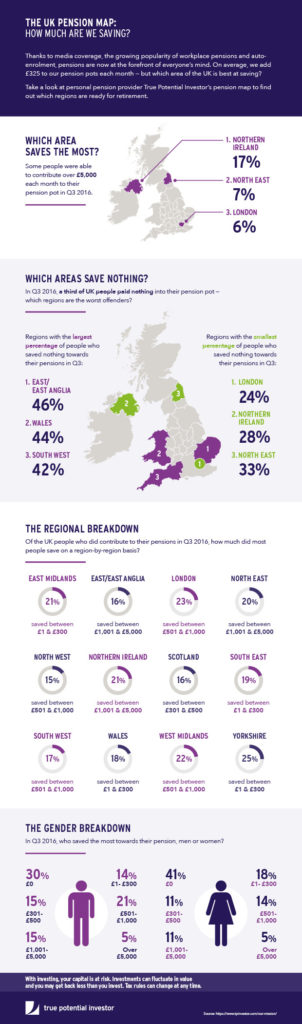
Created by online investment service company, True Potential
Tags:
economy,
investments,
money,
Pensions,
personal finance,
Retirement,
Returns
April 16, 2017
 The new year and the new presidential administration has ushered in a host of fiscal changes that could impact your wallet. Safeguard your money and act in the best interest of your household or business’s bottom line by learning more about the growing financial trends in 2017.
Rising Interest Rates
Interest rates are on the rise in 2017, creating a financial environment that is geared more toward saving than borrowing. In fact, people who put money into personal savings and retirement accounts have the opportunity to create and grow their wealth. Alternatively, people who need to borrow money face paying higher interest rates and making larger payments on their loans each month.
The higher interest rates correlate to the expanding economy and the creation of more openings in the American job market. As unemployment rates go down and American workers may more money, they have the unique opportunity this year to save money and take advantage of rising interest rates that could lead to greater personal wealth. Capital management services offered by professionals like James Dondero are also expected be more in demand this year.
Freelancing in Retirement
This year also has the makings of being the ideal time for retirees to make some extra cash doing side gigs. It is no secret that retirees are living longer and often outliving the money they have set aside for this time in their lives.
Until recently, however, people in this age demographic had few chances to earn extra cash. Many employers did not want to invest time and effort into training employees who would leave the workforce sooner rather than later.
However, thanks to companies like Uber and Lyft that rely on freelancers, senior citizens now have the opportunity to work for themselves as independent contractors and earn money that will not put their Social Security incomes in jeopardy. Along with driving for Uber or Lyft, they also can freelance as writers, artists, tutors, and other independent contractors.
Investment Portfolio Automation
This year also shows signs of increasing the demands for investment portfolio automation. This automation makes investing with financial pros like James Dondero easier and essentially creates an ideal if not passive way for people to put money into the stock market without putting forth any unnecessary effort on their part.
Further, this automation shows promise of being tax efficient and low in cost. Moreover, it costs the same if not less than an exchange-traded fund.
About James Dondero
James Dondero began his career in the financial industry in 1984 and has since become one of the leaders in capital and investment management. As the co-founder and president of Highland Capital Management, L.P. in Dallas, Texas, Dondero also serves as the CEO and chairman of the board at HCM Acquisition Company. Before founding Highland Capital Management, L.P. he worked for top financial companies like American Express and Protective Life.
He graduated with top academic honors from the University of Virginia’s McIntire School of Commerce with dual degrees in finance and accounting. He is certified as a Certified Management Accountant as well as a Chartered Financial Analyst. He also volunteers for Dallas-based charities and organizations like the George W. Bush Presidential Library and Institute, Education is Freedom, Snowball Express, and the Perot Museum of Natural Science.
Tags:
Business,
economy,
financial planning,
investments,
money,
Retirement



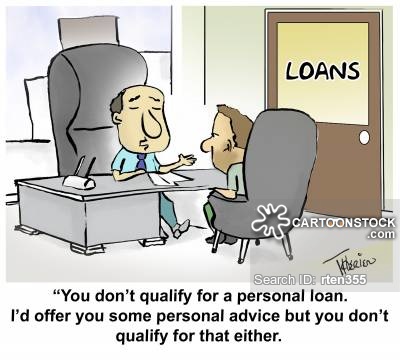 What is a personal loan?
 admin •
  5:23 pm •




Recent Comments