March 27, 2012
 When it comes to finances many people bury their head in the sand and spend up to, or over their means every month without considering the future. If people are happy with their lot and lifestyle then this is not necessarily a bad thing – so long as debt is kept under control.
However, of course the majority of people have dreams and aspirations for which healthy finances are helpful or even vital. The average person could never save up for a house deposit, for example, without cutting down on outgoings and planning ways to conserve funds. Such a person would also need a good credit rating to secure a mortgage, which they may not have if they live on credit and are constantly in debt.
There are numerous benefits to having one’s finances in order. This reduces the stress and anxiety that go with unmanaged debt and therefore leads to a greater sense of ease and comfort. It is also good to know that some money is put aside in savings or investments, for a rainy day or perhaps to make a large purchase such as a property. With the advantages of financial planning in mind, here are 5 tips that are well worth considering:
1) Pay off credit cards
Credit cards carry high interest rates so if the balance is not paid off each month, they can incur considerable interest. Making minimum payments will barely touch the outstanding balance either, so credit cards should be paid off completely as soon as possible. Sometimes low interest loans are the best way to do this, but a banking manager should be able to suggest a suitable plan of action.
2) Reassess outgoings
An effective way of saving money is simply to cut outgoings. Many people are in a habit of spending more than they need to, so by reassessing what they spend each month they will most likely be able to find several areas where savings are possible. People should check direct debits and if they are not necessary or beneficial, stop them immediately.
3) Use an ISA
An ISA is a way to save up to £3000 in a tax free account and this benefits savers much more than a regular savings account. People should choose an ISA if they are saving and use their full ISA allowance to maximize its effectiveness.
4) Get a pension
This is certainly an area that many young people ignore, but this could be to their financial peril in the years to come. A pension is a vital form of financial planning and there are a variety of products available, offering facilities such as pension release and drawdown. Anyone wanting a comfortable retirement should ponder their future without a pension.
5) Make a will
Making a will is another area that people often ignore, perhaps unaware of the possible consequences of dying intestate. Making a will ensures that someone’s money and assets goes to the people they want it to, and stipulations can be included in a will if the donor wishes. A will is not a death wish, merely a shrewd financial precaution.
Tags:
finance,
financial planning,
Financial Tips,
money,
personal finance,
savings,
Tips
March 16, 2012
 Planning for retirement used to be fairly easy: You contribute to senior benefit plans through the government, and you put some aside in 401(k) plans. If you were really focused, you might have opened a stock and bond portfolio for private investments. After the financial crash of 2008, however, those nest eggs might be so financially nutritious right now, especially for females who live longer and get paid less than men. How can you, the average working female, strategize for an easier retirement?
Same Basic Rules Apply
First, don’t toss aside what worked in the past. Continue your private or employment investment strategy. You might want to closely examine how your retirement dollar is invested by looking at the individual companies in your 401(k) mutual funds and the overall risk categories.
The rule of paying yourself first and last still applies: Not only should you always deposit money in your savings and/or investment strategy but also whatever money is left in your budget at the end of the month. Allow those special-purchase savings as well; those amounts should be included in your budget already.
Change Retirement Paradigms
Rethink how you think of your retirement environment. Owning your own home in which you have lived for decades may be a comforting thought, but can your retirement withstand the extended home owner’s insurance, maintenance costs, landscaping costs and utility bills?
Have you planned for escalating medical costs from that longer life expectancy and the related drug costs? You have additional co-payments, deductibles and premium payments to budget and provide for on top of the extended living costs over males.
Would a communal living environment be more frugal or more suited for you? You might still have privacy in a separate abode or a private room, but you share dining space, food costs, utility costs and even entertainment costs and venues.
If living in a retirement community or assisted living environment doesn’t suit you, perhaps sharing the private home is a viable alternative. Two retirement incomes on communal costs cost less per person, after all.
Many retirees are turning to an RV life as well. Buying a small plot of land and arranging for power and water hook-ups are becoming more popular. Renting space at an RV campground is also very popular, and RV living provides the freedom of movement when desired or a stable living environment with virtually every convenience of a brick-and-mortar home but at less overall cost.
Change Location Considerations
Changing locations of your retirement is another possibility. Communities in Mexico or Central America where the cost of living and medical care are far lower are springing up or growing almost weekly. Quick trips home for visa requirements are easily handled, especially when it’s a group trip: Again, cost sharing helps.
Even if you choose to not live as an “expat,” investigate what part of your country has the lowest overall cost of living – rent, food, utilities and gas, for instance. The less money you have to pay to live, the longer your retirement nest eggs will last.
Tags:
Financing Retirement,
New Retirement thinking,
post-recession retirement options,
Retirement Planning,
saving money for retirement
March 12, 2012
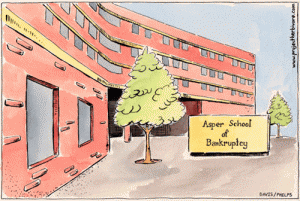 People under severe financial problems are naturally in distress. They are frustrated and desperate especially when creditors are beginning to pressure them into settling their debts. In worst situations, when the chances of finding money to pay off the debt becomes almost impossible, the easiest way out for many is filing for bankruptcy.
However, is filing for bankruptcy the best solution? To know the answer, let us look into bankruptcy and its implications.
Filing for Bankruptcy: When?
Generally, a person in debt should file for bankruptcy only if and when he has exhausted every possible means to come up with a compromise agreement with his creditor and has failed in his efforts.
What Happens After Bankruptcy is Filed?
Upon filing for bankruptcy, the creditors will be notified immediately about it. The debtor can then expect that the unsecured creditors will cease from going after him for the settlement of his debts.
What follows after is that a trustee will be appointed to take charge of the bankruptcy case. The trustee’s job is to make sure that debtor will really pay his creditors. To facilitate payment of the debts, the trustee will sell most of the debtor’s assets. It will also be the trustee’s responsibility to make sure that when the time comes that the debtor will have sufficient income later, the debtor will begin to pay part of his income to the repayment of his debts.
Another responsibility of the trustee includes looking into the financial affairs and transactions of the debtor to see if he has transferred some of his money or properties a third party. His aim is to recover those so it can be used to reconcile all the debtors’ financial obligations.
When a person files for bankruptcy, an agency will keep a permanent record of the bankruptcy, and this record is accessible by the public for a certain amount of fee.
Under normal circumstances, bankruptcy lasts for at least 3 years, but this can also be extended.
What Happens Next?
Filing for bankruptcy is only the beginning of a long and tiresome process. Here are some of the things that will happen right after the filing of bankruptcy:
- Every time a debtor moves to a new place or address, he has to inform the trustee about the move and give him the new address;
- This is also applies when changing names such as when getting married, getting remarried, after a divorce. The trustee has to be informed about the new name;
- When traveling abroad, the debtor has to secure a written permission from the trustee. There are situations when a debtor will be required to surrender his travel documents such as passport or visa to the trustee;
- Any changes in income and assets during bankruptcy must also be communicated to the trustee.
In conclusion, filing for bankruptcy is not good as it will have a negative impact on a person’s credit record and history. It will also take a very long time to repair a credit record. So before finally deciding to file for a bankruptcy, think about all the consequences first. Of course to some it’s the only option left, and there is life after bankruptcy.
Tags:
Bankruptcy,
Bankruptcy Laws,
finance,
Finance & Law,
financial planning,
Law
March 10, 2012
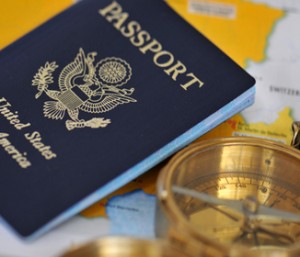 The global credit card processing company Visa has its origins in humble beginnings. Bank of America introduced one of the first credit card programs, BankAmericard, in Fresno, California in 1958. The bank originally planned to keep its credit card business within the state of California. As time passed, Bank of America slowly began to make deals with out-of-state banks. Over the next several years, numerous banks across the United States would license the BankAmericard system. As the number of banks increased, a suggestion eventually arose to start an association of banks.
Association
This association would take the form of a joint venture. All members would have the advantage of a centralized payments system while having the freedom and leniency to compete on a fair basis for their own benefit. This arrangement continued into 1970 when the newly formed National BankAmericard, Inc. received control of BankAmericard and passed it to member banks using the system inside the United States. Bank of America still continued to issue licenses for BankAmericard in different countries. By 1972, 15 countries had been issued licenses. A multinational corporation, IBANCO, was established in 1974 to manage the BankAmericard program in foreign countries.
IBANCO
IBANCO decided to form a single corporation in 1976 despite the hesitancy that surrounded using Bank of America’s name internationally. BankAmericard became Visa U.S.A. in 1976, and IBANCO became Visa International. The name “Visa” was adopted because the word is pronounced the same in many different languages.
Growth Period
Phenomenal growth over the past 30 years led to Visa’s initial public offering (IPO) on March 18, 2008 for $17.9 billion, the largest IPO in United States history. Technological improvements include a worldwide network of automated teller machines (ATMs) providing cash globally to personal and business travelers. Visa was one of the first companies to make a coordinated effort to crack down on credit card fraud. In 2007, Visa restructured itself, creating a new global corporation: Visa, Inc. The Visa Europe brand name remains the same as a member-owned entity.
Reputation
The ability to settle transactions in multiple currencies and having access to cash all over the world make Visa one of the most trusted names in international commerce. Today, Visa, Inc. is a trillion-dollar global entity processing transactions for billions of customers. As of March 31, 2011, 1.87 billion Visa cards are in use worldwide. In the four quarters ending on June 30, 2011, Visa processed a total of 74 billion transactions with a total volume including cash transactions and payments of $5.6 trillion. Visa provides an indispensible service that many customers use to buy essentials like food, shelter and gasoline. Today, Visa, Inc. is a brand name that rightfully commands global respect and ensures its position as a top-rated digital currency company.
Tags:
Card,
Credit Card,
Credit Cards,
Credit Cards Compare,
Visa
March 2, 2012
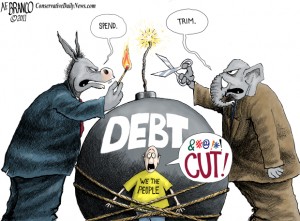 What do you spend money on that’s actually necessary? You’d surprised how much is actually a waste of money. Many people fool themselves, and they’re essentially letting their pocketbook dictate for them. This is a mistake, because you can save a lot of money on things you’re already paying for by just modifying how you pay for those “necessary expenses”.
1. Cook At Home
If you had a $300 bill each month that you could avoid, would you cancel the serivce? Well, I know how you can do this very same thing. Simply, don’t go out to eat anymore. The typical meal for two costs $30 when you include a tip. If you get desserts, drinks, appetizers and alcohol, that price can shoot up more than 200%. Plus, if you have kids, and you buy meals for them, even if you use the kids menu, you could end up spending $50 or more. That is just an unnecessary expense. So, what is the answer? Cook at home. Some people feel that cooking at home is expensive, but it’s not really if you buy a few simple ingredients in bulk and cook from those. Prepared foods are important and cooked foods are important. Just get a small bulk assortment of grains, eggs, cheese, milk, and breads, and you can get creative with cooking at home. Uses spices to mix it up, and just google recipes and cooking tips – you’ll never get sick of your own food this way.
2. Buy Generic Foods
Speaking of bulk grocery shopping, one thing you should do is buy generic. Each grocery store has their own generic brand of most ingredients, and these can be purchased for much less at the grocery store themselves. People are used to buying their favorite brands like Heinz, Starkist, and Dole, but these brands are grossly overpriced. Plus, if you add in the grocery store discount card, you could save even more. On the subject of grocery stores, try not to shop more than once a week. Make your food stretch, and if you can’t, this means more of what you buy should be purchased in bulk.
3. Water
Most people don’t like the taste of water from the tap, but they can get a water filter and bottle it at home. If you bottle your own water, you can save a lot of money in the long run. You don’t have to spend money each week on bottled water, and you don’t have to lug it in from the car (which can be pretty annoying), and let’s face it – you’re helping the environment! Furthermore, a water filter is nice to have because you know that all the water you drink is pure and fresh. When you think about it, buying bottled water regularly means you have two water bills each month, one of which is marked up something like 1000%.
Tags:
cooking,
Environment,
finance,
Saving Money,
shopping



 When it comes to finances many people bury their head in the sand and spend up to, or over their means every month without considering the future. If people are happy with their lot and lifestyle then this is not necessarily a bad thing – so long as debt is kept under control.
 admin •
  9:16 am •



Recent Comments