July 27, 2013
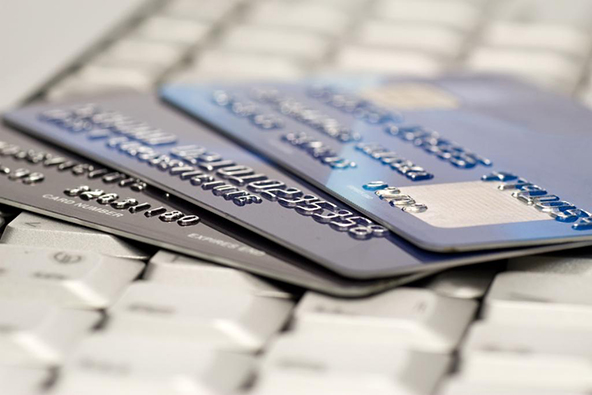
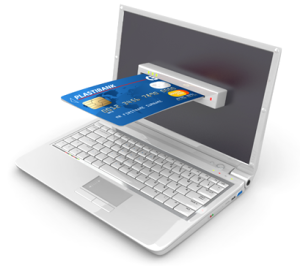 With the growth in popularity of online shopping has come a rise in the ways you can pay for goods on the internet. While many people still prefer the more traditional route of paying directly through online banking, there are a number of advantages to using these specialist services – particularly regarding security, which has become one of the biggest challenges for internet shoppers as hackers and fraudsters seek to take advantage of a whole new market.
Whenever you enter your payment details into a site, you are potentially putting them at risk: phishing attacks (in which users are directed to a spoof website that collects their information) and malware that logs keystrokes are just a couple of the ways the bad guys could gain access to your bank account. This has necessitated the development of more secure online payment services.
An example of one of these services is Ukash. With this method, rather than entering your banking details each time you pay for something, you simply exchange a set amount of money for a 19-digit voucher code, which then acts as a virtual “wallet” that can be topped up whenever you want. The code corresponds to how much money you have: whenever you spend, you’ll receive a new code telling you how much you have left.
This means you don’t have to reveal your credit card number to a variety of different shops in order to make a payment – as long as you treat your vouchers as you would cash, your money is secure.
Tags:
cash,
money,
Online Banking,
Online Services,
Payments
July 18, 2013
 There are few guarantees in marriage, but one of them is this: You’ll have to spend much time discussing your household’s finances with your spouse. It doesn’t matter the age you marry, your commitment means you’ll have to share in the good and the bad. You may have to share your spouse’s credit card debt, student loans, child support commitments and other messy financial troubles – or it could be the other way around where you subject your spouse to your financial woes.
You might be tempted to shelve the topic of your finances for as long as possible. A history of poor financial management may put a damper on romance, after all. But even if you’ve both managed to keep your financial profile intact, marriage links both your finances, so it’s a topic that deserves some thoughtful discussion.
As a start, you’ll have to address questions like: Who will pay the bills? How will you share the expenses? What are your plans for saving? Will you combine finances?
The tips below will help newly married couples to manage their joint financial status and avoid the pitfalls that affect so many couples. Discuss your financial matters today to ensure marital bliss later on.
Commit to Saving A Percentage Of Your Household Income
Don’t assume that you’ll always have the income you now enjoy. Sudden interruptions in your income – whether voluntary or involuntary- may be lurking around the corner. In this uncertain economic climate, there’s the possibility of losing your job. One of you might decide to go back to school or stay at home to care for the children. You’ll have more options if you have a substantial amount of money saved. Your savings will guarantee that you avoid a sharp drop in your lifestyle when one salary is no longer available.
Commit to saving a percentage of your income every month, and stick to your commitment.
Compare Spending Habits
Your spouse might not share your beliefs about money; his spending habits may come as a complete surprise. Spouses who have different financial values need to spend a lot of time discussing their finances. This includes talks about spending habits, debt, and how to manage it.
Plan A Budget
A budget will help to curb unnecessary spending and point out exactly where your money goes. Discuss your financial goals before you build your budget. This will help you to include a plan for meeting those goals.
Get Rid Of Debt
Have a plan to pay off credit cards and student loans. Clearing your debt is the first step towards achieving the goals you’ve set as a couple.
Purchase Life Insurance
You might be uncomfortable discussing the subject of death, but you need to be prepared if the unthinkable happens. Life insurance will protect your finances if your spouse should pass away.
Combine Your Policies
Combine all your insurance policies under one provider and save money. For instance, companies will give you a discount if you combine your car insurance, health insurance and life insurance.
Start a Retirement Fund
It is never too early to start planning for retirement. Make an appointment with a financial advisor to discuss your options.
Live within your means and you’ll enjoy years of marital bliss.
Barry Johnson is a personal finance consultant. His articles mainly appear on money blogs.
Tags:
budgeting,
Debts,
financial planning,
money,
money savings,
personal finance,
savings
July 16, 2013
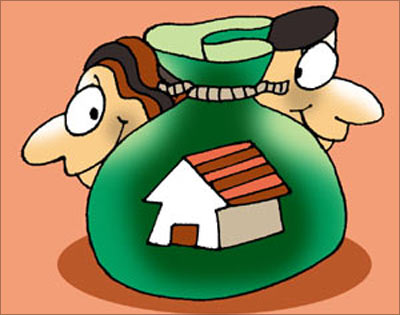
 Purchasing your first home together can be almost as exciting as your wedding day. If you’ve made that first major purchase together before tying the knot, you may have already built up some equity in your home that can be used for repairs and renovations. Whether you plan on using a home equity loan to put an addition on your home or undertake maintenance on your existing home, here are a few things you should know before enquiring about a home equity loan.
Get Appraised (And Know How to Calculate Your Equity)
When determining your home equity, you will first need to have your home appraised to determine its current fair market value. Once appraised, take your home’s fair market value and subtract the amount of money you still owe on your mortgage. For example, let’s say you bought your house for $250,000. Having paid $50,000 as a down payment, your mortgage is now $200,000.
Fast forward to the future when you decide you want to apply for a home equity loan. At that time, you have paid off $125,000 of your mortgage. After an appraisal, you discover that the new market value of your home has risen in value to $300,000. Since you have paid off $125,000 of your mortgage, you still owe $75,000.
$200,000 – $125,000 = $75,000
Take your new fair market price of your home and subtract what you still owe on your mortgage, giving you the amount of money you qualify for your home equity loan, $175,000.
$300,000 – $75,000 = $225,000
This is the total equity available. A bank will typically lend 70-80% of the total equity available.Now that you understand home equity, you have two main options: You can either get a Home Equity Loan (HEL) or a Home Equity Line of Credit (HELOC).
Option 1: The Home Equity Loan
Also known as a “second mortgage,” a HEL gives you a lump sum of cash with a fixed rate of interest. You will have fixed monthly payments for a fixed amount of time, normally between 5 and 15 years. A huge benefit to this option is you won’t be surprised by fluctuating interest rates.Some people use their HEL to help pay off their student loans or credit card bills upon discovering that their HEL interest rate is lower than their student loan and credit card rates. This isn’t always the case. Your HEL rate might not be lower than your other rates, but it is worth your time to determine whether your HEL can assist you with your newly-combined household finances, as well as home improvement projects.
The Home Equity Line Of Credit
A HELOC is a credit line given to you by a lender. You have a maximum amount that you can borrow and are given blank checks or a debit or credit card that allows you to withdrawal from those funds. This allows you to borrow what you need when you need it, instead of taking out one lump sum. You don’t have to withdraw the maximum amount. This just means that the amount of money you are paying interest on has the potential of being significantly lower than your determined equity. Keep in mind that there may be transaction fees each time you withdrawal money. Help from Uncle Sam
The IRS Publication 936, “Home Mortgage Interest Deduction,” offers some helpful advice to newlyweds with home equity loans at tax time. It states that joint tax filers can deduct the interest paid on a maximum $100,000 in home equity loans. The maximum is cut in half if the married couple files separately. Keep in mind, this is a maximum and chances are you will not get to deduct near that amount. This deduction also only applies to home equity loans taken out for home improvement purposes.
Remember
Armed with some knowledge beforehand, you can decide which home equity loan option is best for you and your home – and the vision you have in mind for it.
This post was written by Holly Wolf of Conestoga Bank. Conestoga Bank has serviced Philadelphia and the surrounding regions for 120+ years.
This publication does not constitute legal, accounting or other professional advice. Although it is intended to be accurate, neither the publisher nor any other party assumes liability for loss or damage due to reliance on this material.
Tags:
Debts,
home loans,
Interest Rates,
money,
personal finance
July 15, 2013
 Most people know how important it is to have life insurance and to protect your assets, but an often overlooked aspect is protecting the most important asset you have – your income.
Most people heavily depend on their monthly income to provide for their family, pay off loan debts and keep up with other financial responsibilities.
The important thing to remember is that you can never know what could happen – and have to be prepared to handle your family’s financial situation if something were to go wrong.
Just ask yourself a few simple questions – what would you do if you’d become ill and wouldn’t be able to work for a few months? Would you still be able to provide sufficiently for your family?
A month or two may not seem like a lot of time – it could be a relatively minor mishap as a severe case of the flu or a broken leg, something that would keep you from working, and that could still have disastrous consequences on your family’s financial state.
What about an even worse scenario – if something was to happen to you and you wouldn’t be able to work again, either because of a permanent injury or death – how would you provide for your family?
Also, would you be able to set up your kids for their future – pay for their education?
Think about these questions and then it will become clear to you if you need health insurance. Basically, if you don’t have a really significant amount in savings and are dependent on your consistent income to meet all of your financial responsibilities, income protection is one of the most important things in making sure your family will be taken care of, no matter what.
There are plenty different plans you can choose from, but you should make sure that you got all the possible scenarios covered.
That includes short term income replacement – when you would be insured for the full or at least a significant amount of your monthly income and would be compensated for the period that you’d be unable to work.
You also need insurance in case something were to happen that makes you unable to work ever again – your family would have to be provided for, so insurance with a payout in the case of disability of death is also very important.
Finally, consider that not all expenses are direct – for instance, even if you wouldn’t consider your children’s education a regular expense, you still have to save money in order to provide for them, so you have to have an income protection plan that would cover the costs that will arise in the future – that, for instance, if something were to happen to you, your children would still get the proper education.
These are just a few examples of why income protection can be such a valuable asset – after all, in the year 2013 you can never be sure about your financial situation because of the still unstable economy, so protecting your family in as many ways as you can is critical.
Income protection is just another way of getting a little safer – this way you can create at least a few safety nets that will cushion the financial hit if something unexpected were to happen.
Romayne Warner is a full time self-employed blogging fanatic. Obsessed with finding small ways to save money every day, she enjoys sharing her frugal lifestyle tips and tricks with the world, she regularly writes about saving money.
Tags:
budgeting,
economy,
financial planning,
income,
insurance,
life insurance,
money
June 27, 2013
 There is nothing better than opening a high risk merchant account for businesses operating in high risk environments. It solves the purpose for such risk prone institutions and their dealers for a long term. However, the real ordeal begins after opening one such account. High risk merchant accounts are nothing less than “cash cows” for such businesses but proper management is necessary in order to avail benefits in the long run.
It doesn’t need a lot of effort to manage high risk merchant account but having a prudent strategy is a must.
Here are some tips that might help in maintenance of high risk merchant accounts.
- Easy access: High risk merchant services should try to make it really easy for the customers to get in touch. The easier it is for customers to contact the merchants the better for the business as it would increase satisfaction quotient among them. Generally, most merchants lose out on this point and maintain distance from the customers for numerous reasons.
- Communicate: The more often a business communicates with its customers, the better. It is always advised to keep them updated about the orders placed by them. In addition, any issue related to customer or his payments should be taken as a top priority. It increases the level of communique with customers and increases their satisfaction level too.
- Short response time: It is always better to solve customer query yourself than allowing banks to mediate as it would only worsen the situation. The moment banks enter the confrontation, the scenario becomes all the more complicated. Therefore, it is always recommended to deal with customers’ concerns in the beginning instead of dragging the whole issue further.
- Monitor the accounts: It is very important and should be followed religiously. Businesses should always review and keep track of suspicious orders and online credit card processing.
- Fraud protection: High risk merchants should always employ automated fraud detection systems. They can also use velocity controls on the gateway to filter out potential frauds that have been recognized by experts till now.
Most importantly, high risk merchant banks should guard against excessive charge backs. High levels of charge backs are the primary reason for termination of majority of the high risk merchant accounts. A merchant should not entertain a transaction till authentication is not accepted fully.
The most important feature that ensures high level of security in risk free merchant accounts is settlement of transactions in the form of a lot on a daily basis. This will ensure stable and fraud free mechanism. .
At times, most merchants go out of the way to please their customers and clear high ticket items without adequate proof. This practice is unhealthy as proper verification complete with signatures and other essential details can significantly eliminate the possibility of default. .
Last but not least, all the high risk merchant accounts should make it their duty to comply with merchant agreements provided in writing. .
In case of any changes in the account make it a point to contact the payment processor in advance and maintain hassle free mechanism for years to come.
Tags:
Business,
Credit Cards,
financial planning,
Merchant Accounts,
money,
Payment,
Rates



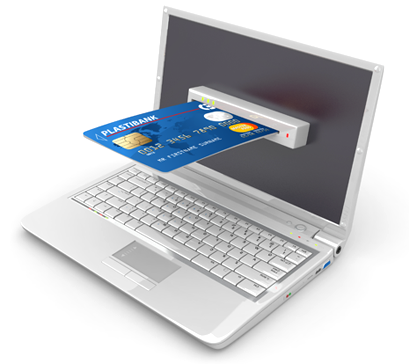 With the growth in popularity of online shopping has come a rise in the ways you can pay for goods on the internet. While many people still prefer the more traditional route of paying directly through online banking, there are a number of advantages to using these specialist services – particularly regarding security, which has become one of the biggest challenges for internet shoppers as hackers and fraudsters seek to take advantage of a whole new market.
 admin •
  7:21 am •


Recent Comments