April 13, 2012
 In 2012, the HARP refinance program for underwater homeowners was revamped. New guidelines have been set forth by the government and they are soon expected to be adopted by lenders. But, will the HARP program 2.0, as it has been nicknamed, live up to the expectations?
First, let’s take a look at what this program was designed to do. HARP was designed as a way for underwater homeowners to refinance their mortgages to current interest rates. This is assuming that their current interest rate on their mortgage is higher than todays rates, which is usually the case.
Homeowners who are current on their mortgage payments and have a loan that is backed by Freddie and Fannie will be able to refinance the loans. Homeowners who have late payments will not qualify and must look to other options such as loan modification or a short sale to avoid foreclosure.
The original HARP program placed a cap on your loan to value ratio, which eliminated many homeowners as participants in the program. Too many people had homes that were worth far less than they owed. With the new program, this cap has been lifted so that anyone who is upside down on their mortgage and meets the other requirements should be able to qualify and refinance. Exciting, right?
Sure, if you believe everything that you read.
Here is the main problem I see with the HARP underwater refinance program: The government does not control what lenders do. They only set the “guidelines” for the program and expect lenders to adopt them. The lenders have to agree to these guidelines and use them.
Why they won’t agree to these guidelines
Loans are backed by investors. For lenders to agree to these guidelines, investors must agree to these guidelines as well. Wall Street must agree to these guidelines! Do you think an investor will let someone who owes $300,000 on their home that is worth $125,000 refinance to a lower rate? I for one, do not.
What I think will happen with HARP
When the guidelines are officially adopted by lenders there will definitely be a “feeling out” period. Sure, HARP refinances will happen, but the majority of those refinances are going to be loans with an LTV (loan-to-value) of 125% or less. This is what investors are looking for. I think some lenders may be able to push up the cap to 135% or maybe even 145%, but I just don’t see it getting any higher than that.
HARP can say that they have new guidelines and no LTV cap for underwater homeowners looking to refinance, but it doesn’t mean it’s going to happen.
I imagine we will see similar problems with HARP that we saw with the HAMP loan modification program. Sounds great, but not many homeowners will qualify and get the help that they need.
About the author: Jeff G. is a prolific financial writer who has composed numerous articles relating to loan modification and the HARP refinance program.
Tags:
financial planning,
Home,
mortgage,
Property,
refinance,
Refinance Programs
April 8, 2012
 Landlords have more to worry about than homeowners. As well as the building, they need to protect their tenants as well as themselves. With these things in mind, looking for the right landlord insurance can be tricky at best. It needn’t be a hassle, though, so keep these tips in mind when you’re shopping around to find the best cover for you.
Covered inside and out
Stripping it down to basics, landlord home insurance is split into two types: buildings and contents. Buildings insurance is a given (and compulsory if you have a mortgage). If the building itself is damaged by fire, flood or similar events then you’ll need to be covered to repair and rebuild. Depending on the insurer, this might also cover you for earthquakes and subsidence. Be sure to check if you live in a high-risk flood area, as you may need a more specialised flood-based cover for your property.
Contents insurance will cover the contents that you own in the property, not your tenants. This includes white goods and furniture. If you are letting a furnished property, this is a good idea in case anything damages your items. Everything that your tenants move in with or buy themselves, they will have to get separate home contents insurance of their own. Typically, contents insurance protects you against fire, theft and water damage.
Get specialist
Do you need specialist landlord insurance? Well, it’s not legally compulsory, but it’s a very good idea. The specifics vary between insurance companies, but buy to let insurance gives you some kind of public liability cover as part of the policy. So for example, if your tenant trips over your carpet and takes legal action, you won’t have to pay the expensive legal fees. You can also get covered for loss of rent, if for whatever reason the property becomes inhabitable or if your tenants are unable to pay. Your standard contents insurance cover may not cover accidental damage, so if you’re letting out a furnished property then it might be worth taking out additional accidental damage cover for your items.
Stay sharp
Be sure to check the ins and outs of the policy details to make sure that you know what is and isn’t covered. As a general rule, landlord insurance policies don’t cover any malicious damage or theft by your tenants. This is why it’s important to make sure that you’ve either got an appropriate tenancy deposit or are satisfied with their character.
Also, low-premium landlord insurance might come with a hefty excess attached. Check that you’re happy with the amount of excess against the premium and the benefits of the policy before you accept, otherwise any claim that you make could leave you in the lurch.
Make sure that you take a look around and find the best policies that are right for you – there’s nothing worse than paying through the nose for cover that you don’t need in the first place.
Tags:
Home,
House,
letting,
Mortgage Loan,
Property,
real estate
March 31, 2012
 As you decide to sell your home it is necessary that you will also have some knowledge on things that you need to consider in selling it so that you can be sure that you will not encounter any troubles with regards of the transaction with the potential buyers.
1. Ways of advertising. The very first thing you need to make sure in selling your home is the way that you are going to advertise it. You need to make sure that the way you promote your home will be very effective so that you can sell it fast. You can ask the help of a real estate agent in advertising or promoting your property. Another advertising strategy that you can do is by listing your property in local newspapers or by putting ad on the Internet.
2. Setting up a valuable price. It is really very necessary that you have the knowledge about the market value of your property so that you can set up a valuable price that isn’t bias to you and to your potential buyer. Set a price in which your buyer can still negotiate, give them a chance to at least bargain on the price that you have. Remember that, price is mostly the first thing that is asked by the buyers and if they find your price is too expensive compared to your competitors surely that they will not waste their time to look at your home. Be reasonable in giving price to your property, a price that is upon the real value of your home.
3. Consider having home inspection. It is an added value that you can have once you decide to sell your house. Remember that having a home inspection will give you ideas on the things that needs to be improved and repaired. Buyers are more willing to purchase a house that undergo a home inspection this is for the reason that they feel more secured. Having home inspection gives a chance to your buyer to realize that it is better to stay in your place because they dont have to worry anymore on the problems that may arise once they choose your property.
4. Legal issues. It is best if you are going to fix and resolve all legal issues on your property before moving on selling it. That way you don’t have to think on the possible problems that you may encounter on the process of selling it. You can freely deal and have legal transaction with your buyer especially if you have settled all the legal issues on your property.
These considerations that you need to have whenever you plan to sell your house are very important to make sure that in the long run of transacting with your problem you will not have any problem. Consider these things even before you start dealing or advertising your property to make sure that you will have a smooth flow of transaction with your buyers.
Tags:
Buying,
Home,
Property,
real estate,
Selling
March 14, 2012
 It is a fact that home renovations adds up to the house’s market value. If a house seller wants to earn big in selling his property he has to do changes and improvements in his property. Surely setting up a garden or a parking space for vehicles would increase the market price of the property. But before getting too much excited you have to bear in mind that putting a property under renovation is a no easy task. For first time house and lot owners who plan to put their properties under renovation, it will be a wise act if you first become familiar with the basic home renovation processes. Why? Well it is because a home renovation is a costly project and I’m sure you don’t want to waste your time and money on unnecessary things. Reading books, magazines and articles online that are related to home improvement will really help a lot.
But wait there is more that matters. As what I’ve said, home renovation is a costly project so you may want to consider these questions first before putting a property under the renovation process. Each of these questions will be in detail later.
1. Is the plan for home renovation practical?
2. How much payback value will I get?
3. Is the plan for renovation flexible for future changes?
Is the Plan for Home Renovation Practical?
The idea is this! Is your plan for home renovation just for luxury? Now if your answer is “yes”, you may want to think twice. In today’s hard and deflated economy many people prefer living practical. As to what many experts say practicality is in these days not luxury! Same as through with buying a house, home buyers would not buy a property that has a very high market value. So check your house, if the current condition of the house you’re planning to sell is still good and has a good market value then putting it under renovation might not be a good choice.
How Much Payback Value Will I Get?
Is you’re plan of putting a property under renovation will be worth your money? Well this is in relation with what I said above, that is “practicality is in” but if you still prefer a home renovation you need to focus on where you can get a good payback value when the time comes that you are going to sell the property. Most of the time renovating the kitchen and bathroom will give more payback value when you sell your property. Recent statistics show that a house owner can have a 75-100% payback value when he focuses on the renovation on the kitchen and bathroom.
Is the Plan for Renovation Flexible for Future Changes?
This is what many house owners should really consider. How flexible is the plan for renovation for future changes? Let’s say you renovated the back part of your house for a garage, then after 3 years you will remove it for another change. Is that practical? Surely it isn’t. So just in case you still prefer renovating your house, make sure you create a well crafted plan that can adapt to future changes and improvements.
Tags:
Home,
Home Improvement,
Property,
real estate
March 8, 2012
 Have you considered taking advantage of the current real estate market and purchasing a home? If so, there are several things to take into consideration, including the following:
· Securing the best interest rate
· Getting pre-approved for a home loan
· Finding the property of your dreams
· Making an offer on your desired property
· Paying a down payment on your new home
With the current economic situation throughout the United States, many people desire to purchase a new home and may even be pre-approved for a home loan; however, the one thing that often keeps people from purchasing a new home is the dreaded down payment.
Down Payment Details
Unless you are able to secure a VA loan, most lenders require a down payment around 20%. Fortunately, some people qualify for an FHA loan that allows them to only pay 3.5% down. Therefore, if you desire to purchase a $150,000 home you are looking at a down payment up to $20,000. With the high unemployment rate and rocky economy, very few people have $20,000 in their savings account thereby making homeownership more difficult to achieve. Rest assured, there are some ways to secure a down payment for a new home.
Ways to Secure a Down Payment
Tax Refund. One of the easiest ways to obtain a nice down payment for your home loan involves increasing the taxes withheld from each of your paychecks by decreasing your number of dependents. As a result, you are able to receive a bigger tax refund each year, which can be put into a savings account or immediately used for a down payment, especially if you are able to obtain an FHA loan.
Sell Unwanted Items. Although this option may require a lot more effort than saving your tax refund, you can often sell unwanted or unused household items, jewelry, vehicles, and jewelry. You may have to spend several months trying to sell these items at yard sales or online; however, if you sell enough and continue to save the money you make off these items you will achieve your down payment and be on your way to owning a new home.
Save Wisely. The most common way to secure a down payment for a new home is often the one that takes the longest—saving money. This requires you to take out a certain amount of money from each paycheck and place it into a savings account until you are able to afford the payment.
Tags:
Home,
home mortgage,
Home owner,
investment,
Property,
Realestate



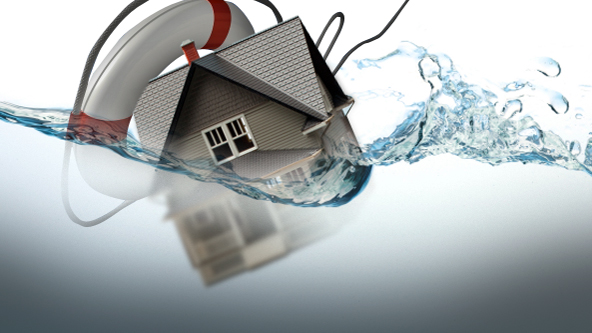 In 2012, the HARP refinance program for underwater homeowners was revamped. New guidelines have been set forth by the government and they are soon expected to be adopted by lenders. But, will the HARP program 2.0, as it has been nicknamed, live up to the expectations?
 admin •
  10:04 am •





Recent Comments