June 16, 2017
 It can be difficult to make the decision to file bankruptcy because most people are afraid of the unknowns associated with actually filing a bankruptcy claim and becoming insolvent. It’s scary to think that you could lose your house or your car, or any other valuable asset you have, and so a lot of people put off filing for bankruptcy for as long as possible; unfortunately, this usually only perpetuates the situation. What’s more, some people finally make the decision to file for bankruptcy and then find out they don’t actually qualify for it. It’s important to get the facts straight so you can decide what is right for you. Once you do make the decision to file for bankruptcy, you’ll want to start working toward the rest of your life.
Get Passed the Shame
There is no shame in reaching out to a Licenced Insolvency Trustee to discuss the option of bankruptcy. Once you have discussed your options and it is decided that you will file for bankruptcy, your credit counsellor can help you determine how to move forward. They will talk you through what the next few weeks, months or even years may look like for you in terms of your financial standings, and you can start to put together a plan to get back on your feet.
Work Toward Goals
Now that the bankruptcy has been filed, it can seem overwhelming to think that you need to start rebuilding your financial status. It’s important to have a list of things you want to work toward; for example, make a long term plan for holding a credit card again. Make a short term plan of building a savings account for yourself so you can cushion unforeseen financial issues in the future.
Talk to Your Family
Part of declaring bankruptcy is that you’ll need to attend some kind of counselling sessions; it will be important to your claim that you do this. What’s more, you should have a frank and honest conversation about your finances with your closest family members so they can understand what is happening to you and perhaps can help you. At the very least, having someone to talk to about what is going on can help you deal with it.
Don’t Give Up
Some people think that filing for bankruptcy is the end of the world. It is just a process by which you can hit the refresh button on your finances – in its simplest terms. Good and honest people often find themselves having to file for a bankruptcy because their finances have gotten out of their control. It doesn’t mean you are a bad person or you don’t deserve to have anything ever again. A series of bad choices or circumstances got you here, but you don’t have to stay in that place.
If you aren’t sure if bankruptcy is right for you, consult a Licensed Insolvency Trustee and they will walk you through the criteria and help you determine if you need to file a bankruptcy claim. While it seems like it’s very unfortunate, you will be able to get through it with the help of your credit counselor.
Tags:
Bankruptcy,
banks,
budgeting,
credit,
Debts,
economy,
financial planning,
money
April 14, 2017
 Holiday plans are often spontaneous and happen when you’re desperately in need of a break from the monotony of your life. Suppose you are planning a family vacation when your spouse or kids have holidays but your funds are a bit tied up. Should you postpone your vacation till you have the money? Absolutely not! Instead of being disheartened by thinking that you do not have sufficient funds at the moment, you can simply plan a vacation with a personal loan.
You can finance your travel smartly by availing a personal loan. Based on your credit history& income source, the eligibility and amount will be determined and accordingly the tenure and repayment conditions for the loan will be laid out. Salaried individuals find it easier to avail personal loans as compared to self-employed businessmen. However, if you have filed tax returns & all company documents are in place, even self-employed individuals can avail a personal loan without providing collateral.
An online personal loan is extremely easy to avail and rarely require any form of collateral. If you meet the eligibility criteria set by the lending institutions and have the necessary documentation in place, there is a definite chance your application will get an approval. In fact, these days online personal loans can be completely paperless with online submission of scanned id and residence proof.
How do personal loans compare with credit card EMIs? There are tax benefits for personal loans. You can claim income tax benefit under Section 24 on personal loan which offers an overall interest benefit of 1.5 lacs for tax exemption. In addition, extending your credit card to finance your travel is not a good idea as they have predefined credit limits that may not suffice the amount you need for your travel.
Tags:
budgeting,
Debts,
loans,
money,
personal finance,
savings,
tax
January 1, 2017
 Most families have accumulated a significant amount of debt due to auto loans or credit cards that have been used over the years. Acquiring debt can make it easy to feel limited with your finances, which can make it difficult to make ends meet. To become debt-free and obtain financial freedom, there are a few important steps to take.
1. Create a Budget
Creating a budget will allow you to determine how much money you can afford to put towards your debt each month. Calculate your household income and write down your expenses, which will allow you to get an idea of how much debt you will pay off with each paycheck.
2. Establish Goals
Establishing goals to pay off your debt in a specific time frame will make it easier to stay on track and avoid losing focus with paying off the debt in full.
3. Cut Coupons
You can save more money each month to put towards your debt by cutting coupons in the newspaper for food and household items that you already purchase. Combine manufacturer coupons and store coupons to double your savings.
4. Pay Off Lowest Balances First
Paying off the accounts that have the lowest balance first, which will allow you to stay motivated and will reduce the amount of money that you pay in interest each month. There are some credit repair companies that can help you consolidate and repay your loans.
5. Avoid Eating Out
Reduce the money that you spend each month by making your meals at home and avoid dining out when you’re on the go. Prepare meals and have easy snacks on hand to take to work and stay within your food budget.
6. Shop at Secondhand Stores
Shopping for clothing or goods at secondhand stores can allow you to avoid paying full price for products that your family may need when it comes to purchasing school clothes or work attire.
7. Use the Envelope System
Convert your paycheck into cash and transfer it into different envelopes to avoid overspending and track how much you have left to spend. This will allow you to become more conscious of how much money you spend without relying on a credit or debit card.
Although it can be challenging to pay off debt as a family, there are several lifestyle changes that can be made to make progress with the money that you owe. By establishing rules with your finances and making goals, you can track the money that you pay off to ensure that you obtain freedom in a realistic time frame.
Tags:
budgeting,
credit,
debt,
financial planning,
loans,
money
December 14, 2016
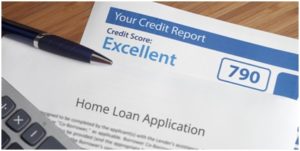 When you find that house of your dreams, the first thing that springs to mind is to apply for home loan since it’s your ticket to funding the big purchase. But sometimes, loan applications get rejected for various reasons, among which the most common is a low CIBIL or credit score. It is major factor that determines your loan approval, loan amount and even rate of interest.
Why is high and low credit score important?
While a high credit score is viewed as a low probability of a default, a low credit score reflects the opposite, making financial institutions wary of the person applying for a home loan.
Credit score is a three digit number that ranges between 300 and 900. It reflects your creditworthiness as it is a summary of your payment history, outstanding balances, number of loans, total credit limit, credit utilization, every loan detail taken from different lenders. Higher credit scores are great for you if you are applying for a home loan. On an average, a credit score of 750 is great for borrowers as lenders find themselves at less risk. Moreover, at this score, you can get good deals on your home loan and better rates of interest.
Your credit score is impacted positively by:
● Consistent payment of loan EMIs
● Credit card bill payments on time
● No over-leveraging
● Payment of credit card bills in full as opposed to minimum due amount each time
● Good financial records
● Many types of credits, especially unsecured personal loans in family
● Good utilization of credit limit on cards
Your credit score is impacted negatively by:
● A lot of credit report enquiries by banks and financial institutions
● Dishonoured or bounced cheques
● Loan repayment irregularity
● Defaults on credit repayments and even defaulting as a guarantor
● Late payments on credit cards or making part payments consistently
● Number of unsecured credit (multiple personal loans)
● Numerous applications for unsecured loan, especially when rejected
● Going beyond the approved credit limit and even high utilization of it
Other than these, your credit score can also be impacted negatively when banks or financial institutions you are dealing with make errors in their records. Hence, it’s important that you keep checking whether or not your banks are submitting the right information. It comes really handy if you request and maintain a copy of your credit history personally as compared to a financial institution doing that for you.
Tags:
Debts,
economy,
Home Loan,
Interest Rates,
investments,
loans,
money,
Mortgages
December 13, 2016
 CIBIL Score is a crucial aspect in determining your home loan eligibility. Every time you apply for home loan, your lender checks this score for approving/disapproving your application. It is a summary of your credit history as per your credit behaviour. It depends on the following factors:
Past payments: All your previous payments, whether on time or delayed, are recorded with CIBIL. Consistency in making payments is considered good whereas more recent delays are seen negatively.
Settlements, defaults and write-offs: Multiple write-offs, defaults on previous loans and more recent write-offs (as opposed to older ones) have negative effects on your credit score. Defaults and delays on secured loans are worse than on unsecured loans.
Credit as proportion of income: The higher the loan balance you have, the lower your credit score will be. Less loan balance shows smart credit utilization on your part.
Credit cards: If you have high credit card balances, your credit score will be low. Consistency in repaying credit card debts improves the score. Credit cards (unsecured loans) are viewed negatively by lenders as compared to secured loans.
Different ranges of CIBIL Score
Every person with a financial history has a CIBIL score and it can range anywhere between 300 and 900, with 900 being the highest. A person can also have a score of 0 or -1, which means that they have no credit history in terms of loans and credit cards. So to get the credit history started, you must have at least one credit card or applied for a loan. Here is a breakup of CIBIL scores and what it means:
- 550 – 650: It is a fair score and accepted by many lenders. This score shows that you have been quite regular with your repayments, other than a few exceptions. Most lenders trust borrowers with this score and approve their home loans but usually with a higher interest rates.
- 300 – 550: This is the worst score anybody can have and it means that you have been defaulting on your payments. With such a score, getting credit is extremely difficult.
- 650 – 750: For home loan eligibility, this score is very promising. And if you have this credit score, you will not face any issue regarding approval of application.
- 750 – 900: It is the best possible score anybody can have and it indicates your expertise at managing your finances. Lenders will approve even a larger loan amount to you at great rates when you apply for home loan.
Tags:
Debts,
economy,
Home Loan,
Interest Rates,
investments,
loans,
money,
Mortgages



 It can be difficult to make the decision to file bankruptcy because most people are afraid of the unknowns associated with actually filing a bankruptcy claim and becoming insolvent. It’s scary to think that you could lose your house or your car, or any other valuable asset you have, and so a lot of people put off filing for bankruptcy for as long as possible; unfortunately, this usually only perpetuates the situation. What’s more, some people finally make the decision to file for bankruptcy and then find out they don’t actually qualify for it. It’s important to get the facts straight so you can decide what is right for you. Once you do make the decision to file for bankruptcy, you’ll want to start working toward the rest of your life.
 admin •
  5:57 pm •



Recent Comments