July 15, 2013
 Most people know how important it is to have life insurance and to protect your assets, but an often overlooked aspect is protecting the most important asset you have – your income.
Most people heavily depend on their monthly income to provide for their family, pay off loan debts and keep up with other financial responsibilities.
The important thing to remember is that you can never know what could happen – and have to be prepared to handle your family’s financial situation if something were to go wrong.
Just ask yourself a few simple questions – what would you do if you’d become ill and wouldn’t be able to work for a few months? Would you still be able to provide sufficiently for your family?
A month or two may not seem like a lot of time – it could be a relatively minor mishap as a severe case of the flu or a broken leg, something that would keep you from working, and that could still have disastrous consequences on your family’s financial state.
What about an even worse scenario – if something was to happen to you and you wouldn’t be able to work again, either because of a permanent injury or death – how would you provide for your family?
Also, would you be able to set up your kids for their future – pay for their education?
Think about these questions and then it will become clear to you if you need health insurance. Basically, if you don’t have a really significant amount in savings and are dependent on your consistent income to meet all of your financial responsibilities, income protection is one of the most important things in making sure your family will be taken care of, no matter what.
There are plenty different plans you can choose from, but you should make sure that you got all the possible scenarios covered.
That includes short term income replacement – when you would be insured for the full or at least a significant amount of your monthly income and would be compensated for the period that you’d be unable to work.
You also need insurance in case something were to happen that makes you unable to work ever again – your family would have to be provided for, so insurance with a payout in the case of disability of death is also very important.
Finally, consider that not all expenses are direct – for instance, even if you wouldn’t consider your children’s education a regular expense, you still have to save money in order to provide for them, so you have to have an income protection plan that would cover the costs that will arise in the future – that, for instance, if something were to happen to you, your children would still get the proper education.
These are just a few examples of why income protection can be such a valuable asset – after all, in the year 2013 you can never be sure about your financial situation because of the still unstable economy, so protecting your family in as many ways as you can is critical.
Income protection is just another way of getting a little safer – this way you can create at least a few safety nets that will cushion the financial hit if something unexpected were to happen.
Romayne Warner is a full time self-employed blogging fanatic. Obsessed with finding small ways to save money every day, she enjoys sharing her frugal lifestyle tips and tricks with the world, she regularly writes about saving money.
Tags:
budgeting,
economy,
financial planning,
income,
insurance,
life insurance,
money
June 27, 2013
 There is nothing better than opening a high risk merchant account for businesses operating in high risk environments. It solves the purpose for such risk prone institutions and their dealers for a long term. However, the real ordeal begins after opening one such account. High risk merchant accounts are nothing less than “cash cows” for such businesses but proper management is necessary in order to avail benefits in the long run.
It doesn’t need a lot of effort to manage high risk merchant account but having a prudent strategy is a must.
Here are some tips that might help in maintenance of high risk merchant accounts.
- Easy access: High risk merchant services should try to make it really easy for the customers to get in touch. The easier it is for customers to contact the merchants the better for the business as it would increase satisfaction quotient among them. Generally, most merchants lose out on this point and maintain distance from the customers for numerous reasons.
- Communicate: The more often a business communicates with its customers, the better. It is always advised to keep them updated about the orders placed by them. In addition, any issue related to customer or his payments should be taken as a top priority. It increases the level of communique with customers and increases their satisfaction level too.
- Short response time: It is always better to solve customer query yourself than allowing banks to mediate as it would only worsen the situation. The moment banks enter the confrontation, the scenario becomes all the more complicated. Therefore, it is always recommended to deal with customers’ concerns in the beginning instead of dragging the whole issue further.
- Monitor the accounts: It is very important and should be followed religiously. Businesses should always review and keep track of suspicious orders and online credit card processing.
- Fraud protection: High risk merchants should always employ automated fraud detection systems. They can also use velocity controls on the gateway to filter out potential frauds that have been recognized by experts till now.
Most importantly, high risk merchant banks should guard against excessive charge backs. High levels of charge backs are the primary reason for termination of majority of the high risk merchant accounts. A merchant should not entertain a transaction till authentication is not accepted fully.
The most important feature that ensures high level of security in risk free merchant accounts is settlement of transactions in the form of a lot on a daily basis. This will ensure stable and fraud free mechanism. .
At times, most merchants go out of the way to please their customers and clear high ticket items without adequate proof. This practice is unhealthy as proper verification complete with signatures and other essential details can significantly eliminate the possibility of default. .
Last but not least, all the high risk merchant accounts should make it their duty to comply with merchant agreements provided in writing. .
In case of any changes in the account make it a point to contact the payment processor in advance and maintain hassle free mechanism for years to come.
Tags:
Business,
Credit Cards,
financial planning,
Merchant Accounts,
money,
Payment,
Rates
June 26, 2013
 Admit it. You’ve daydreamed more than once about hitting the investment jackpot. Your goals are modest. You just want to earn enough money to buy yourself an island. Or at least a second home on an island. So, what’s the secret to discovering the next big thing? Read on for some tips that’ll help you chart a course through the murky waters of investment toward big returns and the island of your dreams.
Tasty Profits: Invest in Restaurants
Consider industries where there will always be demand for the product. For example, people will always need to eat. So, restaurants, especially trendy ones in heavily populated or touristy areas, offer a sweet deal to investors.
Get your slice of the pie early and eat up the profits when the restaurant takes off. Celebrities know the restaurant business is lucrative, too: Ashton Kutcher and his Dolce Group have launched several venues including Ketchup, Dolce, and Geisha House with great success.
Don’t Forget Diversions
Just as people will always need to eat, they’ll always need diversions. Even when the economy’s bad, they still see movies, go bowling, and attend sports events to help them forget that their finances are in the toilet. Take a cue from Jay Z who invested in the Lakers, and consider how you could capture some dollars by investing in a sports franchise.
Entertainment delivery companies such as Hulu, Netflix, and Vudu are leading the way into the new frontier of time-shifted television viewing and on-demand movie watching. Investing in the early stages of these and similar companies may have big pay-offs in the future.
Follow the Big Dogs
Celebrities are making big bucks by investing in industries where there’s a reasonable expectation of success. However, expectations and a company’s size aren’t always harbingers of profit. Just look at Circuit City and Kodak. So, to avoid putting your money in a company that may become a sinking ship, garner wisdom from investment gurus who make a living by spotting the next big thing. Read an article by Fisher Investments about how Ken Fisher navigated his way toward a ginormous portfolio.
Tech is Trending
People are investing in tech companies and partying like it’s 1999. Yep, it’s cool again, and potentially profitable, to put money into online and high-tech ventures. Getting an early piece of the action on a revamped or brand new social media platform could net you profits worth tweeting about.
Let Justin Timberlake be your guide: he and a group of other savvy investors just re-launched Myspace, making it available online and as an iPhone app.
Even if you don’t have thousands of dollars to pour into multiple ventures, leverage your dollars in the crowdsourcing movement. Considered to be the ground-iest of the ground floors of investment, crowdsourcing lets you give small amounts of money in exchange for recognition and in-kind gifts. While that may not sound lucrative, an early investment could open the door for additional opportunities in the future with a company that’s on its way to becoming the next big thing.
Tags:
Cash Flow,
Dollars,
economy,
Financial Plannings,
investment,
money,
Trading
June 25, 2013
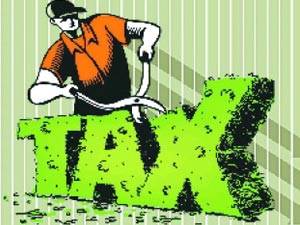 We pay many different types of tax during our lives. What this means is that there is the potential to claim back tax in many different ways. Your tax rebate will be dependent upon what types of tax you have overpaid on, and this will inform the process (or processes) you need to take in order to claim it back.
Healthcare Professionals
If you work as a healthcare professional you can claim tax back for your uniform, including the costs of washing or for purchasing shoes and tights. You can also claim tax back if you require specialist equipment for your job. The only proviso is that the clothes and equipment you claim for must be for work use only, and must not already be being offset by your employer.
Mileage and Travel Expenses
Another form of tax which can be claimed back is for mileage and travel expenses. If you require a vehicle for your job you can claim tax relief which will help to offset the cost of running your vehicle. As a legitimate business expense, this is something which everyone is entitled to, and a tax rebate of this nature can be very helpful for anyone who regularly travels for work related purposes. For more information about claiming back your travel expenses as a tax rebate, visit www.taxrebateservices.co.uk.
Tax Relief for Teachers
Teachers can claim tax back for a number of different reasons. If, for example, you have been required to pay fees to a professional body such as the NUT, you can claim part of these fees back as tax relief.
Teachers can also claim tax back in the same way that healthcare professionals can, if they require the use of specialist clothing or equipment for their jobs. Tax relief can also be claimed if this clothing requires laundering which is outside of the remit of normal clothes washing procedures. But this can only be claimed if the clothing in question bears your employer’s logo.
Other Types of Professional Tax Rebate Claims
There are many different types of professionals who can claim tax back according to the requirements of their job. These include:
- Mechanics
- Construction Workers
- Non Resident Landlords
For more information about whether or not you can claim back tax according to your profession, it’s always important to get the advice of a regulatory body, or from a professional tax rebate service provider.
Tags:
Deduction,
economy,
financial planning,
income,
Rebate,
tax
June 22, 2013
 A secured loan is a lending product which can be obtained by leveraging an asset against the value of the loan amount. They’re a great choice for people who are asset rich, but cash poor. They’re can also be very helpful in an emergency, when you need to access cash quickly. But what does taking out a secured loan actually entail? And how can you tell if it is the right product for you?
Assessing Your Needs
Before applying for a secured loan, it’s important to make sure that you are fully aware of your needs beforehand.
• Do you really need a loan?
• Are you able to make the repayments?
• Is a secured loan the right type of loan for you?
• Do you meet the criteria to qualify for an unsecured loan?
If the answer to all of these questions is yes, then a secured loan is the right option for you. But secured loans come in all shapes and sizes, so it’s a good idea to shop around before settling on one. For example, 1st Stop secured loans are the perfect choice for people with bad credit, who need to borrow any amount between £1500 and £15,000.
Finding the Right Loan Provider
If you’re thinking about taking out a secured loan, it’s important to find the right provider. There are many providers of secured loans, but not all of them are as reputable as they might first appear. When shopping for a lender, you should always check to see if they have any affiliations with regulatory bodies such as the FCA (formerly the FSA). If they do, this is a good indicator of trust.
The Risks of Taking a Secured Loan
Just as with any financial product, there are risks involved in taking out a secured loan. But as long as you are aware of these risks, and know how to manage them, you should find that your secured loan is very beneficial.
Because a secured loan requires that you leverage an asset against it as collateral, if you default on your loan this asset may become forfeit. If the asset in question is your car, or even your home, this loss can be devastating. So it’s important that, before you take out an unsecured loan, you are aware of the repercussions and fully able to make your repayments.
Tags:
Assets,
Debts,
financial planning,
loans,
money,
secured loans



 admin •
  12:34 pm •



Recent Comments