 Thanks to rising costs in general and the need to save a bit more, Christmas has started to get harder to deal with on a financial basis with each new year. Those with big families tend to find it the hardest, but everyone can benefit from a few simple budgetary tips.
There are so many options and methods to be implemented to ensure that you are not overstretched at Christmas and all shouldn’t be too hard to apply to your festive spending habits.
- Although this is perhaps a tip that is a bit late, it is certainly one that is effective; the tip being to start your Christmas shopping early. This allows you to take your time and survey all the numerous offers and sales that are almost certain to be in effect. Remember to look on the internet as well as the high street for deals.
- Using online vouchers or eMoney will help restrict your expenditure, as well as ensure your payments are safe and anonymous. Online vouchers from somewhere such as Ukash only allow you to put a certain amount of money on them and so you can’t spend any more than you have on the voucher.
- Setting a maximum budget for all the people on your shopping list allows you to see the most you will spend on Christmas presents and so you can budget for that set amount, because as long as you don’t go over it, you can set your other budgets in relation to your shopping list.
- Another good tip is to buy early if you’re buying online. Some online stores hike up the delivery prices in the run up to Christmas to take advantage of those late to Christmas shopping and have no choice but to pay the heightened prices.
- Ensure that you are realistic about what you can afford and that you have considered all the other expenditure that is coming out that month that might include heating, gas and water, as well as the likes of travelling costs over the festive period.
Implementing these tips will help you save bundle of money each Christmas and may even inspire you to more helpful tricks to help curve expenditure at one of the most expensive parts of the year.
Tags:
budgeting,
Cash Flow,
Christmas,
Festive Season,
financial planning,
money,
savings
 Before you decide to jump into foreign exchange market as a broker or as an investor, you must acquire a basic knowledge of how this market operates and the terms used in it. The foreign exchange market never shuts down and operates 24 hours a day on all working days. It is the largest liquid financial market. It’s not like a typical ‘market’ or stock exchange. There is no central trading location. All the transactions are conducted over the telephone or electronic foreign exchange trading networks. The ‘interbank market’ is the primary market for currencies. First of all, remember foreign exchange has been abbreviated to ‘forex’ and ‘FX’ by the people who are active participants in foreign exchange trading. Here is a list of the basic terms used in forex trading.
- Exchange Rate: The exchange rate expresses the value of one currency in terms of another. For example, AUD/JPY = 88.6348352. This means, 1 Australian dollar is equal to 88.6348352 Japanese yen.
- Currency Pair: The two currencies shown in an exchange rate are called a ‘currency pair’. The first currency is known as the ‘base’ currency, and the second one in the pair is called ‘counter’ or ‘terms’ or ‘quote’ currency.
- Currency Codes: There are eight major currencies which are traded in the forex market. There is a three character code that denotes the country. The major currencies are;
USD = US Dollar
EUR = Euro
JPY = Japanese Yen
GBP = British Pound
CHF = Swiss Franc
CAD = Canadian Dollar
AUD = Australian Dollar
NZD = New Zealand Dollar
- Lot: The standard unit size of a transaction. A 100,000 units of the base currency are called a standard lot. If its 10,000 units, traders refer to it as ‘mini’ and 1,000 units are called ‘micro’.
- Pip: This is the smallest unit in price quote for currency. Beginners will note that forex traders quote currencies with 4 decimals. For example if a price is quoted as 1.2345 the last digit ‘5’ is known as ‘pip’. If it goes up by 3 pips it would be 1.2348.
- Bid and Ask Price: The bid price is the price at which the forex market will buy a particular currency from you. The ask price is the price they are ready to sell a currency to you. The market makes money when the ask price is higher than the bid price. The difference in the two prices is known as the bid/ask spread.
- Sell Quote / Bid Price: The sell quote is the currency on the left of the pair known as the base currency. For example, if AUD/USD = 1.0532/03, this means you can sell 1 Australian dollar at the bid price of US$ 1.0532.
- Buy Quote / Offer Price: The buy price is displayed on the right of the currency pair. This is the price at which you can purchase the base currency. It is also known as the market maker’s ask or offer price. For example AUD/USD = 1.0532/03 means that you can buy 1 Australian dollar for US$ 1.0532.
Once you are familiar with these basic terms of forex trading you can take the plunge and learn more advanced terminologies and how this unseen market operates.
Tags:
Cash Flow,
Currency Trading. Economy,
economy,
Foreign Exchange,
forex trading,
money
 To profit when buying a stock, you must be right on the direction as soon as you enter the trade. If the stock goes up, you’ll make money, and if the stock goes down, you’ll lose money. If you short a stock, and the stock goes down, you’ll make money and if the stock goes up, you’ll lose money. Pretty basic, right?
However, once I learned how options work and started to trade them many years ago, I realized Newton’s law of motion could allow me to profit regardless of whether a bullish trade went up, or a bearish trade went down.
To quote Isaac Newton, and I paraphrase, “A body in motion will remain in motion.” The Moses corollary to that would be: “A stock in a trend, will remain in a trend – until it isn’t.” And as long as it stays in that trend, there are numerous options strategies designed to take advantage of one of the attributes that make options unique: time decay.
This means it’s possible for a stock to go absolutely nowhere, or to even be wrong directionally on a stock/option trade, and still be able to profit. Now I don’t mean is Enron wrongÉ but it is possible to have a stock go against you directionally by 5%, sometimes even 10%, and still profit. This strategy can be accomplished by the buying and selling of out of the money options, which if they are still out of the money on their expiration date, will expire worthless (and traders would keep the premium sold).
Now while I can’t speak for everybody, the only reason I’m in the market, the only reason I’m a trader, is to… make a profit. So how liberating is it to know that you can profit, even when wrong on the direction your analysis suggested a stock would move in?
Here are 7 conservative options strategies designed to profit when stocks either go nowhere, stay above or below specified demand or supply levels, or stay within a defined range.. for approximately anywhere between three and six weeks:
1) Bull/Put Spread – You sell a put option at the strike price you expect the stock to stay above, and buy another put option at the next out of the money strike price.
2) Bear/Call Spread – You sell a call option at the strike price you expect the stock to stay under, and buy another call option at the next out of the money strike price.
3) Bull/Call Spread – You buy a call option, and sell another call option at a strike price you expect the stock to stay over.
4) Bear/Put Spread – You buy a put option, and sell another put option at a strike price you expect the stock to stay under.
5) Cash Secured Put – You sell a put option at a strike price you expect the stock to stay over.
6) Covered Call – On a stock you already own, you sell a call option at a strike price you expect the stock to stay under.
7) Iron Condor – You enter a bull/put spread and a bear/call spread at the same timeÉ looking to capture a range you expect the stock to stay in between.
Every option trade carries risk of loss, up to and including 100% of the principle invested.
This is a guest post by Steve Moses, Options Trader and Instructor at Online Trading Academy
Tags:
Cash Flow,
Currency,
economy,
money,
stock
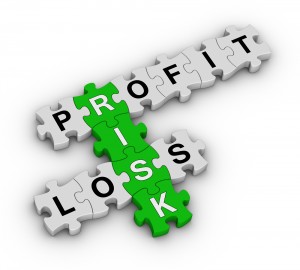 In simple terms FOREX or foreign exchange trading is simply that, trading in foreign currency. You can trade one currency for another. For example, you can trade between the Euro and the dollar or vice versa or between any other currencies. The world is open to you. It is easy to start trading in FOREX, all you basically need is a computer, an internet connection, some basic knowledge about the market and obviously, some money. In the foreign exchange you can trade 24 hours a day, five days a week at any amount. You don’t need to have a lump sum of money to start trading, you just need to have enough to allow you to trade and turn a profit.
Some points to keep in mind when trading
If you are trading in the foreign exchange market and are doing well and want to keep your advantage then there are some points to keep in mind. Always know the market. Study it, so you know what is going on.
Always have a plan in place. Know when to get in to the market and when to step back. Always use your head and your research, never your gut or instinct.
Never invest all your money in one place. Always keep a certain percentage aside for each trade. That way if you incur a loss you wouldn’t have lost everything. Also, if you lose in a certain area then pull out and don’t invest in that again. Move on.
Always trade with the trend and never try and think you can beat the market. The market is always right and you will do well keeping that in mind.
Never try and make a profit in all your trades. Just ensure that you keep a good and positive balance between your winnings and your losses.
Lastly, you might have heard and noticed that all successful traders usually buy when they hear bad news and sell when they hear good news. So why not give it a try? After all it is working for them.
Further advantages
Another advantage of trading in FOREX is that you can enter and leave the market whenever you like. You are not bound by anything. The foreign exchange market is also the most liquid financial market there is and therefore, over three trillion dollars are traded on a daily basis.
Tags:
Cash Flow,
Currency,
economy,
Foreign Exchange,
Forex,
investments,
money
 As with most major expenses, cars will not only have you shelling out on the immediate cost, but will also force you to spend more and more during the time you’re in ownership and so being able to limit expenditure is imperative.
Remember that a car takes a lot of maintenance, as well as the constant need for fuel and the odd top up of oil; but it is the requirements of services and yearly check-ups that can cost into the hundreds and really put a strain on your finances.
There are ways for each stage of car ownership where you can find ways to be able to save money, even when buying the car in the first place, as well as bringing down fuel costs, road tax (if in the UK)and maintenance costs.
- Never ever pay the window price, every car has a target price and you should aim to get a slight percentage off of the price the showroom is suggesting. Look online for the guide price of the car(s).
- Look around to see what you should be getting for your car if part-exchanging. Check ads for cars similar to yours and what they are being valued at, as well as remembering back to what you spent on it when you bought it and whether you have added value over the years with new parts.
- If you’re in the market for a new car, but aren’t worried about the likes of garnishing it with endless optional extras that can rack the price up by a few hundred if not thousand, then ask the dealer whether they have anything new on the forecourt that is a more basic model. This also allows you to get the car earlier, instead of having to wait for it to be built at the factory.
- Try to get a deal that has a few extra benefits thrown in such as free servicing for five years or a years’ worth of free insurance, interest free APR deals are also well worth keeping an eye out for.
- For those after a new fleet car, first of all get looking for a frugal motor that is perhaps diesel-powered as opposed to petrol and then look to get a fuel card to hand from somewhere such as FCSICard.com in order to save on your VAT.
- If you’re a young driver and are considering your options in terms of insurance, try to get your parents or someone with a great deal of driving experience as a named driver which should help bring your premium down.
This is an article from FCSI Card fuel card supplier for fleet drivers in Portugal and around Europe.
Tags:
budgeting,
Car,
financial planning,
money,
Money Saving,
savings



 Thanks to rising costs in general and the need to save a bit more, Christmas has started to get harder to deal with on a financial basis with each new year. Those with big families tend to find it the hardest, but everyone can benefit from a few simple budgetary tips.
 admin •
  1:05 pm •


Recent Comments