July 5, 2012
 If you run a hair or beauty salon, or indeed, any customer facing business, market positioning and a robust business strategy is essential.
Understanding your unique selling point
Good marketing starts with knowing your customer and your competition. Start with your customer in your target market. Think about the services or products you are selling and who you’re selling to. Then look at competitors who are offering similar things to you. Where are they strong and where are they weak? Are their goals clear and how do they attract customers? Is there something that makes them stand out from the rest of the market?
You need to gather as much information about the market and the competitors in it as you can and work hard to understand them. When you have this information, you can start to see how you fit into the wider market and where you can stand out with your competitive edge and ideally a unique selling point that isn’t offered elsewhere in your target market. For example, you might offer a superior customer service that’s accredited to external standards and known by everyone who steps into your salon. Exceptional professionalism, service, friendliness and standards are key to attracting and retaining your customers. A great service strategy can allow you to charge healthy prices rather than targeting the price conscious section of the market that may simply chase the cheapest deals rather than build up repeat custom to a single provider.
Another great differentiator is product, particularly in the health and beauty industry. For example, you might look to offer innovative services such as micro-dermabrasion and bee ‘venom’ facials, or gigi brazilian wax products to tempt in your customers. Innovation in this industry is a vital marketing strategy, as many customers love to try out the latest products and services and keep up to date with trends and developments in the market.
Marketing yourself
Make sure you understand your proposition and positioning before you begin to market yourself, then work with a designer to create a simple brand and logo for your business. This should then be used across your marketing channels, with everything from your business cards, staff uniforms and promotional flyers to signage, car livery and vouchers. Show a consistent brand experience by using the visual identity and language that expresses who you are. An online presence is also a vital marketing tool and getting onto social media can really boost custom. Look at working with a developer to build a simple website that explains your services and offers rapid contact for customers to book. Consider a call back system, if possible, to show that extra service.
Further considerations
As well as spending time and money on your promotions, the full customer experience will be affected by the other decisions such as how effectively you manage your salon operations, purchasing and stock, health and safety, company finances, legal and insurance requirements, staff training and more. It’s worth joining any local business support and networking groups to learn from other business owners. Think about a mentor or a knowledgeable business partner or salon manager if you are new to business ownership. The learning curve is steep, but it’s also fast and extremely rewarding!
Tags:
Business,
Capital,
finance,
financial planning,
Ideas,
investment,
money
July 3, 2012
 Any small business is exposed to a range of risks. An elegant small business shall take the essential acts to alleviate the risk and one important risk administrator is insurance. In several circumstances, there is no requirement your small business requires insurance except you have equipments, workers or it’s a loan condition. However, this is no background not to acquire small business insurance. No any small business is invulnerable to man-made or natural potential liabilities and disasters. Having considered the above mentioned facts the following are the needs for small business insurance.
Business Property Insurance
It is a must to look after your small business’s assets. This type of insurance is an intelligent investment to restrict your liability and is able to cover a range of losses, comprising damage from electrical surges, fires, even misuse by a worker.
Business Disability Insurance
What would occur to your small business if you were physically unable for about one year or acquired eye harm for six months? To the not ready small business possessor, a sickness or misfortune ensuing in disability can be shocking to your business and life. Disability insurance shall substitute your revenue in the occurrence of a sickness or misfortune. Before you say it could never occur to you, think about the hard truths.
According to the source books on issues related with disability management, harsh disabilities have augmented four hundred percent over the past twenty five years from the age of seventeen to forty four. Before the age sixty five, one in seven individuals will turn out to be disabled for 5 years or more than that.
Business Liability Insurance
Evidences show that over seventy eight percent of all U.S. small businesses are organized as sole proprietorship or a partnership. For the largest part of small business proprietors, this type of possession puts your personal liabilities and business at risk. Having small business liability insurance safeguards both your personal life and business from monetary damage.
A widespread misunderstanding of a LLC (Limited Liability Company) or an incorporated company is guarded from personal accountability and liability insurance is not obligatory.
Errors and Omissions Insurance
We exist in a progressively more controversial community. For small businesses specifically, the possibilities of having prosecuted for professional liability are larger than the previous years. Nevertheless, the majority small businesses with the remarkable exclusion of real estate and health care are not conscious of how to create an insurance portfolio, which shall alleviate the risks of such court case.
Preventing your small business from the potential risks is the basis of achievement. Take the essential time to examine your business insurance requirements with an insurance delegate, your industry alliance, and peers. It would be the most vital resolution to the survival your small business.
In general, small business owners should take into consideration that having insurance in relation with the above mentioned cases is the most vital and should be given emphasis similar to the emphasis given for the day to day activities of the organization.
Tags:
Business,
Coverage,
financial planning,
insurance,
money,
savings
July 1, 2012
 Using the term “budgeting” can sometimes be off-putting because people think it’s a way to deprive them of something. Budgeting is actually a way to find out how much money you need for living expenses so that you can control how your pay is used and have something to set aside. Here are a few effective budgeting strategies you can use to meet your financial goals.
Tip #1: Record everything
You may list down your essential expenses like utility bills and insurance payments, but do you also record the smaller ones, like the little purchases at the convenience store or even your vending machine jaunts? Remember, these seemingly trivial expenses do add up, and they can mess up your budget. The trick is to keep all your receipts and write everything down, so that when you work on your budget, it’s accurate, down to the last cent, allowing you to better manage how your hard-earned income is spent.
Tip #2: Select your platform
If your finances are really simple, then maybe a pencil and paper are all you need to plan your expenses. However, if your budget is a bit more involved, you’d need a platform that can make things easier for you. For instance, you can use spreadsheets to map out your budget from scratch or download templates for something more specific.
You can also look for online personal finance services like ClearCheckbook and Money Strands or any other similar websites. Such services have useful budgeting features like generating a spending plan and chequebook balancing.
Tip #3: Spend less than you earn
All your efforts at budgeting would be ineffective if your expenses are larger than your income. What you need to do is spend less than what you earn. Take note that if you use up more than your income, you will accumulate debt. If your income and expenses are pretty much equal, you need to spend less or earn even more. If this is the case, go for spending less it’s much easier than getting a second job. Spending less than your income allows you to accumulate wealth.
Tip #4: Pay yourself first
Think of putting money in savings like a bill to be paid to yourself. Indicate the savings as part of your budget and withdraw it before spending your funds on bills, groceries or any other expenses. See to it that you deposit your savings budget immediately in a separate account so that you won’t mistakenly spend it. If possible, set up a way for your savings to be deducted automatically from your salary. You won’t even realise you’re accumulating wealth.
Tip #5: Reduce entertainment expenses
There’s probably an allotment for “entertainment” in your budget, which could cover expenses like watching a movie, going on dates or even buying video games. Play close attention to these costs because it might cause you to overspend. To reduce entertainment expenses, consider:
- Getting bundled packages for phone, television and internet service.
- Borrowing audio books, movies and even video games from public libraries.
- Visiting free art exhibits or movie festivals for dates.
Tip #6: Prepare your own meals
It’s more expensive to eat out than to prepare your own meals. Consider that having a meal for two people at a mid-priced restaurant would cost around AU$77 to AU$80. Groceries for two people, on the other hand, would cost around AU$150 to AU$200 per week. You can eat at inexpensive restaurant (i.e. fast food) to save on costs, but that’s not good for your health. To save money on food, learn to cook healthy meals. That way, you cut down dining out costs and possible doctor visits.
Tip #7: Overestimate when allotting funds
If you’ve been budgeting for a while, then you probably know that many expenses have variable costs due to fluctuating prices. To prepare your budget for this unpredictability, look over the last year’s worth of receipts/bills and pick the most expensive you ever paid as your guide until an increase is announced. Here’s another tip: When allotting your funds, make sure you don’t use the exact figure. Instead, round off to the higher number, so that you won’t be short on funds.
Tags:
budgeting,
economy,
financial planning,
money,
personal finance,
savings
June 29, 2012
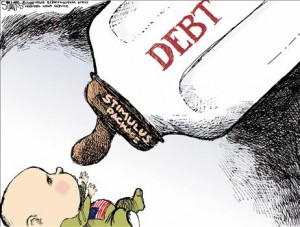 Not so long ago, ‘debt’ would have been a dirty word for many people. The financial crisis in Britain presently has led to people speaking about it candidly. Many will use an IVA to help extricate themselves from debt.
Debt has long been regarded as a taboo subject and people were decidedly reticent to talk about it. The current financial climate, however, has led to record numbers experiencing debt problems of one form or another. As a result of this, it is no longer considered controversial to discuss our debt problems with our friends and family. Debt management can be a particularly difficult due to spiralling living costs but many are beginning to see an IVA (individual voluntary arrangement) as a viable means of tackling financial arrears. Debt management in the UK is becoming increasingly difficult and the Citizen Advice Bureau views the current situation as ‘worrying’. Many in debt will use an individual voluntary arrangement with licensed insolvency practitioners to tackle their debt arrears.
Why are We in Debt?
There are a number of contributory factors to the current financial crisis that grips the nation. From the credit crunch to spiralling living cost, all are having a profound impact upon consumer’s finances and financial experts predict that insolvencies will hit record levels. One of the primary reasons that debt management is proving so tricky for many consumers across the UK is spiralling living costs. Energy bills, cost of food, petrol prices and all sorts of price hikes are hitting consumers in the wallet and those threatened with insolvency or bankruptcy are turning to an individual voluntary arrangement to help them out of their financial hole. Teresa Perchard of the Citizen Advice Bureau stated, “These latest figures paint a worrying picture, suggesting a significant number of households are struggling to meet their most basic living costs.”
IVA – A problem shared
Part of the problem with debt is the loneliness that is associated with it but many are finding that the increasingly accepting attitude surrounding debt is making it easier to get their finances back on track. Many financial experts believe that, when it comes to debt management, an IVA is an excellent means of tackling debt problems head on. An IVA is a legally binding contract between creditors and those in debt and it allows them to pay back their outstanding arrears at a level that is financially feasible for them. Research conducted by Alliance & Leicester found that people are now more likely to talk about debt issues than they are about sport or celebrities.
IVA – Growing debt concerns
The primary reason that people are seemingly more amenable to discussing debt is the fact that money matters and financial concerns are on the mind of the majority of consumers in the UK. Ewan Edwards of Alliance & Leicester states, “Our survey reveals money matters have a firm place at the forefront of people’s minds at the moment.” With insolvency set to reach record levels, many consumers who are swamped in debt are looking for a financial solution to appease their creditors and increasing numbers are opting for an IVA in order to do this.
Tags:
budgeting,
debt,
Debt Consolidation,
economy,
financial planning,
money,
personal finance
June 26, 2012
 No one ever wants to think that something terrible might befall them or their family, or even their car, flat or home, but unfortunately, these things do happen. Many wind up in quite large amounts of debt, or even bankruptcy, simply because something that they were unprepared for happened, be it an illness, a car accident, or even a home repair disaster.
In most cases, insurance will cover the necessary damages, but not always, and that is where the concept of having an emergency fund comes into play. An emergency fund, also called a rainy day fund by some, is basically just as it sounds a stash of money which has been saved and is to be used in the event of an emergency.
Many people stockpile their emergency fund for things like sudden car repairs, say on the way to the office the brakes on your automobile start squeaking, unless you have planned for brake replacements, or have your rainy day fund in place, it could be quite difficult to just reach into the wallet and fork over hundreds of pounds for an unexpected issue. Home repair problems are another big source of uses for any emergency fund, a flooded shower, a termite infestation, a hole in the roof, are all things that can put any sort of emergency fund to use quickly.
And in this volatile economy, building up an emergency fund is an intelligent idea for if another deep market fluctuation occurs and jobs are made redundant, getting sacked, while certainly an unexpected disappointment, might not be quite as terrible if a few months mortgage were sitting in the rainy day fund.
So how to get started, right then, first things first, take a look at your budget and determine just how much funds you will be able to put away. Next, set up an automatic withdrawal from your account, preferably right at the same time you might receive each pay check, then you won’t even know the money was ever there. Set up these withdrawals each month, or even every two weeks. After six months or so of saving, you will be pleasantly surprised to find such a tidy sum sitting in your emergency fund.
The goal of this fund is really to never use it. Do not borrow from the emergency fund to go on holiday, or buy the family Christmas gifts, the funds in that account are only be used in case of an emergency. Once this fund is set up, you will be able to rest easily that if any unexpected crisis were to occur, you would be able to finance it with the money in your emergency fund (or at least partially finance it), and not skip much of a beat in your regular financial life. It is a piece of mind that is relatively painless to set up and get going.
Tags:
Business,
Cash Flow,
economy,
financial planning,
Funds,
money,
real estate



 If you run a hair or beauty salon, or indeed, any customer facing business, market positioning and a robust business strategy is essential.
 admin •
  3:34 am •



Recent Comments