May 3, 2012
 Saving for your retirement can seem like a daunting task for most folks today, but it is something that should be every working person’s goal and ultimate aspiration. Despite the seemingly impossible task of saving up for your own retirement, especially at the last moment, there are little ways that you can consider that can bring you closer to your goal of saving for retirement, without having to work like a mule. Here are a few tips on how to increase your retirement savings:
Downgrade – Simple living is best
Living on the edge of their means is one of the reasons why a lot of individuals find it difficult to save up for retirement. It is quite common now-a-days to find people that are living well beyond their means. People who are in a situation like this are wasting money that could potentially be saved and used for their retirement schemes. Contrary to what people say, living simply is not something to be ashamed about – so if you’re looking for a fast way to save more for your retirement, then consider downgrading your living expenses is one great way to go about it.
Invest
Try investing in businesses or other secure means, this can increase your overall income and is another great way to save up for retirement money quicker. Not all investments promise a good or profitable turn-over in the end, so choose businesses that you want to invest in wisely. Businesses that have a strong long term grow potential are good, so are businesses that cater to the masses have the best chances of providing you with a steady profit.
Pension offers are opportunities
If the company you’re working for offers retirement benefits or saving pools, consider chipping in a little of your income into it. A little goes a long way. Pensions and benefits are also a great means to help out with your retirement savings goals. Availing of healthcare and pensions can add to your savings by cutting down on the need to look for more money. Because these types of benefits can be earned while you’re still in working prime, you can be sure that you’ll have a substantial amount by the time you do decide to call it quits and put your feet up.
Prioritize
If you want to meet a specific amount of money to realize your retirement dreams, then you really have to prioritize for it. Coming up with a viable sum that is more than what you’d expect to spend for the duration of your retirement and beyond, should be the main outline of any savings schemes. It is wise to plan ahead in order to set priorities, but it is also important to set a goal beyond the expected amount that you think would need for a comfortable retirement.
Pooling all of the profits from the above mentioned tips should provide you with enough provender to retire in comfort or at least meet you basic needs, given that you don’t expect anything extremely extravagant or opulent. Investing and not spending beyond your means is the key to a successful savings and retirement plans.
Planning for a retirement needn’t be stressful or difficult. Everything can be planned out and achieved with good old fashioned hard work, determination, and foresight. Utilizing holistic tips like these as part of your overall retirement plan will definitely help to improve your financial situation now, and will also ensure that you will have more savings available for when you are finally ready to retire.
Tags:
budgeting,
Finance for insurance,
financial planning,
money,
Retirement,
Retirement Planning,
savings
April 30, 2012
 Starting out in a new relationship is one of the most exciting things in life. You have stars in your eyes, butterflies in your stomach, and you are so elated that you have found your lifelong soul mate. When you are in this part of the relationship, you think that nothing could ever go wrong, but unfortunately the reality is that there is a strong chance that this may not be the last relationship you will ever have. This is not to say that you should prepare for the worst, but you should definitely protect what you have worked so hard for.
Plan for the Best and Prepare for the Worst
Be an optimist with a pessimist’s plan. If you are going into a relationship with the thought that it will fail, then it probably will. The best course of action is to go into a relationship with the thought that it will succeed, but putting into place the right actions for a just in case can help you as well as your partner. You not only want to protect yourself, but you want to protect them as well. Although it is a tricky subject to cover, if the two of you can work together through it, you can most likely work through anything.
Lay it All Out on the Table
When your relationship gets to the point that it is becoming a partnership, you will need to take some serious action. Whether you are moving in together or even getting married, there are things that you will need to know about each other. In order to accomplish this task, you will need to each lay your finances out for the other to examine. You both should share your credit report, banking information, bills, assets owned, retirement and investment accounts, and anything else that has to do with assets and liabilities. If you have an open and honest relationship, this should not be an issue. By doing this, you will be transparent with each other and you will know how to proceed.
Know the Law
Having an understanding of the laws in your state when it comes to joint property is important when it comes to your relationship. You should know at what point your debts and assets become shared. In most cases this immediately happens upon marriage, so make sure that you have all of the information you need before tying the knot. In some cases there is a certain timeframe where your relationship is considered a legally binding partnership that hold the same responsibilities as a marriage. There are also some states that will allow cohabitation agreements. Make sure that you know what laws apply to you and your relationship before getting too far into it.
Relationships are not started with the plan to fail, otherwise you would have never started the relationship in the first place. Not only that, you wouldn’t hand all of your assets over to someone without first knowing what they are going to do with it and probably not without some sort of protection for you if things go wrong, so don’t do it in your relationship. Get to know all about your partner, including their financial status, so that you know the kind of road you are headed down.
Tags:
Assets,
financial planning,
Law,
money,
Personal Assets
April 29, 2012
 Going on a summer vacation is a tradition in America, but it seems that most tourist destinations use this fact as an excuse to hike up prices. Fortunately, there are ways to save money on travel during the summer and still have a great vacation.
Flying is practically essential if you plan on leaving your immediate area. If you need to save money air fare, try a few of these tips.
Flying Tips
1. Plan to fly on Tuesday, Wednesday, or Saturday. Since many business travelers try to avoid these days, airlines offer discounted travel on these days.
2. Be sure to start checking air fare prices early. If you aim to book your air fare thirty to ninety days from when you and your family want to fly, you’ll be in the zone to get the lowest prices. Historically, airlines offer higher fares in the time frame before ninety days out to leave room so that they can adjust for higher fuel costs if needed. Within thirty days of travel, demand for seats is higher, causing the airline to charge more.
3. Try to fly from a major hub. In general, major international hubs like Los Angeles and Chicago offer airfares that are usually cheaper than flying from your local airport.
4. Watch out for last minute deals. Last minute deals on airfare are offered by nearly all of the major carriers, and if you live near a major hub they could save you a lot of money. For example, airlines will typically sell their last seat or two on flights to other major hubs for a fairly significant discount.The airlines assume that they would rather make some money by selling the seat rather than let it go empty. These deals are usually only offered on one or two seats at a time, so you will have to keep your travel party small to take advantage of them.
5. Be willing to stay overnight at a strange airport. In order to completely fill their planes, airlines offer great deals on “split” or overnight flights. These flights will require you to take the very last flight at night to an airport, stay the night, then leave on the first flight of the morning.
Driving Tips
Depending on the car you drive (and the gas mileage), it might be a good idea to get a rental car. Make sure your car insurance covers car rentals before leaving the lot.
1. Use cell phone apps to find cheap gas. Gas stations that are located near the highway typically charge more than those located off the highway. Have kids figure out if driving a little further will be worth the savings.
2. Use cruise control. Most modern vehicles will be able to use fuel more efficiently in this mode. Also, setting the car speed to the speed limit will reduce your likelihood of getting a ticket.
3. Pack lightly. Every extra one hundred pounds of stuff in your car can reduce your fuel efficiency by as much as one percent. Try to avoid carrying a lot of extra gear.
Lodging can be a major expense on any vacation. Follow these tips to save on hotels.
Lodging Tips
1. Consider options outside of hotels. Staying with friends and camping out are two great ways to avoid having to pay for hotels. Many campsites today come with amenities such as swimming pools and upscale bathrooms, making camping fun for everyone in a family. Other options can include renting a house or condo. While not as cheap as camping, these kind of places can be much more affordable than renting multiple rooms when traveling with a large group.
2. Travel during the week. Weekend rates for hotels are usually the highest. Try to plan your travel during the week to get better rates.
3. Look for discount codes and coupons. Booking online can save money, especially if you have a coupon code for the hotel chain or the booking website. Just type in the hotel name and “coupons code” into a search engine to find discounts.
The summer is a great time to go on vacation, and many people still have memories of the great family trips they took as kids. Don’t be afraid to ask for discounts and look for deals at every place you plan to travel this summer.
Author Bio: Danielle Parker is a freelance writer and a very picky consumer. Whatever she purchases, she only wants the best. Even when purchasing car insurance, she is only interested in the top rated car insurance companies.
Tags:
financial planning,
money,
personal finance,
Saving tips,
savings
April 27, 2012
 The world is an unpredictable place and even the most careful person can happen upon unforeseen events that can turn their existence upside down. That is why it is increasingly important for homeowners to purchase home insurance and for anyone with a family to look after to consider purchasing life insurance.
Taking out these two policies will provide peace of mind and more importantly, will make things so much easier to deal with in case of an unexpected, unfortunate incident.
Home insurance
Home insurance policies — which can also be known as hazard insurance or homeowners insurance — are property insurance that cover private residences. These policies typically cover the physical structure of the house as well as personal belongings inside the house, and liability. Since all of this is covered under one policy, the homeowner pays just a single premium. Home insurance and life insurance policies have some similar history.
Home insurance is a relatively new type of insurance in the United States, where the first official policy was available in 1950 — shortly after World War II and the subsequent boom in middle class home ownership. Home insurance was available in Great Britain before that year, and was available in other forms in parts of the United States, but it was not known as home insurance and did not do quite the same thing.
Life insurance
While home and life insurance both give peace of mind, life insurance has been providing that relief for far longer, as it has been available in varying forms for centuries. Life insurance is currently available in two forms: term — or temporary — insurance, and permanent insurance. There are also policies available that cover just accidental death and do not cover such things as suicide or health problems, and are typically sold for a much lower premium because of this fact.
Why choose insurance?
Any homeowner who does not get home insurance is playing a very risky game — one where the consequence for losing can be the loss of hundreds of thousands of dollars. Anyone who owns a home should have a home insurance policy. Life insurance is a bit more tricky, but it still makes sense to have some sort of policy so that in case of death, loved ones are taken care of and the cost of a funeral is covered.
Both of these policies provide something priceless: the ability to go to sleep at night with less worries and more security.
Tags:
financial planning,
Home Insurance,
insurance,
Insurance Advice,
money,
personal finance,
Policy
April 24, 2012
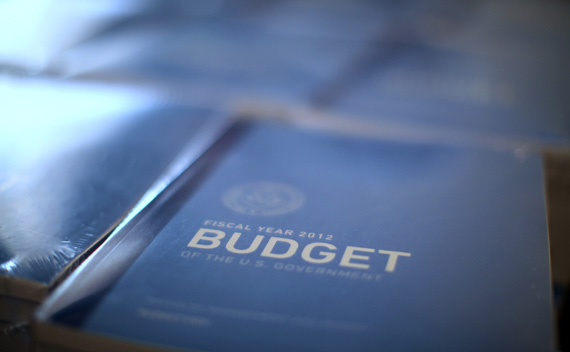
 The Budget is rarely an occasion for celebration, and Chancellor George Osborne’s announcement that plans to increase fuel duties by 3p per litre would not be dropped has been met with negative reception from many British motorists, who feel they are already being charged too much for fuel.
These new fuel duties will go into effect from August 2012, and a number of motoring groups have voiced their criticism of the initiative, which will cause cash-strapped motorists to be even more out of pocket. With the price of unleaded petrol rising above £1.40 in many parts of the UK, motorists will be paying more than ever before at the petrol pump.
Osborne has defended his decision by pointing to his previous scrapping of the fuel tax escalator in the March 2011 budget, which he explained would have made fuel 6p more expensive at present, if still in effect. This has reportedly saved motorists a total of £4.5 billion according to the Guardian newspaper, but many people feel more could have been done to combat the rising cost of motor fuel.
It’s not only fuel prices that were affected by the recent budget either, with the CO2 emissions threshold for company cars also being reduced from 160g per km to 130g from April 2013, which will penalise employees driving less fuel-efficient vehicles and medium-sized cars in general. However, diesel drivers may benefit from the change, with the dropping of the 3% diesel tax supplement from 2016.
If you’re concerned about the impact of the Budget on your day-to-day driving, switching to a more fuel efficient vehicle could be the most effective way to shield yourself from rising fuel prices, although this is not an economical option for everyone. Finding out how your driving habits could be consuming more fuel than necessary can also be very useful for helping a full tank last longer, such as avoiding stop-start driving or taking alternative routes to avoid traffic congestion.
Now is the ideal time to make these changes to your driving habits, with fuel price increases showing no signs of slowing down. Over the last two years, the monthly fuel bill for a family with two petrol cars has reportedly risen over the last year, and unleaded petrol is expected to have hit £1.50 by the time the new fuel duties are in effect in August. Comparing car insurance to find the best deals and buying used parts for repairs could help you save money in other aspects of car ownership.
Tags:
Budget,
budgeting,
Car,
economy,
money,
personal finance



 Saving for your retirement can seem like a daunting task for most folks today, but it is something that should be every working person’s goal and ultimate aspiration. Despite the seemingly impossible task of saving up for your own retirement, especially at the last moment, there are little ways that you can consider that can bring you closer to your goal of saving for retirement, without having to work like a mule. Here are a few tips on how to increase your retirement savings:
 admin •
  11:01 am •


Recent Comments