January 1, 2017
 Most families have accumulated a significant amount of debt due to auto loans or credit cards that have been used over the years. Acquiring debt can make it easy to feel limited with your finances, which can make it difficult to make ends meet. To become debt-free and obtain financial freedom, there are a few important steps to take.
1. Create a Budget
Creating a budget will allow you to determine how much money you can afford to put towards your debt each month. Calculate your household income and write down your expenses, which will allow you to get an idea of how much debt you will pay off with each paycheck.
2. Establish Goals
Establishing goals to pay off your debt in a specific time frame will make it easier to stay on track and avoid losing focus with paying off the debt in full.
3. Cut Coupons
You can save more money each month to put towards your debt by cutting coupons in the newspaper for food and household items that you already purchase. Combine manufacturer coupons and store coupons to double your savings.
4. Pay Off Lowest Balances First
Paying off the accounts that have the lowest balance first, which will allow you to stay motivated and will reduce the amount of money that you pay in interest each month. There are some credit repair companies that can help you consolidate and repay your loans.
5. Avoid Eating Out
Reduce the money that you spend each month by making your meals at home and avoid dining out when you’re on the go. Prepare meals and have easy snacks on hand to take to work and stay within your food budget.
6. Shop at Secondhand Stores
Shopping for clothing or goods at secondhand stores can allow you to avoid paying full price for products that your family may need when it comes to purchasing school clothes or work attire.
7. Use the Envelope System
Convert your paycheck into cash and transfer it into different envelopes to avoid overspending and track how much you have left to spend. This will allow you to become more conscious of how much money you spend without relying on a credit or debit card.
Although it can be challenging to pay off debt as a family, there are several lifestyle changes that can be made to make progress with the money that you owe. By establishing rules with your finances and making goals, you can track the money that you pay off to ensure that you obtain freedom in a realistic time frame.
Tags:
budgeting,
credit,
debt,
financial planning,
loans,
money
December 16, 2016
 The National Pension System (NPS), introduced by the Indian government in the year 2004 is mandatory for all government employees except the armed forces personnel.This scheme was extended to the private sector in 2009. It is a portable retirement savings account, which can be efficiently used to provide financial security to senior’s through a pension income.
This scheme offers benefits such as tax deduction of INR 1.5 lacs under section 80CCD (1) of the Income Tax Act (IT). An additional tax deduction of up to INR 50,000 under section 80CCD (1B) of the IT Act is also available. Subscribers also have the flexibility of choosing asset allocation between equity, fixed income instruments, and government securities.
NPS is known as a defined contribution scheme because returns under this scheme are market driven. The NPS interest rate changes based on the performance of the market and the asset allocation chosen by the subscribers.
Asset allocation under NPS
Funds invested in NPS can be invested into 3 types of assets namely equity, corporate bonds, and government securities. There are two investment options available under this plan;auto choice and active choice.
Under auto choice, funds are automatically allocated in a pre-determined proportion based on the age of the subscriber. For example for subscribers under the age of 35 years, funds are allocated as follows: 50% in equity and balance amongst corporate bonds and government securities. As the subscribers age, the exposure to equity is reduced and investment in government securities increase.
Under the active choice option, subscribers may choose the asset allocation as per their preferences. The NPS scheme allows subscribers to allot upto 50% of their contributions to equity. Subscribers may use this option to their advantage to maximize the potential returns. For instance, an Investor approaching retirement age (between 45 to 50 years) may opt for a conservative allocation by investing a substantial portion of his funds in government securities.
Maturity and Annuities
The primary objective of NPS is to create a corpus that is used to buy an annuity plan for regular income during the post-retirement years. At the age of 60, the subscriber may with draw a maximum of 60% of the funds as a lump sum. The remaining corpus is used to purchase an annuity that will provide regular income to the subscriber.
Subscribers may choose not to withdraw any funds and use 100% of the corpus to buy an annuity. However, if the corpus at the time of exit from NPS at the age of 60 years is less than 2 lacs, the subscribers may withdraw the entire amount in lump sum. To determine the potential income, individuals may use an online pension plan calculator.
Joining NPS
In order to join the NPS scheme, the subscribers must submit the NPS application form, along with Know Your Customer documents to a Point of Presence (POP). Upon submitting the documents, the subscribers are issued with a Permanent Retirement Account Number (PRAN), T-Pin and I-Pin. Subscribers are informed of their PRAN application status via email and SMS. They may also know their application status by contacting the issuing bank. However, the subscribers may get in touch with the Central Record Keeping Agency (CRA) which manages the issuance of PRAN, in case the PRAN card is not received.
NPS is focused on offering financial security to the individuals after their retirement. The flexibility available for investors to allocate their contributions in different asset classes allows them to maximize the returns and accumulate a higher post-retirement income.
Tags:
Assets,
Business,
economy,
financial planning,
Financial Retirement,
investments,
money,
Pension,
Property
November 26, 2016
 Low credit ratings often increase the interest rates on various financial products, such as home loans or credit cards. Borrowers with higher credit scores are able to save significant amounts on their loans when compared to individuals with lower credit scores.There are several ways that help people to improve their credit scores given by credit rating agencies like Credit Information Bureau (India) Limited (CIBIL). The agencies do not treat all types of debts in the same way while calculating the credit score. The ratings are affected negatively if the outstanding balance on the card increases.
Here are five ways that help improve credit scores.
1. Lower the Credit Card Balance
The best way to improve credit rating is to lower the outstanding balance on the card. The rating agencies make a downward revision to the score if the credit utilization ratio exceeds a certain percentage. This ratio is the amount used by the cardholders as a percent of the overall credit limit. Reducing card balance may seem to be a difficult task but is achievable with the help of discipline. Users must adhere to stringent limits to reduce the balance and improve the credit score. If possible, individuals may ask the issuing company to increase the limit on their cards. This may also help improve the credit score provided the users do not increase their spending because of the higher limit.
2. Convert Card Debt to Personal Loan
With some diligent planning, card users may be able to improve their credit ratings even before paying off the debt. They are advised to consider converting the card debt to a personal loan. Higher outstanding balance on card reduces the credit score much more than personal loans. Loans with fixed installments are not considered by the agencies while calculating the credit ratings. Therefore, availing a personal loan instead of maintaining a high balance on the credit card is advisable. In addition, to improve credit score, such conversion is beneficial in reducing the cash outflows. The interest rates on personal loans are often lower than the card interest rates. It is important that the cardholders discontinue the use of their credit cards after such conversion to ensure the ratings are not affected.
3. Selective Accelerated Debt Payments
Repaying loans in a timely manner has several benefits. However, individuals who want to improve their credit scores must consider postponing such pre-payments. The money should instead be used to pay off the card outstanding because this kind of debt affects the scores more than loans.
4. Keep Regular Checks on Credit Report
Research shows that a significant percent of individuals have errors on their credit reports. It is possible that errors have severe results on the credit scores. This further impacts their borrowing capability and rate of interest that is levied on their loans. It is recommended that borrowers check their credit report prior to applying for any kind of loan. If any errors are found, they must immediately contact the rating agency and seek rectifications. This would help improve their credit score and enable them to borrow at a lower rate of interest.
5. Make Timely Repayments
Credit scores are significantly affected due to delayed payments. Lenders report delays to the agencies after 30 days from the payment due date. Such late payment reports are reflected in the credit score for many years, which impacts the individuals negatively. To avoid this, making timely payments is recommended.
Unfortunately, several people in India are not aware of the importance of good credit ratings. They fail to understand that even a slight improvement in their credit score may help them save huge amounts and get a lower interest rate on their borrowings.
Tags:
budgeting,
credit,
Debts,
economy,
loans,
money,
personal finance
October 31, 2016
 Private lending companies will provide the facility of merging several loans into one and charge a lower monthly interest rate than the prevailing one. But it should always be carefully noted that federal loans provide better interest rate than the private ones and hence these two should be kept separate. Detailed information has been provided below regarding the advantages of consolidation and refinancing of student loan to have a better view of the two.
Advantages of Federal Student Loan Consolidation
Getting hold of an experienced and knowledgeable company equipped with a streamlined online application process provides its borrowers with an opportunity to save well before the subsequent loan amount is up for due. The hassles of searching for a reputed company has been solved by online service providers like financial hot seat who after comparing among several possible alternatives provides a list of the top six companies who have a good reputation in the market regarding student loan consolidation and refinancing. Unlike the traditional ways of borrowing money, the student loan consolidation facility provided via internet substantially reduces the loan amount to be repaid at the end of the term by keeping a check on the rate of borrowing. This is a big help for students who are the budding face of an economy and has been newly introduced in the job market.
Advantages of refinancing
There are several benefits of consolidating or refinancing a student loan, be it private or federal, which each and every borrower must know in order to derive the maximum possible benefit from its use. The advantages are briefed as under:
Convenience – Students who opt for loan refinancing needs to make only a single payment every month instead of multiple payments since refinancing combines all the existing loans of the borrower into a single loan amount.
Market fluctuations – The rate of interest prevailing in the market is quite volatile and is prone to frequent changes every year. Borrowers who have been paying higher interest on their existing loan have the opportunity to take advantage of any fall in the rate of borrowing which was not available at the time of initial borrowing.
Greater cash flow – Refinancing a number of loans into a single one will require lesser payment per month than each one being paid separately. This will indirectly lead to more cash to spend at the end of the month thereby ensuring improved cash flow.
Better credit history – Making a timely payment for a single loan is easier than individual payments being made. This creates a higher chance to improve the credit worthiness of the borrower increasing his chances to obtain more loans from the market easily.
Improved savings – The last but not the least is the advantage of saving a substantial amount of money when it comes to loan consolidation and refinancing.
A more detailed information about the beneficial effects of refinancing can be gathered from the internet and reliable sites like the financial hot seat to explore and experience its benefits in case the situation demands for exercising such facility.
Tags:
Debts,
economy,
financial planning,
Interest Rates,
loans,
money,
personal finance
October 19, 2016
 Budgeting doesn’t need to be hard. It can be as simple as you want to make it. However, there are a few things that you can do to make sure you have a positive experience with your budget. Here are four tips to make sure you have a great experience and start to feel the “magic” of budgeting.
Tip #1 – Write it Down
Budgets can come in many shapes and sizes. They can be created for individuals, families, and households. You can even create them to help you find the funds to go on a service mission, have a wedding, or have another specific event. The biggest issue, however, is not that people don’t want to do a budget…it’s that they never write it down. Writing it down brings a level of commitment. Putting it out on paper or a spreadsheet, or even using an app of software allows you to see it and commit to it. So take a second and write your budget down, if you haven’t already!
Tip #2 – Create a Savings Plan
Along with a budget, consider having a separate document that goes along with your budget that will work hand in hand. That document is a savings plan. Creating a specific savings plan will enable you to keep your mind on the long game… that is saving for the future and for future emergencies. It doesn’t need to be hard. Just specify how much you want to save and then make specific, action goals so that you can make sure and accomplish what you are striving for.
Tip #3 – Make Goals
Speaking of goals…while you are writing down your budget and savings plan, make sure that you make S.M.A.R.T. goals. Specific, Measurable, Attainable, Relevant, and Time oriented. Setting goals allows you to look into the future and make plans. It will also become a benchmark and allow you to feel successful when you hit those goals. Look at the next six months or a year and make some goals and then do everything that you can to strive to hit them!
Tip #4 – Keep the Long Term in Mind
We all have times when we have an emergency or situation in which we need to spend money to survive. Whether it’s medical bills, or the car breaks down, we all have times when this happens. Don’t let it bother you. Pay what you need to pay, and then get back up and keep striving to hit your goals. If you can keep the long term in mind, then you will forever be able to accomplish your goals (even if it takes a bit longer than you thought).
If you can keep these four tips in mind, then you will have a positive budgeting experience. Put it out on paper, create a savings plan that compliments your budget, and make specific goals to help you get where you want to go. If something happens in the middle of your plans, keep the long term in mind. Following these four tips will increase your level of financial confidence and ultimately help you find financial peace in the months and years to come.
Tags:
budgeting,
Earnings,
financial planning,
investments,
money,
personal finance,
savings



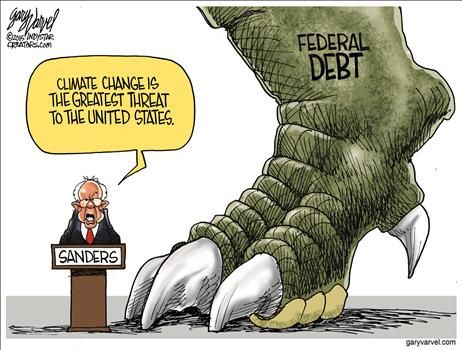 Most families have accumulated a significant amount of debt due to auto loans or credit cards that have been used over the years. Acquiring debt can make it easy to feel limited with your finances, which can make it difficult to make ends meet. To become debt-free and obtain financial freedom, there are a few important steps to take.
 admin •
  4:52 pm •




Recent Comments