December 16, 2014

Image Source: http://www.ft.com/cms/s/0/14460750-4835-11e3-a3ef-00144feabdc0.html
With the world leaning significantly towards all things tech, technology companies are seeing rapid growth by the minute. In 2013, the US witnessed bulk IPOs from the tech industry, a marked improvement since the temporary dip during the 2009-2010 recession.
Much has been written about who came out as clear winners amongst tech IPOs. But, if you pay less attention to the success stories of individual companies and take a step back, you’ll see how tech companies are taking over the bigger picture.
Out of the 222 companies that went public in 2013, 45 were tech companies.

That said, let’s take a look at why diverting your attention to tech IPOs can prove to be a good idea:
Tech Companies Are Storming The IPO Market
2015 Tech IPO Candidates
| Name |
Funding |
Last Round Date
|
| Uber |
$2.71b |
Dec-14
|
| Cloudera |
$1.20b |
Sep-14
|
| Dropbox |
$1.11b |
Apr-14
|
| Airbnb |
$801.44m |
Apr-14
|
| Box Inc. |
$564.06m |
Jul-14
|
| AppNexus |
$310.50m |
Sep-14
|
| Good Technology |
$291.30m |
Sep-14
|
After Alibaba filed to go public in September 2014, the IPO market saw the technology industry chasing new horizons. The market is now bustling with news from a number of tech enterprises who are positive to go public soon. With leading companies like Palantir, Dropbox, Spotify, Cloudera, Good Technology, Airbnb, and Deem looking to go public in 2015, the technology industry will soon be making waves in the IPO market.
Tech IPOs Are The New Black

The growing need for cloud computing, database management, and software is helping companies build a strong client base. This, coupled with a fast-growing Internet, is sending technology concerns down the IPO road, expanding the market significantly. Add that to the growing dependency of other industries on the technology sector, and you have an exponential growth forecast for tech ventures.
A List Of Startups In The Top IPO List
A number of startups across the US and the rest of the world are rapidly climbing the industry ladder. Companies like Airbnb, Snapchat, and Square are slowly shedding their private skins and taking daring risks by entering the stock market. This can be beneficial to you, because these startups are valued at an average of $5 billion and tend to offer stocks at a relatively low rate.
Successful Tech IPOs In The Past
With Alibaba named the biggest initial public offering in the history of IPOs, the stock market has been showing a favorable inclination towards the tech industry. But, the Chinese e-commerce giant was not the only tech company to launch a grand opening.
Zendesk, a customer service software company, witnessed a swift shift from its initial share price of $9 to $20-$25 in no time. The IPO success story of Twitter is another that has been brewing a new wave of tech IPOs around the world. While all tech companies might not make history, it is pretty evident that tech giants like Alibaba, Twitter, and Facebook have set the ball in motion for technology-based enterprises. The success of these tech giants in the past is a clear indicator why you should pay more attention to existing and upcoming tech IPOs.
If you aren’t convinced yet, consider this tidbit – if you had invested $1000 in the initial public offerings of Amazon, Ebay, Yahoo, Google, Linkedin, and Facebook, this is what you would have made by 2013.

Image Source – http://www.statista.com/chart/1602/internet-ipos/
Don’t miss out on making big bucks on potentially successful tech companies again. Pay close attention to the tech IPOs that are lined up in the near future, analyze the company’s growth, financials, and market strategy. And as always, invest wisely.
Tags:
Business,
economy,
financial planning,
Financial Statistics,
investments,
money,
Profit,
stock
November 19, 2014
 Self-employed workers may be extremely focused and have an entrepreneurial spirit that will lead to business success but they are also notorious for being disorganized when it comes to paperwork. It really is not possible to be an excellent businessperson and an office administrator. Unfortunately, administration is the backbone of every business and it absolutely must be carried out on time and accurately for a business to maximize its profits.
Many self-employed workers or contractors actually find the financial side of their business intimidating and confusing. There are so many ways to set up a company and manage its finances, and many rules concerning the filing of company accounts and record-keeping.
A small business whose financial side is not managed correctly may find that it loses money and this can hit profit margins hard. Sometimes money is lost simply because a business forgets to invoice for work carried out, or because it undercharges. Suppliers and subcontractors will rarely chase up a late invoice.
Ask any accountant and they will tell stories about entrepreneurs who have months of receipts and invoices piled on their desk, check payments with no details of what the payment was for and receipts of funds into their bank accounts with no note of why they were paid. Couple this with the need to file tax returns correctly and on time and the result is an extremely chaotic office that acts as an anchor weighing down the whole business.
Taxation is one of the most complex areas for any size of business and keeping accurate records of all set-up and ongoing costs is vital to allow you to submit an accurate tax return after your first year of trading. Poorly-managed accounts often result in paying more tax than you should – you cannot claim expenses if you lose your paperwork.
Many employee benefits are tax-deductible such as life insurance and pensions. In fact, all HSA contributions are tax-deductible. Self-employed workers can also deduct from their tax bill the cost of disability and dental insurance premiums along with legal and liability cover. Few self-employed workers manage to claim all these expenses correctly.
Efficient business finance management requires both time and excellent organizational skills. There are several areas of financial administration where self-employed workers repeatedly fail, such as chasing invoices, pricing services and keeping up with tax matters. It’s especially easy to fall behind and get into debt when taking part in an MLM. Check out mlm scam reports to see how you could be in danger of losing lots of money if you aren’t careful.
Fortunately, there are many accountants that offer specific tax advice for contractors and some provide business administration as well as accountancy services. These are called umbrella companies and they provide a way for contractors and self-employed workers to receive help from qualified accountants with the financial and tax aspects of running their business.
An umbrella company essentially acts as an operating company for an entrepreneur, contractor or small business. The umbrella company manages all business finances from daily accounting and administration tasks through to the filing of annual accounts and management reports. The umbrella company manages all the accounts and pays you a salary so that you can focus on what you do best – running a great business.
Tags:
Cash Flow,
economy,
Freelancing,
money,
personal finance,
tax
October 28, 2014
 Personal investments can take many forms. Depending on the income of the investor, his appetite for risk, the expenses that he is responsible for and the rate of return that he expects, his investment portfolio will contain different instruments of financial saving. In general some common investment opportunities include real estate, shares and bonds, gold in physical form or tradable bonds, and mutual funds with a systematic investment plan or SIP. Of late people have begun venturing in to the field of commodity trading as a retail investment as well.
What does Commodity Trading involve?
Commodities in the field of Commodity Trading refer to food, energy or metal products which are an important aspect of industrial production. These key commodities are important for development and thus people invest in them using different options. The first is a Futures Contract wherein an investor agrees to buy or sell a specific commodity at a given price in the future at an agreed date. Futures contracts can be drawn up for commodities such as crude oil, natural gas, gold, silver, and even agricultural produce such as wheat, corn and rice.
The trouble with a Futures Contract is that it is very high risk and also rather expensive for a single retail investor. This is where commodity trading companies can help. As a retail investor you open up an account with a commodity pool operator and this person or partnership invests the money collected from individual investors in futures contracts and options. They keep you updated with account statements and annual reports. You ride out the contract with the partnership and split the profits or losses as generated.
Other Instruments to Invest in Commodities
While some investors are happy allowing an expert to handle their daily buying and selling, others wish for a more hands on approach. In this case stock options are a good investment plan. Commodity stocks are easier to buy than futures contracts. They also employ the broker pattern, so if you are already using a broker for company stocks, you will find it easier to add on a broker for commodity stocks. You can also hold on to them or sell them at will based on what changes you see in the market as you track them. Needless to say this option offers you greater control over your investment.
If monitoring commodity stocks on a daily basis is an activity that you would rather not do, you can consider investing in Commodity Exchange Traded Funds. These track the price of a single commodity and use an index of futures contracts. So while you are not directly investing in a futures contract you can still get the benefits associated with investing in one. Not all commodities have Exchange Traded Funds associated with them, so your investment options in commodities via this instrument will be somewhat limited.
You can also invest in mutual funds as an indirect means of commodity trading by investing in a mutual fund that invests in the stocks of companies that are involved in commodity trading. This will allow you to be recipient of the trickledown effect in the profits generated and will also guard you against sharp losses. All in all commodity trading is an investment worth considering in your portfolio.
Tags:
Cash Flow,
Currency Converter,
economy,
Foreign Exchange,
Investmentrs,
money,
Trading
July 29, 2014
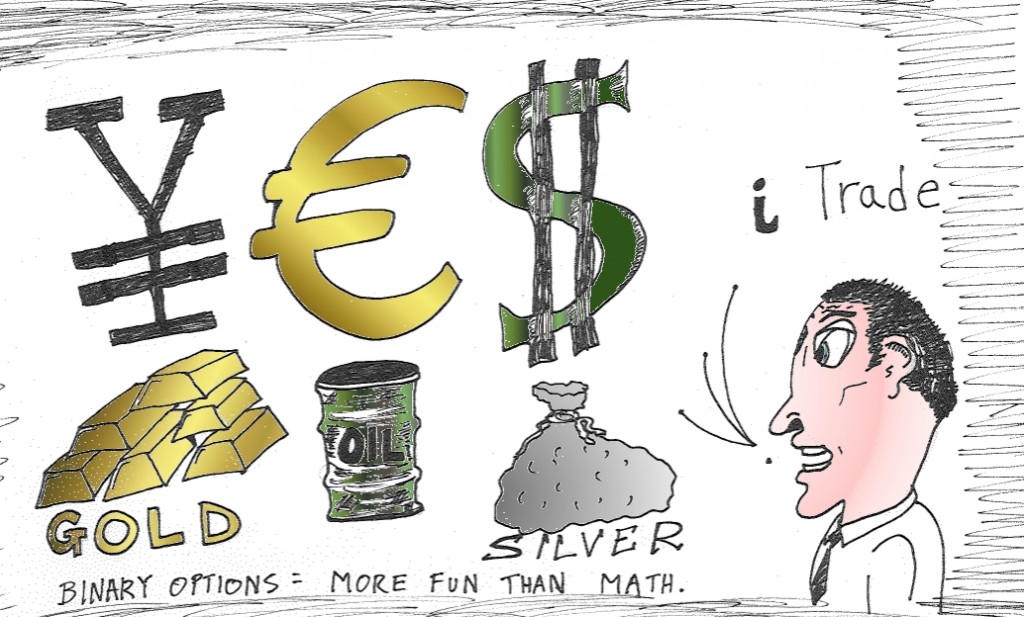
 When we talk about performance and trust in the binary options industry, EZ Trader is one of the brokers who has won many traders over the years from all over the world.
Being one of the first binary options platform (they have their own trading platform which saves you time by avoiding the intermediary companies and offers unique trading systems), since 2008, EZ Trader holds the WGM (Win Global Markets), Services Ltd. of the year 2011, with the headquarters at Nicosia (Cyprus).
Amongst the advantages the company offers I can mention the fact that you don’t have to download any software on your computer, the EZ Trader platform is fully web-based, easy to use (alongside with the HELP and FAQ domains) and very user friendly.
If you activate an account at their platform you will benefit from free online consulting (it is very important that you can communicate with them with ease and they offer that in more than one language), you can contact them with ease through e-mail or by calling the international numbers available at their platform (7 in total at this moment).
Traders can benefit from mobile apps too, the user can use this app on iOS or Android, the app is called EZ Mobile. All you have to do is work with passion, inform yourself, always pay attention and you will succeed and multiply your income using one of the best platforms.
In this EZ Trader review you will also see the assets they offer and these are as follow: 58 stocks, 10 currencies, 19 indices and 4 commodities, overall you can benefit from 91 assets (at the beginning they had 44 assets but since 2011 they have almost double that number); these assets are composed from: indices, stocks, commodities and Forex.
Besides the doubling of the asset number available at EZ Trader they have improved the Lock-Out Period, Expiry Times and they offer more flexibility to your options, making your trades much easier to realise.
In this domain you must be very well informed and EZ Trader will help you find with ease every bit of news you might need to make the best trades for you.
Before every transaction you must read a lot, you must understand the process completely, you must know the terms, you must always create a strategy and then try your luck.
EZ Trader is ideal not only for traders that have already gathered a stock of knowledge about binary options, offering them safety and simplicity but also for the beginners, offering them information and substantial bonuses.
Even if at the first sight this platform used to give the binary options business more of a gamble look they have evolved a lot along the years and now they are a trustworthy binary options broker (being controlled by the CySec: Cyprus Securities and Exchange Commission can only confirm that they are serious).
You can read a full EZ Trader Review and find that there are bonuses which are offered to the traders without commissions draws in more every day and they are helped through free online consulting (24 hours a day, 7 days a week) and through the loyalty bonuses.
Some traders consider that true binary options brokers should offer good software and analysis tools and as much information about the assets as possible. The same traders consider that EZ Trader is focused too much on huge bonuses and low charging fees and for this reason the company may resemble a gambling casino.
The bonuses offered by EZ Trader are: for a minimum deposit of 500 you get a bonus of 250 and the wager is 25 times the received bonus (and the period of time in which you must obtain this volume are 90 days).
Considering the different assets and time frames they offer up to 95% return, all you have to do is pay attention and profit from their offers. Withdrawal time usually ranges somewhere between 5 and 7 days, you must be patient until you get your first winnings.
As you use EZ Trader’s platform you will learn more about binary options, invest wisely and enjoy the online experience offered by every transaction.
Tags:
Binary Options,
Business,
Currency,
economy,
Foreign Exchange,
Forex,
income,
money,
Stock Exchange,
Trading
July 28, 2014
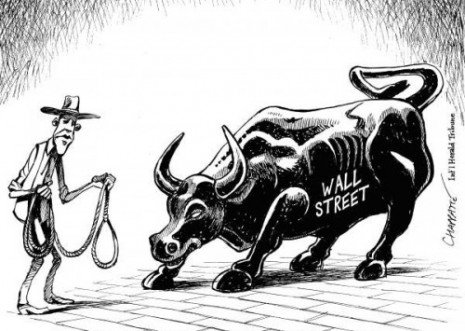
 If you’re a movie buff and coincidentally enjoy watching the markets as well, it’s likely you’ve seen the movie Wall Street. The villain, Gordon Gekko, is a fictional stock broker who, while being exceptionally greedy, had a knack for managing investments. Albeit fictional, he became a huge symbol for all the negative aspects of a stock broker.
Australian Prime Minister, Kevin Rudd, even labeled the perpetrators of the 2008 financial crisis as “Children of Gordon Gekko”. The character is said to be loosely based on a collection of stock broker personalities including Michael Robert Milken who was indicted for racketeering and securities fraud back in the late 80s.
Obviously, this is not how the majority of stock brokers behave, so don’t let this movie skew your perception of the career. Rather, learn the true nature of the profession and gain insights from some of the most successful brokers and hedge fund managers who intend on building positive legacies for themselves. Here are four notable individuals who fit that description:
Chris Gardner
Well known for the movie “The Pursuit of Happyness”, Chris Gardner worked hard at Dean Witter Reynolds as an unpaid intern while homeless and caring for his only son in 1981. They would sleep in bathrooms and church shelters and he would be the first one in and last one out of the office aggressively calling potential clients. He eventually was able to pass the licensing exam necessary to becoming a stock broker. He later left Dean Witter Reynolds to work for Bear Stearns and became one of the top earners of the company. He now owns his own company Gardner Rich & Co LLC and has a net worth of about $60 million.
Ray Dalio
Born in Queens, New York, when he was 12 he bought $300 worth of shares in Northeast Airlines and ended up tripling his investment after the company merged. He earned his BA from Long Island University and his MBA from Harvard. Ray began his career in finance investing in commodity futures on the New York Stock Exchange. He also worked as a futures trader and a broker at Shearson Hayden Stone. He now has a net worth of about $12.5 billion and runs the largest hedge fund firm, Bridgewater Associates. You can find an informative animated video titled “How The Economic Machine Works” on YouTube where he shares his extensive experience of the investment world.
David Tepper
He has been listed by Forbes Magazine as one of the 25 Highest-Earning hedge fund managers in 2013 and earned a whopping 61% return focusing on distressed bonds in 2001. He began his career in finance in the treasury department of Republic Steel in Ohio and later became a credit analyst at Goldman Sachs. The hedge fund firm he leads is Appaloosa Management and has earn substantial returns over the course of its history. In 2012, the firm earned a 30% return because of pinpoint exchanges on certain securities. He has a net worth of about $7 billion and engages in various philanthropic activities mainly in education and hunger. In 2003, he made a considerable $55,000,000 donation to Carnegie Mellon University’s business school. He’s leaving quite a legacy.
Bruce Kovner
This hedge fund manager has been around the block a few times, literally. He became a taxi cab driver at age 31 after quitting his Harvard PhD studies because of writers block. It was then when he decided to engage in derivatives by investing $3,000 from his MasterCard into soybean futures contracts. He didn’t accurately assess the risk of the investment when it grew to $45,000 because he waited till the price dropped to $23,000 before selling. He cites that experience as an important lesson in risk management. He eventually became a trader at Commodities Corporation which is now connected to Goldman Sachs. Currently he’s the chairman of Juilliard where he learned how to play the harpsichord. His net worth is $4.3 billion.
If interested in learning more about a career as a stock broker, visit http://www.stockbrokersalary.biz to read up on informative articles related to the profession. Also, find out how to market yourself as a stock broker to increase your client base.
Tags:
Broker,
economy,
financial planning,
Foreign Exchange,
Funds,
money,
stock,
Trading



 admin •
  4:04 pm •



Recent Comments