October 21, 2012
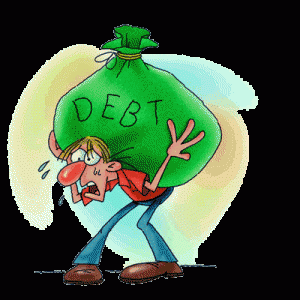 With the average household debt increasing constantly all over the UK, homeowners everywhere are struggling to keep their increasing monthly payments under control. Without the proper debt management solution, their attempts are frequently accompanied by failure and most of the times lead to a growth of their monthly payment that simply cannot fit in their budget.
The various credit card related debt as well as the other large payments like mortgages, education or automobile loans are getting out of hand, an aspect which reflects in the rising number of people filing for bankruptcy. However, an alternative road to financial security and freedom comprises of corroborating your credit card debt with a secured loan. Let’s find out why.
1. The overall monthly interest paid is reduced
The principal issue and the main generator of credit card debt is the high interest rate in association with the additional charges. In essence, unsecured loans have an innate high interest rate that guarantees your lender he will be able to recuperate at least a part of his investment if you are not able to pay your debt. On the other hand, homeowner loans are secured against equity, which means that the risk you pose for the creditor is lower. Therefore, the interest rates of the loan are substantially reduced.
2. Your income/spending budget can be calculated easier
When you have a plethora of credit cards that have to be paid on different dates and each of them requires minimum monthly payments, your debt can easily spiral out of control. It’s hard enough to stay up to date with the major loans, so adding credit cards into the equation complicates things immensely. However, since a single affordable payment can be easily integrated within your budget easier and it eliminates effectively the need to remember every other single debt you have, you are greatly simplifying your finances.
3. A single creditor to deal with
The more unpaid credit cards you own, the more calls you will receive from the lenders and banks. As your debt grows – and, without the proper solution, it will – you will start to receive more and more calls from the creditors, often at the most inappropriate moments. However, since the secured loan consolidates all debts into a single account and the lender takes charge of handling your finances, you can be certain that your other creditors will no longer trouble you.
4. Enhanced affordability for the monthly payments
Secured loan consolidation doesn’t only imply that the value of the interest is lower. In fact, you can also specify a longer repayment period, which permits you to minimize the monthly payments to a sum that you feel comfortable with. True, the total interest paid is directly proportional to the span of the repayment period, but you will be able to manage your household budget easier.
5. You won’t be tempted to spend more than you should
What every credit card actually represents is a lure for overspending. In other words, how great is it to purchase something you want – not necessarily need – now and pay for it later? Cutting up your credit cards and consolidating the debt with the secured homeowner loan is just the cure you need for that temptation!
Tags:
budgeting,
Credit Card Debts,
Credit Cards,
debt,
financial planning,
home loans,
investments,
L:oans,
money,
personal finance
September 12, 2012
 More and more credit card users are going in the debt each month and the common reasons are stagnant income, rise in the living cost, and unexpected life events such as the accidents, diseases, and natural calamity etc. These reasons make the survival difficult for the credit card users and they find it really difficult to come out of their debt. It may surprising to hear but it is true that debt relief will become the easiest job for you if take care to follow some important debt relief tips. Concentrate on these 3 important debt relief tips to get freedom from all the debt.
Follow the best debt relief option
There are too many debt relief options available in the market depending on the market situations in the local area. Taking a loan from the financial institutions is the first option that most of debtors try. The debtors can also sell their ownership of house, car, bike or anything else. The item you choose to sell should depend on the total amount of debt that you have to repay. The debtors can also ask for the money from some other sources such as the relatives, friends, and neighbors etc. So you have so many options of debt relief but the big question is that which option should be tried.
To get the answer of this question, the debtors should compare all the options and choose the one that is most suitable according to their requirements. Choose the best option that not only helps to pay the debts but also gives the peace of mind to the debtors.
Pay full debt each month
The credit card providers provide an option to pay the minimum debt this month and pay the rest in the next month. This is a good option of payment for those who do not have the sufficient money to pay their debts this month. Although it is a good option but it can also make the situations worst for the credit card users. The money that you will not pay this month would add to the balance in the next month. This will increase your burden in the next month and it will continue to rise whenever you will fail to pay. So the best option is to try to pay full debt each month and do not let your debt grow like a tree.
Hire a credit counselor
If you think that these 2 tips might not go a long way in giving relief from the loads of debt growing then the next important tip is to hire a credit counselor. The credit counselor will run a credit counseling program to analyze your financial situation and the debt. The credit counselors will also help in getting the concessions from the creditors on the interest rates. So this is how the counselors can be helpful in reducing the debt.
These are the three important tips that will help any debtor to get freedom from the debt.
Tags:
budgeting,
Credit Card,
Credit Card Debt,
debt,
financial planning,
personal finance,
savings
June 29, 2012
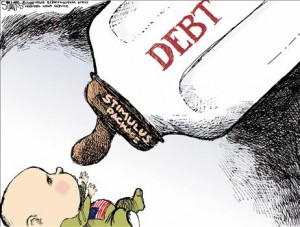 Not so long ago, ‘debt’ would have been a dirty word for many people. The financial crisis in Britain presently has led to people speaking about it candidly. Many will use an IVA to help extricate themselves from debt.
Debt has long been regarded as a taboo subject and people were decidedly reticent to talk about it. The current financial climate, however, has led to record numbers experiencing debt problems of one form or another. As a result of this, it is no longer considered controversial to discuss our debt problems with our friends and family. Debt management can be a particularly difficult due to spiralling living costs but many are beginning to see an IVA (individual voluntary arrangement) as a viable means of tackling financial arrears. Debt management in the UK is becoming increasingly difficult and the Citizen Advice Bureau views the current situation as ‘worrying’. Many in debt will use an individual voluntary arrangement with licensed insolvency practitioners to tackle their debt arrears.
Why are We in Debt?
There are a number of contributory factors to the current financial crisis that grips the nation. From the credit crunch to spiralling living cost, all are having a profound impact upon consumer’s finances and financial experts predict that insolvencies will hit record levels. One of the primary reasons that debt management is proving so tricky for many consumers across the UK is spiralling living costs. Energy bills, cost of food, petrol prices and all sorts of price hikes are hitting consumers in the wallet and those threatened with insolvency or bankruptcy are turning to an individual voluntary arrangement to help them out of their financial hole. Teresa Perchard of the Citizen Advice Bureau stated, “These latest figures paint a worrying picture, suggesting a significant number of households are struggling to meet their most basic living costs.”
IVA – A problem shared
Part of the problem with debt is the loneliness that is associated with it but many are finding that the increasingly accepting attitude surrounding debt is making it easier to get their finances back on track. Many financial experts believe that, when it comes to debt management, an IVA is an excellent means of tackling debt problems head on. An IVA is a legally binding contract between creditors and those in debt and it allows them to pay back their outstanding arrears at a level that is financially feasible for them. Research conducted by Alliance & Leicester found that people are now more likely to talk about debt issues than they are about sport or celebrities.
IVA – Growing debt concerns
The primary reason that people are seemingly more amenable to discussing debt is the fact that money matters and financial concerns are on the mind of the majority of consumers in the UK. Ewan Edwards of Alliance & Leicester states, “Our survey reveals money matters have a firm place at the forefront of people’s minds at the moment.” With insolvency set to reach record levels, many consumers who are swamped in debt are looking for a financial solution to appease their creditors and increasing numbers are opting for an IVA in order to do this.
Tags:
budgeting,
debt,
Debt Consolidation,
economy,
financial planning,
money,
personal finance
June 23, 2012
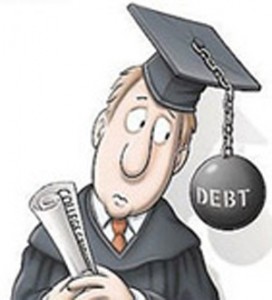 Having a difficult time paying off your student debt while in college? Let’s face it, paying off debts while you’re still studying is not that easy. For one, you have no regular source of income. But then again, there are still other options available.
Just remember that when you have an existing student loan, the interest would accumulate through years if you are unable to pay them off on time. This would further increase your financial burden so as much as possible, you have to pay off your debts on time or even earlier.
Here are some tips on how to pay off your college student debt:
1. Save money. First, you really have to save money in order to pay for your loan. For instance, you can save at least ten percent of your weekly allowance or income so that by the end of the year, you have enough money to pay off a portion of your student loan. Try to find means on how to stretch your money. Avoid spending on things you don’t really need such as brand new clothes and skip eating in expensive restaurants or fast food chains. Be practical when it comes to money.
2. Find a part time job. You can also look for a part time job while studying so you can save money to pay off your debt. There are jobs you can try online such as freelance writing, pay per click advertising, blogging, online tutorials, and more. You can start doing work from home so you can save on time and travel expenses. You can also apply as a student assistant in your university. Some universities would give discounted tuition fees and monthly allowance for student assistants.
3. Pay quarterly interest for your student loan. If for instance, you use unsubsidized loan, you can pay the interest every quarter. This will enable you to minimize the amount of interest which you will pay when you graduate. It’s like saving your money for the future. In subsidized loans, the loan would start to accumulate interest especially if it takes longer for you to finish college. Paying the quarterly interest allows you to pay the interest on the original loan amount, which in turn, helps you save money.
4. Look for other sources of income. You can also pay off your student debt by looking for other sources of income. If you can’t get a part time job for example, you can opt to conduct garage sales or other income-generating projects to help you earn money.
These are just some of the things you can do to pay off your student debt. If you are able to pay off your debt as early as possible, it will be to your advantage.
Tags:
budgeting,
debt,
economy,
financial planning,
loans,
money,
personal finance,
Students Loan
May 24, 2012
 Many people think that consolidating debts is a quick and easy way to solve their debt problems. It is easy and quick to get the loan and set it up, but there are still many dangers involved if they haven’t fully thought it through.
It happens all too often: John borrows $10,000 to consolidate his multiple credit card debts only to use his credit cards again when he feels the pinch. Before he knows it, John now has the $10k loan and a balance of $5k on his credit cards. He’s in more debt now than when he started.
To avoid this nasty debt cycle, you need to consider some important points before you make a decision. Here are the top 4 things you need assess:
- Do you spend more than you earn? A common reason for using a consolidation loan is to help with cash flow. But just like a vitamin supplement that will only help if you have a good diet to begin with, a consolidation loan will only help if your budget is cash flow positive. The worst thing you can do is take out a loan and they use your credit cards again when you feel the pinch.
- Can you afford the repayments? This comes after you consider your budget and based on that analysis, can you afford to repay the loan comfortably? The whole point of debt consolidation is to make the payment slighter lower and more affordable. If this isn’t the case, or you may struggle to meet the payments each month then you might need to look for another solution – like a debt management plan, for example.
- How long will the loan last? Sometimes, consolidating your debts to a lower monthly amount means you will pay for longer. This might be a positive if it means you aren’t struggling every month, but you need to be aware that you will be in debt for longer whereas most people are trying to get out of debt as soon as possible.
- How much will you repay in total? Another effect of paying the loan for longer is that the total repayment might be more than it would have been if you continued paying the previous amount. This might not be the case if you had high interest credit cards, and it gives you the more affordable repayment you might need, but you need to be aware that you might pay back more with a consolidation loan because it is taken over a longer period.
Hopefully these points will give you more information about whether a consolidation loan is right for your situation and you will know exactly what you’re signing up for.
They can be an excellent debt relief tool when used appropriately but many people think they are a magic bullet and get a nasty shock when they don’t change their spending habits or thinking and end up further in debt.
If you’ve taken out a consolidation loan in the past, share your experience with us in the comments below.
Tags:
budgeting,
Credit Cards,
debt,
economy,
financial planning,
money,
personal finance



 admin •
  4:08 pm •


Recent Comments