September 1, 2013
 In the UK the Archbishop of the Church of England has struck out at pay day lenders calling them “morally wrong”. Unfortunately after bashing the pay day loan industry it transpired that the Church had invested over $7 billion of its pension funds in a company which had then supported a pay day lender. Indirectly therefore the Church had invested in a pay day lender! The very industry it regarded as sinful. It seems they were suitably embarrassed.
In response to the Archbishop’s attack the pay day lender in question, Wonga, who is also a pay day loan provider in Canada (see www.Wonga.ca), created and released a very clever, tongue in cheek, advertisement based on the 10 commandments – the Wonga version is the 10 commitments. The aim of the advert is to better educate people when interpreting the Church’s comments about pay day lenders. It sets out the promises the company makes to its borrowers and highlights the fact Wonga is a responsible lender. Probably the Church is a little unhappy that the debate and the new advertising campaign has certainly given the lender even more publicity – the adverts have of course been reported upon by the media thus resulting in free advertising and increased publicity for the company.
Further, far from sounding like the loan shark the Church has tried to portray pay day lenders as, the Wonga advert pretty much agrees with what the Church has had to say on the issue of pay day lending. The lender stated it was transparent about the price of its loans, carried out thorough credit checks and froze interest after two months to protect defaulting customers. It also said that it welcomed competition.
The pay day loan industry in the UK is not regulated like it is in Canada. Many politicians, charities and other organisations are calling for regulation but do not have the solution – the Archbishop is at least trying to push forward an idea. He is proposing that Credit Unions work from church premises to offer similar loans at lower interest rates – his idea is to push pay day lenders out of the market. This certainly sounds like a challenge. For a start he wants to find church members to volunteer as staff at the branches. This may be a big hurdle in terms of attracting customers. The average church goer probably does not reflect the average pay day loan customer. No one wants to be judged when taking out a loan.
A recent study indicated that the average age of a church goer was 61. Anglican leaders have warned that the Church of England will cease to exist in 20 years because elderly worshippers will die. As a result of this the Church presently has an urgent national recruitment drive to attract more members.
Just recently the Rt Rev Paul Butler, Bishop of Southwell and Nottingham stated that teachers should not illustrate math lessons with examples of “profit and loss”, or encourage children to save in order to buy bikes or toys Instead, lessons should focus on the math involved in giving donations to charity, saving for an overseas project, or even “tithing” – giving 10 per cent of one’s income to the Church.
When the Church is making statements like this you have to wonder whether it is the Credit Union/pay day loan “solution” is one part of its necessary recruitment drive. Pay day loan providers want profit, the Church wants people in seats: both have their own agenda.
Although the Rt Rev Paul Butler might not think it important, educating children about profit and loss and savings is all part of money management. This is vital in today’s society – Surely it is better money management which will reduce the need and desire for pay day loans.
Tags:
Cash Flow,
Debts,
financial planning,
Interest Rates,
loans,
money,
payday loan
August 28, 2013
 It will happen at a stoplight on your way to your first real job. The Plymouth Acclaim that you earned merely because you were the 16-year-old child of middle class suburbanites will not go, no matter how hard you hit the gas. The serpentine belt will blow, again, and it will seem silly to put more money into a car that is old enough to drink.
Still, what car seems affordable on an entry-level salary? Even the most economical of economy cars is likely too expensive to be paid for out-of-pocket. More often than not, securing an auto loan is a necessary step in purchasing your first car, and there are a few things that are helpful to know before you trust the offer made by your dealer.
New or Used?
Even before thinking about a loan, it is wise to decide whether you will purchase a new or used car, and from who? There are many pros and cons to both used and new cars, so it’s best to keep your budget in mind as you make your decision. Used cars, whether purchased as a “pre-owned” vehicle from a dealership or from your neighbor on Craigslist, will more often than not be significantly cheaper than a new version, and may not even be that, well, used. Notoriously, the value of a car depreciates as soon as it drives off the lot. If you buy a used car, make sure you have access to its entire history. Know who owned it before you. Know what accidents it has been involved in. That way, if you’re on the brink of having a used car horror story, you have the information to navigate your new-to-you car in another direction. On that note, never sign an As-Is statement. You are entitled to 30 days to find out whether the car is in working order.
As for new cars, they can be more expensive. And if few people are already driving that year or model, you can’t be absolutely sure that you haven’t landed yourself a lemon. Research is just as important with new cars as it is with used ones—you want to know the MSRP (Manufacturer Suggested Retail Price) and what deals other dealerships are offering on your chosen model. The Internet is a great place to research car prices, warranties, and safety features. Finance options for your new or used car can also be found online.
The Loan
Before you apply for a loan, it is wise to know your credit score first. There are many places that will give you access to your credit score for free online, such as Credit Karma. This will help you know what kind of interest rate for which you are eligible. Generally, the higher your credit score, the lower your rate. As you are young, it’s likely that your credit score will be low due to your brief credit history.
“The newer the car, the lower the rate” is also a piece of car finance advice that has been bandied about since the beginning of auto loans. While this may seem like a tick in the “pro” column for new vehicles, remember that the cost of the vehicle itself will likely be more than enough to make the savings in interest a moot point.
There are many ways for you to finance your car, and it’s smart to both diversify your application process and go to the dealer with a pre-approval already in place. Apply for loans at banks and credit unions, online financial institutions, and even the dealership (though these loans usually aren’t as competitive). Be honest on your applications, and take your time when considering all of your offers. Know the total cost of the loan. Pay attention to the loan term—a shorter term will involve higher monthly payments, but less interest. Don’t go for an offer that comes equipped with a laundry list of fees—you can be certain you won’t make up for the difference in savings on interest. No matter the case, do the math. Which offer works best with your current income? Which offer will allow you to save the most money in the long run?
If you go to the dealership pre-approved for a loan with a nice low rate, you will have the upper hand in negotiating what could be an even lower rate with you dealership.Be wary of the dealer offering you a lower price on the car with a higher interest rate. Remember, do the math. Rely on your own research. If you display clear confidence in your knowledge, it is less likely that the dealer financial manager will try to pull the wool over your eyes.
Driving Away in Your New…
While attempting to seduce you into their loan, the car dealership may offer you a number of “services” that also may not be in your best interest. Any “extended warranty” is more than likely not worth the extra cost—most warranties are extensive enough to cover any damages, and at the point the extension kicks in you will have spent more than you would out-of-pocket for repairs. Many dealerships offer expensive security systems that you could easily install yourself for less. Be careful about deciding to purchase life or disability insurance from your dealership. Like with loans, you may be better off getting a better deal elsewhere, if you need these types of insurance at all.
Of course, remember to have fun as you shop, and to buy a car that you can see yourself driving. A car may ultimately be a practical tool for transportation, but the right car can also provide a pleasurable experience.
Levi Hyatt is a part time blogger and a full time wannabe stunt driver. He’s carried his passion for cars over to writing about car financing. When he’s not going full throttle, Levi enjoys playing guitar for his cats George, Ringo and Paul.
Tags:
Assets,
Car,
Car Financing,
Car insurance,
economy,
insurance,
Interest Rates,
loans
August 27, 2013
 Saving your home loan deposit can seem like a difficult task, especially if you are a first home buyer. Luckily, there are a range of things you can do that will help to make it happen sooner than you might think. Here are 5 top tips for saving a home loan deposit efficiently and effectively.
Cut Your Unnecessary Spending
The first step to boosting your savings is to immediately start cutting down on your unnecessary spending. If you want to get a home loan deposit together as fast as possible, it’s worthwhile scaling back what you spend on other things. Every little bit counts, and it can be as small as bringing your own coffee to work, eating at home instead of dinner out, and cutting out impulse spending on luxury items.
Analyse Your Budget
Now that you’ve made a start, it’s time to take a good look at your budget. Analysing your income and expenses will help you to ascertain where your money is going, and how it can be optimised to create a more effective savings plan. Ensure that your budget is clear and comprehensive, and use it to help you maximise your income.
Dedicated Savings
To get the best results, consider opening a new savings account specifically dedicated to your home loan deposit. Look for something that is high interest with low fees to ensure that your savings continue to grow. Divert a set amount of your weekly wage directly into this account, and be sure to add extra contributions whenever you can afford it.
Consider a Professional’s Input
If you feel like you have tried all of the above and still haven’t seen a great boost to your savings, it might be time to call in some expert assistance. Talking to a financial professional can give you new ideas and strategies on the smartest ways to save, helping you to own your dream home sooner. You may even be able to get great advice from a lender, particularly those with a history of helping people to achieve their financial goals. Agencies such as Fox Symes are famous for their quality debt solutions, and have also become specialised in offering great value home loans. By choosing a lender like this, you are truly getting the best of both worlds, and will have all the help you need to effectively save your deposit, fast!
Stick to It!
Now that you have a great savings plan in place and your finances are working efficiently, it’s essential that you focus on the long term. It’s easy to feel discouraged if you get caught up in day to day expenses, and the trick to success is to have a positive attitude and always remember your end goal. Never forget that all of your hard work now is allowing you to achieve the incredible goal of owning your dream home in the future.
With these top tips, you will be able to start a quality savings strategy to help you buy your own home sooner than you might think. Time is of the essence, and when you’re looking at saving a home loan deposit fast, every day counts. Get started today and enjoy the reward of seeing your savings grow!
Tags:
budgeting,
Debts,
home loans,
Interest Rates,
loan,
money,
savings
August 8, 2013
 The Federal Housing Administration, also known as FHA, has been insuring mortgages since the 1930s. From the time of the Great Depression, the agency has assisted low to middle income consumers in their quest to purchase a home that, otherwise, they may not be able to afford. While FHA mortgages have a reputation of being more costly for the consumer, FHA also offers other perks that make these loans attractive. Here are 6 reasons an FHA mortgage may be the better choice:
1. Credit
When using an FHA loan, the borrower is subjected to less stringent credit requirements. For automated underwriting approval, an FHA mortgage requires that a borrower have a minimum credit score of 620 and a maximum debt to income ratio of 43%. However, manual underwriting can take into consideration additional compensating factors that are used to strengthen a loan approval. In addition, FHA will also consider non-traditional sources of credit, such as cell phone and utility bills and payments.
2. Down Payment
FHA offers one of the lowest down payment mortgage programs available to consumers. With a down payment of 3.5%, an individual with a credit middle score of at least 620 and a debt to income ratio of no more than 43% can purchase a home.
3. Gift Funds or other sources
FHA mortgages allow the borrower to use gift funds that meet approval to help fund the loan. Gifts may come from a variety of sources, such as family, friends and employers. Many borrowers will also combine an FHA mortgage with funds from state or local housing initiatives that come in the form of low interest loans or bonds.
4. FHA Refinance
FHA mortgages offer an existing borrower an easy way to refinance through its FHA streamline refinance program with no cash out. With the streamline program, a borrower is not required to submit any documentation, a credit history is not required and an appraisal is not needed. FHA relies on the borrower’s current mortgage payment history which must be satisfactory. In addition, there must be a “net tangible benefit” when refinancing with the streamline. This means that the borrower must save a certain amount of money each month through the approved refinance. However, other situations could be considered a benefit, such as moving from an adjustable rate mortgage to a fixed rate mortgage.
5. Assumable
FHA mortgages are assumable, something that is not available with conventional loans. An assumable mortgage is one that a buyer can assume from the seller at the interest rate that the seller currently has. There are some stipulations that must also be met and the borrower must be approved in order for the assumed mortgage to be accepted. However, this is a definite perk for a home seller who holds an FHA mortgage.
6. Multiple Mortgage Programs
There are many different types of FHA mortgage programs available to home buyers. The FHA 203(k) is a type of mortgage that is used when there are repairs or maintenance issues that must be addressed when purchasing a home. FHA also offers sweat equity loans for home buyers who are interested in using their sweat equity towards their down payment. Manufactured housing loans are also available through FHA. Today, FHA’s energy efficient loans are also becoming a popular choice.
The type of loan that a home buyer chooses will always depend upon their needs and their goals. It is an individual decision that requires a home buyer to become educated about what is available to them. By doing so, a home buyer can become a successful homeowner for the long term.
Tags:
Assets,
Buying,
Home,
Interest Rates,
loan,
mortgage,
real estate
August 6, 2013
 Many people want to purchase a home, but also have a difficult time coming up with the down payment. While income may be good, everyday and monthly living expenses make it almost impossible to save the amount of funds that are necessary to obtain a mortgage. However, when searching for down payment options for a home purchase, they may find that it is actually possible.
1. Conventional mortgages require a down payment of 20% which can be a large sum of money for the first time home buyer to save. There is a minimum down payment requirement of 5 to 10% which will depend on the individual lender. Any amount below 20% will require that the borrower pay private mortgage insurance along with the monthly mortgage payment. With a conventional loan, putting the most down as possible is important because it will result in a better loan and lower mortgage rate.
2. Government loans offer better options when it comes to down payments. FHA loans require a low 3.5% down payment with a minimum credit score of 620 and maximum debt to income ratio of 43% for automated underwriting. In addition, FHA offers borrowers many other benefits, such as 6% seller concessions. These loans are also assumable which means they can be assumed by the buyer, who must be approved, when the borrower decides to sell the home. FHA loans also have an upfront mortgage insurance premium paid at closing and an annual mortgage insurance premium that must be paid for the life of the loan or until the loan is refinanced with a conventional or other type of loan.
3. VA loans have no minimum down payment requirement. In fact, most VA loan borrowers use this as a means of 100% financing. However, a borrower must be eligible according to VA guidelines. VA loans do have a one time VA funding fee.
4. FHA mortgages offer sweat equity loans which allow a borrower to perform their own work in lieu of a portion of the down payment.
5. FHA mortgages also offer bridal registry loans which allows others to deposit funds to a bridal registry that will be used to fund the down payment of the mortgage.
6. Gifts are an acceptable part of obtaining a mortgage and are often used with FHA loans. However, gifts must meet the program’s guidelines for approval. The gift can be from family, friends and even employers. There are specific rules that must be followed regarding proof, sourcing and transfer of funds.
7. Many states, counties and cities offer housing initiatives to assist with the down payment for first time home buyers. These funds are usually in the form of low interest loans or bonds. Each one has its own guidelines for repayment with some having no repayment as long as the borrower remains in the home.
8. Some employers offer down payment assistance as a benefit after the employee has worked a certain period of time.
9. For second homes or investment properties, some borrowers will use the equity that is available in their primary residence for the down payment.
While saving the down payment funds for a home purchase can take some time, home buyers should keep up to date with what additional avenues of assistance are available to them. Since most down payment assistance programs are refunded on a regular basis, borrowers should keep in touch with the latest updates in their area or state. It is also not unusual for new local programs to crop up unexpectedly. The important thing is to keep saving, keep looking and not give up.
Tags:
Assets,
Buying,
Home,
Interest Rates,
loans,
mortgage,
Property



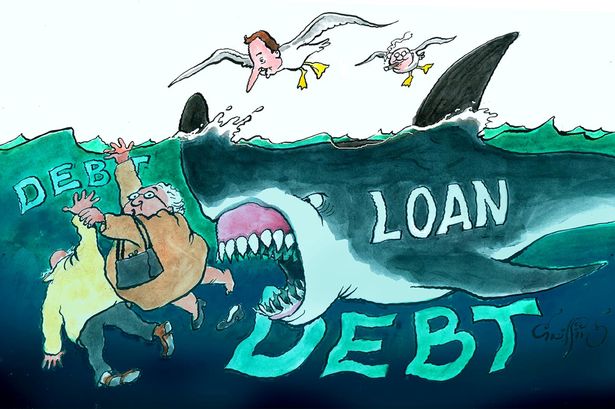 In the UK the Archbishop of the Church of England has struck out at pay day lenders calling them “morally wrong”. Unfortunately after bashing the pay day loan industry it transpired that the Church had invested over $7 billion of its pension funds in a company which had then supported a pay day lender. Indirectly therefore the Church had invested in a pay day lender! The very industry it regarded as sinful. It seems they were suitably embarrassed.
 admin •
  11:54 am •




Recent Comments