March 6, 2013
 A credit card is a form of loan, albeit one involving more flexible terms and smaller sums of money than a personal loan or a mortgage. However, like other types of loans, credit cards also have interest rates. You need to understand more about how interest rates work, and how they will affect you and your finances, before taking out a credit card.
Why interest rates can be confusing
At the moment, credit card issuers can choose one of 14 different methods for charging interest. These methods involve calculating interest in different ways. So, if you have two credit cards which seem to have the same interest rates and you use them in exactly the same way, one could cost you more because the provider has decided to use a different method to work out that interest.
APR
Another reason why interest rates are confusing is because the industry uses acronyms such as APR to talk about interest. APR (Annual Percentage Rate) is a standard way to work out the cost of credit, taking into account the interest rate and any other charges. This rate shows you how much it will cost to borrow money over the course of a year.
It should be the case that credit cards with lower APRs give you the best deal, but it doesn’t always work out that way. This is because many cards start and stop charging interest on transactions at different times. However, most lenders offer a ‘typical APR’ when advertising credit cards. This is because when you apply for a credit card, you may be offered a rate based on your credit history and personal circumstances. According to a Guardian factsheet, banks only have to offer their advertised APR or a better rate to 66% of potential customers.
When interest rates will affect you
If you pay your balance off in full every month, you probably won’t need to worry about interest rates. However, interest rates will affect you if:
You only make minimum payments off your total balance every month
You pay anything less than the full balance each month
You use your credit card to take money out of a cash machine
If you meet any of these criteria, you should be looking to find the lowest interest rates when carrying out a credit card comparison. If you do your research and take the time to work out how much a credit card will cost you in the long term, you are likely to end up with a good deal and a way of borrowing money that suits you.
Tags:
credit,
Credit Card,
debt,
financial planning,
Interest Rates,
money,
Rates
March 5, 2013
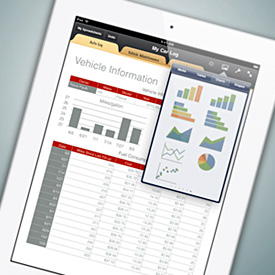 While all things seem to change at one point or another, the business world seems to be stuck in a state of constant transformation, with new businesses being spawned and old businesses either prospering or falling into failure. With such a huge wildcard being thrown up, if you want to survive contemporary business, then it is absolutely vital that you keep with the times, adapting to the ever-changing environment and taking advantage of new technology.
Speaking of technology, if you have not noticed, you see that more and more business is being conducted through mobile and virtual means; in other words—smartphones, computers, and tablets such as the iPad. These nifty devices are now home to a world of helpful resources and tools, but most people refer to these aspects as “apps,” short for applications. Whether you find yourself playing a few rounds of bingo over at www.partybingo.com during a long, boring business flight, or you simply need to use your iPad to give a brief presentation, as common media puts it, “there’s an app for that.”
However, as far as business-oriented apps are concerned, there are several out there that can make an array of tasks much more convenient for business owners. Three of these apps can be found below:
Keynote: If you are a business owner, as well as a Mac-user, then chances are good that you have a little (or a lot) of experience with the Keynote app. The techies over at Apple have been working hard though, now being able to offer Keynote for iPad users as well.
Keynote is a presentation app, and a rather powerful one at that. Using this app, users are able to do everything from full-color presentations equipped with transitions, to building a pie chart to show expenditures.
Numbers: Also debuting on a Mac, but being completely reworked to coordinate with iPad users, is the Numbers app. If there is one thing business owners probably see too much of, it is the dreaded spreadsheet. As dreaded as it can be sometimes, it is vital to create important financial reports and charts compiled from inputted data that has been collected.
Boasting more than 250 features and functions, the Numbers app offers users a variety of charts, tables, graphics, and photos, making any spreadsheet go from bland and boring, to sleek and edgy. Need to distribute a spreadsheet or two? Not a problem for the Numbers app as it allows user to export data to Excel, convert to PDF, or simply send it as an email.
Roambi Analytics: What is more important to a business owner, small and large alike, than the status of his or her business? Luckily, the Roambi Analytics app allows users to do just that. Even better, this app is not just for iPad, but it also works on the iPhone too, allowing one to become even more mobile.
The Roambi Analytics app is capable of converting important statistics and other data from Excel, Google Docs, and other financially-oriented program, into nifty little visual “presentations” for you to view on your iPad or iPhone. Pretty simple, eh?
There you have it folks! The three apps mentioned above are sublime at making the complicated, and broad, task of business, and making it much more convenient. Naturally, the three above are just a tiny portion of the literally thousands of apps available to business owners. Plus, should you find yourself with some free time, you could always play Angry Birds or some other game.
Tags:
Apps,
Business,
financial planning,
Gadgets,
money
March 2, 2013
 Strategy #1: Expand by Contracting
While it may initially appear counterintuitive, for many small businesses, the best way to expand is to contract. The logic of this strategy is fairly straightforward when we recognize that the number one metric owners want to increase is profitability (as opposed to simply adding growth for growth sake), as additional sales can often be closed, but at the expense of margins.
Two of the ways that businesses can expand profitability include adding more high-profit work and subtracting more low-profit work. By reviewing their client base and actively pruning those projects which take up large amounts of resources yet yield a small amount of profit, firms can better optimize their workforce to pursue higher margin work and expand their profitability for 2013.
Strategy #2: Specialize
An off-shoot of Strategy #1, specialization challenges companies to narrow their brand messaging and business model to focus on going deeper within a specific domain, and thereby becoming more valuable and dominant in their sector. The proliferation of advanced technology, and a connected, worldwide workforce means that competition will only increase in intensity in the years to come. By choosing to double-down on specific verticals riddled with complexity, small business owners can increase barriers to entry for potential competitors and buttress their reputation within the industry.
The effective implementation of this strategy will initially involve entrepreneurs scrutinizing the current offerings of their firm, aligning them with the expected trajectory of the industry, and then making the tough decisions to refine the product mix from trying to be a “Jack of All Trades” towards becoming a highly specialized industry expert commanding top dollar. By applying the 80/20 Rule and determining which 20% of their clients are responsible for 80% of their financial success, small business owners can better customize their offerings, and selectively cater to the most profitable niche of their marketplace.
Strategy #3: Embrace Daily Deals
Over the past 24 months, there has been a meteoric rise and fall of the “Deal of the Day” or “Flash Sale” phenomenon. While the frenzied euphoria of this business model is now behind us, the measured and pragmatic benefits of a correctly applied Daily Deal approach can serve as a valuable arrow in the quiver of entrepreneurs seeking growth. Whereas earlier, small business owners would look at Daily Deals as a profit maker, today they are leveraging this model as an inventory management tool (facilitating rapid turnover of aging products to make way for new shipments), as well as utilizing the visibility of these deals to complement ongoing marketing initiatives and build brand awareness. While many firms still can and do generate profit from Daily Deals, the true business value of this marketing strategy must be taken in total with these other organizational benefits.
Strategy #4: Offer Self-Serve Options
For years, the Internet has offered individuals the opportunity to peruse and purchase products 24/7, yet many companies have still not structured their business to accommodate this environment. By designing a website and ecommerce system with a wealth of information on request, as well as FAQ’s and standardized order forms, businesses can leverage the power of automation to take some of the burden off of their staff using highly refined online content to advance prospects through the marketing funnel and engage them precisely at the critical time they are making a buying decision.
Strategy#5: Go Big or Go Home
While Strategies 1-4 provide solid expansion options for 2013, for those small business owners for whom incremental growth is just not enough, private equity funding is the way to go. By providing the founder with the security of cash in his pocket, plus sufficient capital to pay off all outstanding debts, expand internal systems and infrastructure, add more top leadership, and scale the organizational footprint to bigger markets, a private equity investment offers the fastest way to get there. By removing the month-to-month financial pressures of payroll and production costs, business owners can enjoy a renewed focus on making the strategic decisions that will position the firm for accelerated growth in 2013 and beyond.
Tags:
Business,
Capital,
Cash Flow,
economy,
financial planning,
investments,
Success
March 1, 2013
 With any type of long or short-term investment, there are always a number of risks that will effect the success of your investment. If you put too much money into one particular investment, of course, you stand to lose a large sum. Likewise, if you are perhaps too hesitant, and do not invest enough, your savings may very well become eroded by inflation. By seeking professional Investment Management advice, you will ultimately minimise the risks of your investment and gain some degree of protection for your capital.
Listen to The voice of Experience
Investing is often a complicated and complex procedure, and understandably, you may be concerned that your lack of market knowledge will result in a potentially large loss of capital. Professional Investment Management firms however, are decidedly experienced in their field, and with a detailed understanding of the current market, will utilise the latest advances in investment theory in order to secure your investments.
Peace of Mind for the Present and Future
To succeed as an investor, you must be able to dedicate a considerable amount of time to evaluating the market and keeping track of your investments. This will involve ongoing personal dedication, and a sizeable amount of paperwork. By entrusting your financial investment to experienced Investment Management professionals, you are not only providing yourself with more time and space for the demands of the present, but you are also helping to secure a potentially stable life for yourself and your family in the future.
Empowering you as an Investor
The main reason why people chose to hand over the responsibility of their investments to Investment Management services is that it provides them with far greater security and far less risk than if they had overseen their investments personally. However, the more ethical and supportive Investment Management firms will actually offer services to support your own understanding of your investments, allowing you to eventually take control yourself. Such an approach will allow you to eventually take back full control of your investments, with a superior understanding of investment strategy and a greater financial return.
Ongoing Personal Support
Naturally, you will want to stay up-to-date with the progress of your investments and will desire ongoing support and perhaps reassurance from those who you are entrusting with handling your investments. Investment Management firms are very appreciative of this and accordingly, offer continual support via phone calls, face-to-face meetings, online webcam meetings and email. The very best Investment Management services will extend their support throughout the weekend, in the knowledge that your concerns may arise at any given time.
Tailored to Suit You
If you are seeking investment guidance from a professional firm, the chances are you do not understand which investment choices are most suitable for you and your specific needs. Of course, professional services such as the Investment Management from Sanlam have extensive experience with clients of all backgrounds and will have specific tailored advice based on your personal investment needs.
Tags:
Cash Flow,
economy,
financial planning,
investment,
Management,
money
February 28, 2013
 In the current economic climate it can be difficult to keep things afloat. The last 5 to 10 years have seen many businesses struggling to get by, prompting dramatic changes of business models or steps towards insolvency or recovery. If you’re worried about your business it only takes a walk down any high street to see you’re not alone. Large retailers BlockBuster, HMV and Jessops have gone into administration since Christmas, so now is the time to take action.
Things are ok at the moment. What steps can I take to keep my business afloat?
With the current state of the economy, even if you are making profit, things can spiral downhill very quickly if you’re not careful. You’ll need a watertight business plan, so talk to an advisor. Their help can save you a fortune later on. They will help you see your business through the eyes of potential customers, including the shopping experience and services you provide. You might be advised to make changes, and it’s important you follow these changes through.
Things are already bad. What options do I have?
Insolvency and recovery options depend largely on just how bad your business’s financial situation is. If you notice difficulties arise, it’s important to take action as soon as possible and not to wait for issues to resolve themselves over time. If this happens you can halt your insolvency or recovery programme, but if your company is trading while insolvent directors can be liable for wrongful trading. You don’t want to find yourself facing legal action or being personally responsible for debts, so take action now. A financial advisor will guide you through your options, which may include refinance, administration and liquidation.
Liquidation is the winding up of a business so it ceases to trade. Creditors’ Voluntary Liquidation is the most common form in the UK, involving closing the business and selling its assets to pay debts.
Pre-pack administration is when the company is sold to a third party (the administer). This is a good option if you are under a lot of pressure to react quickly, but it does mean the administer can sell the company without the agreement of creditors – unlike in liquidation cases. It can, however, be sold to the current directors to create a phoenix company; essentially your old business with a new name.
If a bank (or other creditor) decides the directors aren’t suitable, they may appoint an administrative receiver to take over running the company. This person can sell off assets and recover money as they see fit, and will primarily serve their own interests. This is called receivership, and means the conduct of directors will be investigated.
Voluntary arrangements and voluntary liquidation are a much better option than court ordered compulsory options, but your business doesn’t have to get to those stages. Consider debt management, lending money or restructuring before your cash flow problems get out of hand. Business recovery experts will be able to help you, whatever your situation.
Tags:
Business,
Debts,
economy,
financial planning,
Financial Situation,
money



 A credit card is a form of loan, albeit one involving more flexible terms and smaller sums of money than a personal loan or a mortgage. However, like other types of loans, credit cards also have interest rates. You need to understand more about how interest rates work, and how they will affect you and your finances, before taking out a credit card.
 admin •
  10:11 am •




Recent Comments