August 17, 2013
 Refinancing is a great option that homeowners have especially when mortgage rates are lower than what they already have in place. Can refinancing a mortgage eliminate debt? The reality is that refinancing a mortgage cannot eliminate debt, although using a refinance to reduce debt can be a very successful financial strategy.
When refinancing, the homeowner is basically turning in the existing mortgage for a new loan. The new loan can have a different rate, a different term and a completely different program. Normally, borrowers will try to obtain a lower mortgage rate and/or a lower term, if possible. In most cases, the standard fixed rate mortgage is chosen even when refinancing from an adjustable rate mortgage. Fixed rate mortgages offers borrowers security by knowing that the same mortgage payment will be in place for the entire term of the loan.
Debt consolidation is often done when refinancing. By doing so, the borrower is combining the balances of other debt, such as credit cards, loans, etc., and adding it to the mortgage balance. While this increases the funds needed for the mortgage, the other debt is paid off at closing. The debt is not eliminated, it is simply moved to another debt vehicle which is the new mortgage.
Moving other debt to a new mortgage can only be done if the borrower has enough equity in the home. The homeowner must also qualify for the refinance according to the lenders guidelines. This type of loan is considered a cash-out refinance and will generally have a higher mortgage rate than a no cash out loan. The new mortgage will include the funds that are necessary to pay off the other debt. The debt amount is then part of the new mortgage and is paid as part of the the monthly mortgage payment for the full term of the loan.
By utilizing a debt consolidation refinance, many homeowners are able to free themselves of the burden of carrying an overabundance of debt that must be paid on a monthly basis. This debt usually carries a higher interest rate which can make multiple monthly payments uncomfortable. Adding these expenses to a refinance often results in a more cost effective budget for a homeowner because the total debt payment is usually reduced. The end result to the homeowners is typically a better monthly cash flow.
In order to reap the benefits of a debt consolidation through refinance, homeowners must make it a goal not to incur additional debt. With less debt, a homeowner’s financial stability will can often remain intact which leads to added security in case a hardship should arise. The savings recognized from a mortgage refinance can be accumulated or used in lieu of credit cards. This is the beginning of the path to financial freedom for many homeowners. However, incurring additional debt expenses after the refinance can lead a homeowner to repeating the process with multiple debt consolidation loans which, in the end, will not be cost effective.
Everyone dreams of the day when there will not longer be a mortgage payment to make. While it may seem so far away, time does move quickly and, with careful planning, it will be a reality faster than you think. Planning a refinance with debt consolidation will also help a homeowner reach their goals of eliminating overwhelming payments on a monthly basis.
Tags:
Debt Problems,
Debts,
economy,
financial planning,
Interest Rates,
Mortgages,
refinance
July 16, 2013
 Purchasing your first home together can be almost as exciting as your wedding day. If you’ve made that first major purchase together before tying the knot, you may have already built up some equity in your home that can be used for repairs and renovations. Whether you plan on using a home equity loan to put an addition on your home or undertake maintenance on your existing home, here are a few things you should know before enquiring about a home equity loan.
Get Appraised (And Know How to Calculate Your Equity)
When determining your home equity, you will first need to have your home appraised to determine its current fair market value. Once appraised, take your home’s fair market value and subtract the amount of money you still owe on your mortgage. For example, let’s say you bought your house for $250,000. Having paid $50,000 as a down payment, your mortgage is now $200,000.
Fast forward to the future when you decide you want to apply for a home equity loan. At that time, you have paid off $125,000 of your mortgage. After an appraisal, you discover that the new market value of your home has risen in value to $300,000. Since you have paid off $125,000 of your mortgage, you still owe $75,000.
$200,000 – $125,000 = $75,000
Take your new fair market price of your home and subtract what you still owe on your mortgage, giving you the amount of money you qualify for your home equity loan, $175,000.
$300,000 – $75,000 = $225,000
This is the total equity available. A bank will typically lend 70-80% of the total equity available.Now that you understand home equity, you have two main options: You can either get a Home Equity Loan (HEL) or a Home Equity Line of Credit (HELOC).
Option 1: The Home Equity Loan
Also known as a “second mortgage,” a HEL gives you a lump sum of cash with a fixed rate of interest. You will have fixed monthly payments for a fixed amount of time, normally between 5 and 15 years. A huge benefit to this option is you won’t be surprised by fluctuating interest rates.Some people use their HEL to help pay off their student loans or credit card bills upon discovering that their HEL interest rate is lower than their student loan and credit card rates. This isn’t always the case. Your HEL rate might not be lower than your other rates, but it is worth your time to determine whether your HEL can assist you with your newly-combined household finances, as well as home improvement projects.
The Home Equity Line Of Credit
A HELOC is a credit line given to you by a lender. You have a maximum amount that you can borrow and are given blank checks or a debit or credit card that allows you to withdrawal from those funds. This allows you to borrow what you need when you need it, instead of taking out one lump sum. You don’t have to withdraw the maximum amount. This just means that the amount of money you are paying interest on has the potential of being significantly lower than your determined equity. Keep in mind that there may be transaction fees each time you withdrawal money. Help from Uncle Sam
The IRS Publication 936, “Home Mortgage Interest Deduction,” offers some helpful advice to newlyweds with home equity loans at tax time. It states that joint tax filers can deduct the interest paid on a maximum $100,000 in home equity loans. The maximum is cut in half if the married couple files separately. Keep in mind, this is a maximum and chances are you will not get to deduct near that amount. This deduction also only applies to home equity loans taken out for home improvement purposes.
Remember
Armed with some knowledge beforehand, you can decide which home equity loan option is best for you and your home – and the vision you have in mind for it.
This post was written by Holly Wolf of Conestoga Bank. Conestoga Bank has serviced Philadelphia and the surrounding regions for 120+ years.
This publication does not constitute legal, accounting or other professional advice. Although it is intended to be accurate, neither the publisher nor any other party assumes liability for loss or damage due to reliance on this material.
Tags:
Debts,
home loans,
Interest Rates,
money,
personal finance
June 22, 2013
 A secured loan is a lending product which can be obtained by leveraging an asset against the value of the loan amount. They’re a great choice for people who are asset rich, but cash poor. They’re can also be very helpful in an emergency, when you need to access cash quickly. But what does taking out a secured loan actually entail? And how can you tell if it is the right product for you?
Assessing Your Needs
Before applying for a secured loan, it’s important to make sure that you are fully aware of your needs beforehand.
• Do you really need a loan?
• Are you able to make the repayments?
• Is a secured loan the right type of loan for you?
• Do you meet the criteria to qualify for an unsecured loan?
If the answer to all of these questions is yes, then a secured loan is the right option for you. But secured loans come in all shapes and sizes, so it’s a good idea to shop around before settling on one. For example, 1st Stop secured loans are the perfect choice for people with bad credit, who need to borrow any amount between £1500 and £15,000.
Finding the Right Loan Provider
If you’re thinking about taking out a secured loan, it’s important to find the right provider. There are many providers of secured loans, but not all of them are as reputable as they might first appear. When shopping for a lender, you should always check to see if they have any affiliations with regulatory bodies such as the FCA (formerly the FSA). If they do, this is a good indicator of trust.
The Risks of Taking a Secured Loan
Just as with any financial product, there are risks involved in taking out a secured loan. But as long as you are aware of these risks, and know how to manage them, you should find that your secured loan is very beneficial.
Because a secured loan requires that you leverage an asset against it as collateral, if you default on your loan this asset may become forfeit. If the asset in question is your car, or even your home, this loss can be devastating. So it’s important that, before you take out an unsecured loan, you are aware of the repercussions and fully able to make your repayments.
Tags:
Assets,
Debts,
financial planning,
loans,
money,
secured loans
May 8, 2013
 Your credit card, while serving as a powerful tool for all your financial needs, can lead you to a world of trouble if you don’t use it the right way. Credit cardholders must avoid getting trapped in a deep hole called debt. However, they often find it hard to consider the immense amount of expenses, especially if a bank already gave them enough credit to just charge these costs. Moreover, this powerful financial tool can oftentimes be considered as the worst form of finance because of the fact that incurred debts are classified as unsecured. Also, they carry an interest rate that is higher than a home or car loan. Compared to other types of loans such as home mortgage or student loan, credit card debts are not tax deductible.
If you have a credit card, you don’t want to use it on certain things or events that could definitely spell disaster on your financial and economic standing. In fact, many experts say that you should not use it in these situations:
- Paying for your college tuition. Using the credit card while in college is never good to begin with, because of the consequences that doing so may bring. Many college graduates have experienced dealing with credit card debt during their time at school, and their financial woes continue to pile up as they advance in age. For one, upon graduation from college, you might not be able to find a job at the soonest possible time, which would make it hard for you to earn income to pay off your credit card debt.
- Paying for your wedding costs. In such a prolific event like a wedding, planning is a key priority. Saving for years with your soon-to-be wife or husband for the significant day is a very important way if you want it to be extra special and start your married life on the right track. However, you shouldn’t use your credit card in financing your wedding costs, as this will backfire, causing you newlyweds to deal with debt during your first few years of marriage.
- Going on a vacation spree. If you are planning for a vacation, it is best that you save on cash money for your out-of-pocket expenses rather than using your credit card all throughout your out-of-state or out-of-country trip. Financing your trips through the use of your credit card will just create a mountain of debt upon your return.
- Paying for your medical expenses. Dealing with the costs of your medical treatment can be very daunting, but that does not mean you should resort to using your credit card to finance them. Some health providers offer rate adjustments and payment plans that might be suitable for you.
Using your credit card is still important, but using at frequently and as a means of covering much of your finances is not good at all. Next time you encounter the abovementioned situations, think twice before dealing with your finances. Use your credit card in moderation, or suffer consequences along the way.
Tags:
credit,
Credit Card,
Credit Card Debt,
debt,
economy,
financial planning,
money
March 26, 2013
 Being mortgage free is the paradise that all mortgage holders are looking for, and thousands of people every year decide to over pay on their mortgage to help them achieve this goal. Whether this overpayment is a lump sum, or one or two extra payments over the course of a year, reducing your mortgage will help you to save later on in life.
However, does the notion of paying off your mortgage early distract you from putting money away in a savings account? At the end of the day, what is a better position to be in – mortgage free with no savings, or savings and a hefty mortgage? Let’s take a look at the pros and cons of paying or your mortgage, or saving the money instead.
Savings
Before you make a decision about whether or not to save or spend, first consider whether you have enough of a savings fund to build on. In order to cover any emergencies, it’s always recommended that you have at least four to six months’ worth of savings in the bank. Even if you do have a decent amount of money to fall back on, that still doesn’t mean that you should spend it on paying off your mortgage, or clearing a decent chunk of it at least.
Before using this money to pay off your mortgage, consider paying off any other debts you have, like credit cards or other financing debts. These expenditures will typically have higher rates of interest, meaning you’ll be saving yourself money in the long run if you pay these amounts off. Only then should you consider paying off your mortgage with your savings. There could be early-repayment penalties if you decide to clear some of your mortgage, so always seek the advice of your m
Making Sense Of It All
In order to choose saving your money over paying off your mortgage, your savings account would have to offer better interest rates compared to the money you would save reducing your mortgage debt in the long run. If we take a look at the best mortgage deals verses the current interest rates across the typical high street savings accounts, saving your money wouldn’t be advisable.
As interest rates are very low at the moment, you’ll certainly be paying more interest on your mortgage repayments compared to the money you would save with your savings account. Getting an ISA savings account is key if you want to avoid income tax on savings interest, but again, what you are able to save in a savings account must also be compared to what you would knock off your mortgage in the long run.
If you are able to make monthly overpayments on your mortgage, then you could find that you’re making quite a saving on your debt. Over a typical 25 year mortgage, a homeowner could save over £8,000 just by making an extra £50 payment every month, based on a £150,000 mortgage. Furthermore, the more you can pay off on top of your monthly repayments, the more you’ll save!
Tags:
debt,
financial planning,
Home Loan,
Interest Rates,
money,
mortgage



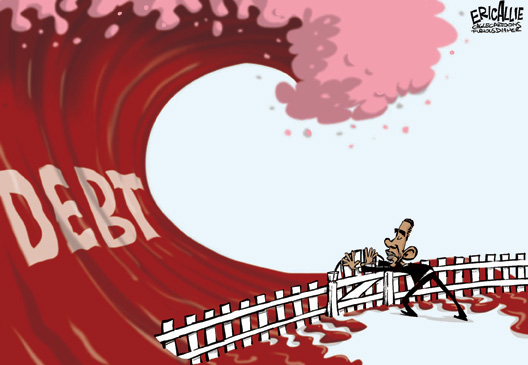 Refinancing is a great option that homeowners have especially when mortgage rates are lower than what they already have in place. Can refinancing a mortgage eliminate debt? The reality is that refinancing a mortgage cannot eliminate debt, although using a refinance to reduce debt can be a very successful financial strategy.
 admin •
  1:40 am •



Recent Comments