April 18, 2012
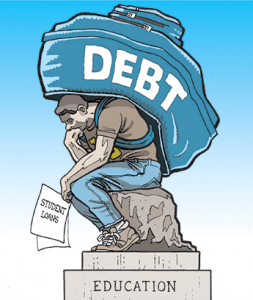 Student loans, if not properly managed, can become a burden that devastates a young professional out of college. Defaulting on payments can ruin a burgeoning credit rating, and an inability to pay the loan at all can lead to years of bankruptcy. Any loan is a risk, and long term loans can have a draining effect on an individual. The question then is how to avoid potentially costly debt as the cost of higher education continues to rapidly increase?
Take Only What You Need
Avoid excess debt by calculating exactly how much you need to borrow in order to complete your schooling. By avoiding excess debt, you can keep the amount owed low and thus payments will be smaller and more manageable. Being frugal for four years can be the difference between good credit and defaulting.
Budget
A defined budget both during and after college can be beneficial in avoiding defaulting on payments. By maintaining the habit of operating within your means, and evaluating your income as such that you can make your payments and lead a normal life, you will know exactly how much you are paying and to what ahead of time. By sticking to a budget you will never accidentally miss a payment, while at the same time saving enough to cover any emergencies that have not been accounted for.
Credit Cards
As a general rule you do not want to stack debt upon debt. A common occurrence in today’s world is the living from month to month on the back of credit card debt, hoping that the next month will be the month where you finally “Catch up.” Credit cards are a money sink, the high amount of interest makes paying off the debt exceptionally hard, and missing a single payment can increase the interest. By accruing credit card debt, student loans become harder to pay, and more of your monthly income gets consumed in interest payments. Credit cards should be avoided as often as possible.
Be Timely and Maintain Records
Do not leave payments to the last minute. Stay on top of your debt, note all the payments, and keep track of what is owed. Maintaining an understanding of your debt is imperative if you intend to pay it off. Slacking off or avoiding keeping records can leave you at a loss when you need that information the most. Questions about when money was paid or received can go a long way toward avoiding a credit score mishap.
Keep Your Lender Informed
Changes in address and phone number can occur quite frequently. It is not enough to simply notify your local post office of the address change. By keeping your lender informed you will avoid possible missed payments due to a mailing error. Small errors can have large repercussions and it is wise, even if occasionally inconvenient to stay ahead of the curve when dealing with your personal finances and the parties involved with your fiscal well being.
Seek Help if Necessary
Admitting to financial problems is often shameful and difficult. The inability to pay one’s bills in a given month can create a cascade effect that can affect one’s finances for years. Though it is difficult, when financial problems present themselves it is best to seek assistance from friends or family if possible in order to avoid problems in the future. If such assistance cannot be obtained inform your lender and see if anything can be done to help.
Construct a Plan
Constructing a financial plan can help assess where one stands and how to achieve financial freedom in the future. A financial plan should carefully measure ones income against one’s expenses, and through such evaluation weed out unnecessary expenses. The plan should convey a solid idea of when debts will be cleared, and should be regularly adjusted as salary and expenses either increase or decrease. Constructing such a plan takes dedication and requires individuals to maintain solid records and be willing to extricate themselves from activities or purchases that can have an adverse effect on their budget. A financial plan can be a valuable tool in overcoming the difficulties of dealing with debt as one enters the workforce.
One of the advantages of student loans is their ability to help create good credit for young adults beginning their lives independent from their parents. The difficulty arises from the lack of knowledge regarding debt and debt management. Asking most college graduates to deal with debt is like asking a child to run before it can crawl. There are no solid foundations in place that educate young adults in the proper methods for budgeting, planning, and debt management. Therefore the impetus is upon the individual to seek out and find the resources that will make him or her better prepared for life after college.
Tags:
budgeting,
debt,
economy,
financial planning,
loans,
money,
personal finance,
student loans
April 16, 2012
 You may be one of the many who are tired of renting. Or you may be someone who’s about to be married and saving for that wonderful place you intend to call home. Will owning a house you can call your own remain a dream? It doesn’t have to be. There are many ways to make this dream become a reality for you. It’s just a matter of putting things in order. All these considerations may sound complicated, but they’re actually not. Just like everything else in life, it’s simply a matter of “looking at the bigger picture” and then breaking them down into smaller pieces, working on accomplishing each piece slowly but consistently.
How to Begin
Start with a well designed plan. First, you have to decide on the basic four: 1) the type of house you want; 2) the location; 3) are you building or buying? and 4) How much is your budget?
Knowing the type of house you want is very basic because building a house, or buying a finished one is not something you do everyday. And so a lot of thought has to be put into considerations such as size and functionality. To address these two concerns, think about your family now, or your family five to ten years from now. What’s the size of your family? How many children do you have? Will you have more in the coming years? How many bedrooms do you plan to have? How big will be the kitchen? Or the dining room? How many bathrooms? All these may sound very simple, but if left unconsidered, it will have an effect later on.
The location of the house is also crucial. More than considerations on distance from your workplace and the school, location also determines the value of the land where you intend to build your house (or where the house you intend to buy is already built). This adds up to the actual cost of the house.
Know the amount of the house you want – even of it’s a rough estimate. Knowing and seeing the amount will help you and guide you in your decisions.
From there, you can now proceed by asking your self this question: can you afford it? If through your pencil pushing you realize that you can’t afford it, then at least the knowledge will help you make some adjustments. Moreover, although you may not have the money now, in lump sum, but there is a way. There are home loans available for those who can afford it in the long haul …
What to Do Next
First, evaluate your finances to find out how much you have, and if you need to get a loan, how much you need to borrow. Second, be familiar with the different lenders in your area and find out as much as you can about them. Do Internet research and visit deifferent websites. Make comparisons. Identify which amongst the many lenders can help you best. Find out about the different home loans they’re offering, their interest rates, the benefits of their loans, and many other information necessary before you make your decision. You can also consult a local mortgage broker for additional information.
Bottom line, there is help out there. Just find the best one, and start working to own the home you’ve always wanted.
Tags:
financial planning,
Home Loan,
House Loans,
loans,
money,
mortgage
April 9, 2012
Most people come to a certain point when they have to borrow money to buy something expensive. This could be a house, home improvements, school fees or a car. Times are economically difficult at the moment so getting a loan isn’t always as easy as it once was. If you have a reasonable credit history though, there are car loans available. Here are some ways that you can make sure you get the best car loan possible.

Know your credit history
First of all make sure you know your credit score, this will put you in a much better negotiating position. Money lenders are far more likely to lend you money if you have shown that you can be trusted to repay the money you have borrowed. That isn’t to say that you can’t be trusted if you have a less than perfect credit history, many people have lost their jobs over the last few years and have found themselves unable to repay their credit. Unfortunately the banks will still penalise those people with higher interest rates and less car loan choice. Check the APR on any car finance you are considering and make sure that you work out the difference between the flat rate and the APR as the difference can be considerable. Even if you have a low credit score, there are many ways that you can improve it over time so don’t get too disheartened. There will also still be loans available to you but they will have much higher interest rates. To avoid a footprint on your credit history if you think you will be turned down, try to get car loan quotes over the phone.
Get a higher acceptance rate
Another way of getting a good car loan deal is to apply for PPI, or payment protection insurance. This doesn’t mean that you have to take it out, in fact it isn’t recommended at all. But, just for applying for a loan with PPI means that you are more than likely going to be accepted. When you have your quote and you have been offered your loan then you can say you have just changed your mind and cancel the payment protection insurance and get the car loan company to give you a new quote. You will normally have fourteen days to do this. Doing it this way will usually mean that you get the lower interest rate too.
The best way to make sure you get a good deal on your car loan is to shop around. If you get a good quote, make sure you read the small print to ensure it is as good as it appears.
Tags:
Car Financing,
car loans,
economy,
loans,
money,
personal finance
March 5, 2012
 There have been numerous articles written about how to avoid getting into payday loan debt. There is clearly a need for such information since this kind of debt is becoming a major concern across America, the UK and in virtually every civilized country. Payday load debt is becoming a worldwide epidemic of astronomical proportions.
MailOnline recently ran an article entitled “How women are being seduced into debt by payday parasites: ‘Instant’ cash firms with interest rates as high as 16,000% are ruining lives”. The article observes that “Over the next six months, it is estimated that every 15 seconds in the UK a female will take out a payday loan.”
The amount of money that advertisers are pouring into campaigns that entice people into high interest short term loans is staggering. Of course the return on investment is obviously worth their advertising investment since they are taking in such huge profits. Until effective usury laws are enacted to prevent such predatory lending practices, this problem will continue to get worse.
It is certainly important to educate people on how to avoid this kind of dept, but that doesn’t help those who are already trapped. The purpose of this article is to help those who have already been seduced into the payday trap. It is for those who need payday loan help right now.
For those who have multiple payday loans on top of each other and are continually trying to get Peter to pay Paul, please pay close attention to the following information. It can provide the relief you are looking for and greatly take the pressure off.
The first step to getting out of the never ending cycle of payday loan debt is payday loan consolidation. Consolidation is the key to stopping the continually increasing tally of interest and late fees on all of the different high interest, short term loans that you have accumulated.
The idea behind consolidation is really quite simple. You simply pay off all of your current high interest payday loans using what is usually referred to as a consolidation loan. Consolidation loans enable you to have a longer payback time period arrangement with a more reasonable interest rate.
These types of debt assistance programs combine multiple payday loan obligations into one small affordable monthly payment. This gives you the breathing room to get your finances back on track. The better programs out there don’t have upfront fees. They allow you to immediately begin reducing the cost of interest fees and renewal fees associated with the payday loans. Once you stop the vicious payday loan cycle and transfer your debt to a manageable long term loan with a reasonable fee, you can then begin putting together a budget that will help you pay off the consolidation loan even faster.
Avoiding payday loan debt in the future is very important, but getting out of the cycle right now is the number one priority. Find a credible and qualified payday loan consolidation provider today and start getting in control of your finances.
Tags:
budgeting,
debt,
finance,
financial planning,
loans,
payday loan,
Payday loan debt,
Presonal finance
February 29, 2012
 When you are in the market for a new loan, there are a number of things you need to take into consideration when making your comparisons. With so many different lenders and loan products however, this comparison can be stressful, time consuming and confusing – but unfortunately it needs to be done because a loan is definitely not a financial product you want to get wrong. The wrong loan can be costly, it can be frustrating, it can put your security at risk and you can be stuck with it for many years.
Fortunately there is a way to make all of these comparisons a little easier. You can’t and shouldn’t avoid spending the time comparing loans, but what you can do is make the comparisons you need to with your current bank, and save yourself some time and save your sanity.
1 – Type of loan
Each lender will offer a number of different loans, but most lenders will specialise in a certain type of loan. Whether a lender is a small business specialist, a teacher’s credit union or a financial institution which specialises in bad credit cases, they will have these specialities to allow them to better understand and cater to their particular client, and offer more comprehensive services for their target customer.
If you can find a lender who specialises in your type of loan, then you will save yourself time in the approvals process because you won’t apply to a high profile lender when you need a bad credit specialist for example, who can offer you alternative verification procedures. Similarly, if you are a small business owner, you want to be dealing with a lender who is a specialist in low doc loans.
Therefore, when you first applied for your current loan, transaction or savings account you should have sought out a lender based on your needs and the type of product you were after, as well as the type of person you are. As a result, your current bank should already be perfectly matched to your needs and situation, and should therefore be the perfect financial institution to tailor a loan to your needs.
2 – Staff
When there is a problem with your account or you have a question you don’t want to be endlessly on hold and you want to speak to someone who will listen and be able to help you. If you already have a number of accounts with a certain lender you will know the level of customer service you receive and whether your questions are answered promptly and easily.
It is also important for a bank to have a well qualified loan officer on their staff who is able to look at your situation and tell you upfront whether you will qualify for a loan, and whether there is anything you can do to improve your chances of approval. If you already have a loan with your current bank then you will have dealt with the loan officer previously, and they will know your financial history in detail. This can help reduce the perceived risk to the bank of lending you more money, as they can see the intricate details of your loan history and how reliable you are with your repayments.
Going back to the small business example, if your current bank is a small business specialist, they will also likely have a small business advisor as part of their staff. Having specialist staff to meet your needs means you can discuss exactly why you need the loan, and your goals for your business, to make sure that a loan is the right option.
3 – Access
Successfully managing your finances means always knowing what is going on with your accounts. Therefore, whether you prefer to check your balances online, on your smart phone, by calling the phone banking number of popping into a branch on your way to work, you will have established routines with your current accounts. This not only means you can stay on top of your accounts, but it also means you know the best ways to avoid unnecessary fees.
Even if you are getting a loan with your existing bank you will likely have to go into the branch to complete the paper work, and this gives you a chance to discuss your loan needs. However, there is no doubt that online banking is much faster and convenient than a branch visit could ever be, and by applying for a new loan with your current lender you don’t need to learn any new online banking systems, or remember any new online banking passwords, because you can access all of your banking products in the one place.
4 – Reputation and relationship
The reason word of mouth advertising is so successful is because it is devoid of any marketing hype or spin, and simply tells the true story of a real personal experience with a service provider. When you are shopping around for anything new, chances are you’ve asked your friends and family which product or service they use, and whether they are happy, to help you narrow down your search and choose a reputable and reliable product. However, the danger when relying too heavily on word of mouth advertising when it comes to banking products lies in how different your financial situation is to that of your friends and family.
There is usually a lot more going on with other people’s finances than they’ll let on, so one person’s experience with a bank may not necessarily reflect another’s. However, that doesn’t mean you can’t rely on word of mouth advertising at all when looking for a lender, because you can ask yourself about your experiences with your current bank, and receive an honest and relevant answer. Ask yourself whether you are happy with the service, whether it is easy to do your banking with your current bank, and whether the products are reasonably priced and fully featured. This will give you a good indication of whether it is worth you taking out a new loan product with your current bank – whom you already know everything about.
Plus, when you have an existing relationship with your bank, it is often possible to have loan application fees waived, and you may even be able to negotiate on any ongoing fees, or qualify for a lower interest rate because you are known to the lender.
Alban has been blogging about personal loans for the last 3 years. He has also contributed several articles on savings accounts and credit cards.
Tags:
banking,
banks,
finance,
home loans,
loans,
personal finance,
short term loans



 admin •
  10:31 am •



Recent Comments