July 16, 2012
 Small companies are the backbone of UK corporate land and David Cameron, Britain’s Prime Minister, no less, has recently said that he believes that they are crucial in creating jobs, wealth and opportunity. Small businesses are seen as having a key role to play in play in the UK’s economic recovery – more major economic turmoil from continental Europe notwithstanding.
Even so it is still depressingly tough for small companies with a host of problems to overcome and it seems little in the way of real meaningful support from government or the banking sector. For them, it appears, that any kind of business lending is just still too difficult or unattractive.
Moreover, smaller companies are often finding that they are being squeezed financially by larger ones who are effectively using their size and power to dominate smaller companies and use them in effect as a source of finance. According to the Federation of Small Businesses’ statistics as many as 30% of small businesses say they are being paid late on a regular basis.
Whilst there is some legislation around to prevent this (late payment interest etc.) many small companies are reluctant to use these methods as they risk damaging the relationship with their customers.
There are a few practical things that all companies (even the larger ones) should do to help minimize late payments and reduce the pressure that this puts on cash and the ever increasing risk of default.
Firstly make sure that your terms of payment are agreed in writing. See a lawyer if you haven’t already got some well written and legally enforceable Terms & Conditions of sale.
Make sure you have a formal system in place for credit check all your customers. There are many ways to do this with a number of web sites available online, it doesn’t cost very much and it is quite an easy thing to do. This will help you to make informed credit decisions and many of them will tell you if your debtor has a track record for paying people on time.
Try to have a champion at your customer (usually the person buying your goods or services) who can help pressure the finance department if needed and will help smooth out any issues.
Make sure you get your billing right, errors and omissions are the commonest reasons for delayed payment. Don’t provide your debtor with any excuse; check and double check names, addresses, purchase order numbers, prices and all calculations.
Make sure that you or someone in your team calls your debtor well in advance of the invoice falling due for payment to make sure it has been received, is being processed and that there are no problems with it – don’t wait until it is overdue.
Review you overdue debts position regularly (create an aged debtors report) and make sure that all overdue debts are escalated for management intervention.
Tags:
Business,
Cash Flow,
economy,
investments,
money
July 15, 2012
 You are here because you want to know more about how to trade foreign currency. Foreign currency, also known as foreign exchange, or FX as it is most popularly called, is traded on one of many markets collectively called the FX market. Naturally, you want to know how to make money trading FX, but you’ll also want to learn how to avoid losing money while trading FX. This is the key to successfully trading FX – trade smart. You trade smart by doing exactly what you are doing here – learning all that you can about every facet of the FX world.
One of the most important things you can do to save yourself a lot of heartache and heartburn is to learn about the forex brokerage firm that you plan to associate with. Fly-by-nights and Johnny-come-lately FX companies are creating and opening up websites every day. Not all of them are legitimate, unfortunately, and there is little recourse to the investor who unwarily opens and establishes an FX trading account with his hard-earned cash.
A reputable company will be one that has been around for years. It’s important that you read the company’s “about us” page and learn who they are, where they are located, what they stand for, and what their policies are, try to read out source forex brokers reviews and see what other traders think about them. It’s also important to learn what protections and safeguards your account will have. Also consider seeking out the opinions, criticisms and testimonials of other forex traders who have used their services to help you assess the company before you open and fund your trading account.
And speaking of funding, be certain that you know exactly what the brokerage firm requires of you. A disreputable firm may lure you in with a low initial deposit, only they neglected to clearly state that that low initial deposit was below the minimum trade. Be absolutely clear as to the minimum and maximum amounts you need to start your account and start trading with your account.
While it’s absolutely true that experience is the best teacher, it’s equally true that forewarned is forearmed. If you want to trade FX – trade smart!
Tags:
Cash Flow,
economy,
Foreign Exchange,
Forex,
investments,
money,
Trading
July 1, 2012
 Using the term “budgeting” can sometimes be off-putting because people think it’s a way to deprive them of something. Budgeting is actually a way to find out how much money you need for living expenses so that you can control how your pay is used and have something to set aside. Here are a few effective budgeting strategies you can use to meet your financial goals.
Tip #1: Record everything
You may list down your essential expenses like utility bills and insurance payments, but do you also record the smaller ones, like the little purchases at the convenience store or even your vending machine jaunts? Remember, these seemingly trivial expenses do add up, and they can mess up your budget. The trick is to keep all your receipts and write everything down, so that when you work on your budget, it’s accurate, down to the last cent, allowing you to better manage how your hard-earned income is spent.
Tip #2: Select your platform
If your finances are really simple, then maybe a pencil and paper are all you need to plan your expenses. However, if your budget is a bit more involved, you’d need a platform that can make things easier for you. For instance, you can use spreadsheets to map out your budget from scratch or download templates for something more specific.
You can also look for online personal finance services like ClearCheckbook and Money Strands or any other similar websites. Such services have useful budgeting features like generating a spending plan and chequebook balancing.
Tip #3: Spend less than you earn
All your efforts at budgeting would be ineffective if your expenses are larger than your income. What you need to do is spend less than what you earn. Take note that if you use up more than your income, you will accumulate debt. If your income and expenses are pretty much equal, you need to spend less or earn even more. If this is the case, go for spending less it’s much easier than getting a second job. Spending less than your income allows you to accumulate wealth.
Tip #4: Pay yourself first
Think of putting money in savings like a bill to be paid to yourself. Indicate the savings as part of your budget and withdraw it before spending your funds on bills, groceries or any other expenses. See to it that you deposit your savings budget immediately in a separate account so that you won’t mistakenly spend it. If possible, set up a way for your savings to be deducted automatically from your salary. You won’t even realise you’re accumulating wealth.
Tip #5: Reduce entertainment expenses
There’s probably an allotment for “entertainment” in your budget, which could cover expenses like watching a movie, going on dates or even buying video games. Play close attention to these costs because it might cause you to overspend. To reduce entertainment expenses, consider:
- Getting bundled packages for phone, television and internet service.
- Borrowing audio books, movies and even video games from public libraries.
- Visiting free art exhibits or movie festivals for dates.
Tip #6: Prepare your own meals
It’s more expensive to eat out than to prepare your own meals. Consider that having a meal for two people at a mid-priced restaurant would cost around AU$77 to AU$80. Groceries for two people, on the other hand, would cost around AU$150 to AU$200 per week. You can eat at inexpensive restaurant (i.e. fast food) to save on costs, but that’s not good for your health. To save money on food, learn to cook healthy meals. That way, you cut down dining out costs and possible doctor visits.
Tip #7: Overestimate when allotting funds
If you’ve been budgeting for a while, then you probably know that many expenses have variable costs due to fluctuating prices. To prepare your budget for this unpredictability, look over the last year’s worth of receipts/bills and pick the most expensive you ever paid as your guide until an increase is announced. Here’s another tip: When allotting your funds, make sure you don’t use the exact figure. Instead, round off to the higher number, so that you won’t be short on funds.
Tags:
budgeting,
economy,
financial planning,
money,
personal finance,
savings
June 29, 2012
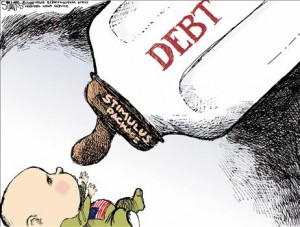 Not so long ago, ‘debt’ would have been a dirty word for many people. The financial crisis in Britain presently has led to people speaking about it candidly. Many will use an IVA to help extricate themselves from debt.
Debt has long been regarded as a taboo subject and people were decidedly reticent to talk about it. The current financial climate, however, has led to record numbers experiencing debt problems of one form or another. As a result of this, it is no longer considered controversial to discuss our debt problems with our friends and family. Debt management can be a particularly difficult due to spiralling living costs but many are beginning to see an IVA (individual voluntary arrangement) as a viable means of tackling financial arrears. Debt management in the UK is becoming increasingly difficult and the Citizen Advice Bureau views the current situation as ‘worrying’. Many in debt will use an individual voluntary arrangement with licensed insolvency practitioners to tackle their debt arrears.
Why are We in Debt?
There are a number of contributory factors to the current financial crisis that grips the nation. From the credit crunch to spiralling living cost, all are having a profound impact upon consumer’s finances and financial experts predict that insolvencies will hit record levels. One of the primary reasons that debt management is proving so tricky for many consumers across the UK is spiralling living costs. Energy bills, cost of food, petrol prices and all sorts of price hikes are hitting consumers in the wallet and those threatened with insolvency or bankruptcy are turning to an individual voluntary arrangement to help them out of their financial hole. Teresa Perchard of the Citizen Advice Bureau stated, “These latest figures paint a worrying picture, suggesting a significant number of households are struggling to meet their most basic living costs.”
IVA – A problem shared
Part of the problem with debt is the loneliness that is associated with it but many are finding that the increasingly accepting attitude surrounding debt is making it easier to get their finances back on track. Many financial experts believe that, when it comes to debt management, an IVA is an excellent means of tackling debt problems head on. An IVA is a legally binding contract between creditors and those in debt and it allows them to pay back their outstanding arrears at a level that is financially feasible for them. Research conducted by Alliance & Leicester found that people are now more likely to talk about debt issues than they are about sport or celebrities.
IVA – Growing debt concerns
The primary reason that people are seemingly more amenable to discussing debt is the fact that money matters and financial concerns are on the mind of the majority of consumers in the UK. Ewan Edwards of Alliance & Leicester states, “Our survey reveals money matters have a firm place at the forefront of people’s minds at the moment.” With insolvency set to reach record levels, many consumers who are swamped in debt are looking for a financial solution to appease their creditors and increasing numbers are opting for an IVA in order to do this.
Tags:
budgeting,
debt,
Debt Consolidation,
economy,
financial planning,
money,
personal finance
June 26, 2012
 No one ever wants to think that something terrible might befall them or their family, or even their car, flat or home, but unfortunately, these things do happen. Many wind up in quite large amounts of debt, or even bankruptcy, simply because something that they were unprepared for happened, be it an illness, a car accident, or even a home repair disaster.
In most cases, insurance will cover the necessary damages, but not always, and that is where the concept of having an emergency fund comes into play. An emergency fund, also called a rainy day fund by some, is basically just as it sounds a stash of money which has been saved and is to be used in the event of an emergency.
Many people stockpile their emergency fund for things like sudden car repairs, say on the way to the office the brakes on your automobile start squeaking, unless you have planned for brake replacements, or have your rainy day fund in place, it could be quite difficult to just reach into the wallet and fork over hundreds of pounds for an unexpected issue. Home repair problems are another big source of uses for any emergency fund, a flooded shower, a termite infestation, a hole in the roof, are all things that can put any sort of emergency fund to use quickly.
And in this volatile economy, building up an emergency fund is an intelligent idea for if another deep market fluctuation occurs and jobs are made redundant, getting sacked, while certainly an unexpected disappointment, might not be quite as terrible if a few months mortgage were sitting in the rainy day fund.
So how to get started, right then, first things first, take a look at your budget and determine just how much funds you will be able to put away. Next, set up an automatic withdrawal from your account, preferably right at the same time you might receive each pay check, then you won’t even know the money was ever there. Set up these withdrawals each month, or even every two weeks. After six months or so of saving, you will be pleasantly surprised to find such a tidy sum sitting in your emergency fund.
The goal of this fund is really to never use it. Do not borrow from the emergency fund to go on holiday, or buy the family Christmas gifts, the funds in that account are only be used in case of an emergency. Once this fund is set up, you will be able to rest easily that if any unexpected crisis were to occur, you would be able to finance it with the money in your emergency fund (or at least partially finance it), and not skip much of a beat in your regular financial life. It is a piece of mind that is relatively painless to set up and get going.
Tags:
Business,
Cash Flow,
economy,
financial planning,
Funds,
money,
real estate



 Small companies are the backbone of UK corporate land and David Cameron, Britain’s Prime Minister, no less, has recently said that he believes that they are crucial in creating jobs, wealth and opportunity. Small businesses are seen as having a key role to play in play in the UK’s economic recovery – more major economic turmoil from continental Europe notwithstanding.
 admin •
  4:35 pm •



Recent Comments