April 29, 2012
 Going on a summer vacation is a tradition in America, but it seems that most tourist destinations use this fact as an excuse to hike up prices. Fortunately, there are ways to save money on travel during the summer and still have a great vacation.
Flying is practically essential if you plan on leaving your immediate area. If you need to save money air fare, try a few of these tips.
Flying Tips
1. Plan to fly on Tuesday, Wednesday, or Saturday. Since many business travelers try to avoid these days, airlines offer discounted travel on these days.
2. Be sure to start checking air fare prices early. If you aim to book your air fare thirty to ninety days from when you and your family want to fly, you’ll be in the zone to get the lowest prices. Historically, airlines offer higher fares in the time frame before ninety days out to leave room so that they can adjust for higher fuel costs if needed. Within thirty days of travel, demand for seats is higher, causing the airline to charge more.
3. Try to fly from a major hub. In general, major international hubs like Los Angeles and Chicago offer airfares that are usually cheaper than flying from your local airport.
4. Watch out for last minute deals. Last minute deals on airfare are offered by nearly all of the major carriers, and if you live near a major hub they could save you a lot of money. For example, airlines will typically sell their last seat or two on flights to other major hubs for a fairly significant discount.The airlines assume that they would rather make some money by selling the seat rather than let it go empty. These deals are usually only offered on one or two seats at a time, so you will have to keep your travel party small to take advantage of them.
5. Be willing to stay overnight at a strange airport. In order to completely fill their planes, airlines offer great deals on “split” or overnight flights. These flights will require you to take the very last flight at night to an airport, stay the night, then leave on the first flight of the morning.
Driving Tips
Depending on the car you drive (and the gas mileage), it might be a good idea to get a rental car. Make sure your car insurance covers car rentals before leaving the lot.
1. Use cell phone apps to find cheap gas. Gas stations that are located near the highway typically charge more than those located off the highway. Have kids figure out if driving a little further will be worth the savings.
2. Use cruise control. Most modern vehicles will be able to use fuel more efficiently in this mode. Also, setting the car speed to the speed limit will reduce your likelihood of getting a ticket.
3. Pack lightly. Every extra one hundred pounds of stuff in your car can reduce your fuel efficiency by as much as one percent. Try to avoid carrying a lot of extra gear.
Lodging can be a major expense on any vacation. Follow these tips to save on hotels.
Lodging Tips
1. Consider options outside of hotels. Staying with friends and camping out are two great ways to avoid having to pay for hotels. Many campsites today come with amenities such as swimming pools and upscale bathrooms, making camping fun for everyone in a family. Other options can include renting a house or condo. While not as cheap as camping, these kind of places can be much more affordable than renting multiple rooms when traveling with a large group.
2. Travel during the week. Weekend rates for hotels are usually the highest. Try to plan your travel during the week to get better rates.
3. Look for discount codes and coupons. Booking online can save money, especially if you have a coupon code for the hotel chain or the booking website. Just type in the hotel name and “coupons code” into a search engine to find discounts.
The summer is a great time to go on vacation, and many people still have memories of the great family trips they took as kids. Don’t be afraid to ask for discounts and look for deals at every place you plan to travel this summer.
Author Bio: Danielle Parker is a freelance writer and a very picky consumer. Whatever she purchases, she only wants the best. Even when purchasing car insurance, she is only interested in the top rated car insurance companies.
Tags:
financial planning,
money,
personal finance,
Saving tips,
savings
April 27, 2012
 The world is an unpredictable place and even the most careful person can happen upon unforeseen events that can turn their existence upside down. That is why it is increasingly important for homeowners to purchase home insurance and for anyone with a family to look after to consider purchasing life insurance.
Taking out these two policies will provide peace of mind and more importantly, will make things so much easier to deal with in case of an unexpected, unfortunate incident.
Home insurance
Home insurance policies — which can also be known as hazard insurance or homeowners insurance — are property insurance that cover private residences. These policies typically cover the physical structure of the house as well as personal belongings inside the house, and liability. Since all of this is covered under one policy, the homeowner pays just a single premium. Home insurance and life insurance policies have some similar history.
Home insurance is a relatively new type of insurance in the United States, where the first official policy was available in 1950 — shortly after World War II and the subsequent boom in middle class home ownership. Home insurance was available in Great Britain before that year, and was available in other forms in parts of the United States, but it was not known as home insurance and did not do quite the same thing.
Life insurance
While home and life insurance both give peace of mind, life insurance has been providing that relief for far longer, as it has been available in varying forms for centuries. Life insurance is currently available in two forms: term — or temporary — insurance, and permanent insurance. There are also policies available that cover just accidental death and do not cover such things as suicide or health problems, and are typically sold for a much lower premium because of this fact.
Why choose insurance?
Any homeowner who does not get home insurance is playing a very risky game — one where the consequence for losing can be the loss of hundreds of thousands of dollars. Anyone who owns a home should have a home insurance policy. Life insurance is a bit more tricky, but it still makes sense to have some sort of policy so that in case of death, loved ones are taken care of and the cost of a funeral is covered.
Both of these policies provide something priceless: the ability to go to sleep at night with less worries and more security.
Tags:
financial planning,
Home Insurance,
insurance,
Insurance Advice,
money,
personal finance,
Policy
April 20, 2012
 It seems that every time you go grocery shopping it is a little more expensive than the last time. Prices seem to be consistently creeping upwards by a few more cents all the time. Weather damaging the crops, animals falling ill, gas prices increasing – these and many more factors are such that their impact will be resilient enough to be felt at the grocery store as well. Instead of dreading shopping use these tips to help save money and keep your grocery bill in check –
Coupons
Coupons are a great way of saving money on groceries. There are some Sunday papers that still offer coupons to cut out. In order to get more of them do a quick search on the Internet and you will come across websites which will feature coupons. Some will need to be printed while in case of others you would simply need to load the coupon to your favorite grocery store card. Now if the coupon is used for an item that is on sale it can result in added savings. Some grocery stores double and even triple the value of a coupon up to at least a dollar.
Price Book
This is one of the easiest things to do and can take the form of a notebook or even an excel sheet. Since there are certain items like canned goods which are purchased every time, they could be written down per page or column if using a spreadsheet. List the stores that you shop at on the left and then list the normal price that is usually paid. This type of system makes it easier for tracking popular items and then comparing the sale ads to see if the best price can actually be picked up at.
Meals
Write down the meals that you would like to cook for the time in between your shopping. This makes it easier to look through the ads and see if the needed ingredients are available on sale anywhere. Planning meals helps to make the money last even longer when shopping for grocery.
Cook from Scratch
No matter how many members are in a household it always seems to be easier to come home and serve a packaged meal. This is nice but it does cost almost double than if you made it yourself. It is understandable that after a long day at work you are worn out and exhausted but it is equally important to realize that a crock pot on the counter is the perfect way to make your meals. Just put everything in it before getting ready for work and upon your arrival at night it is already cooked and ready to serve.
List
As you thumb through the ads and gather your coupons make a list while proceeding downwards. This helps you stick to buying only what is needed and hence ensures maintaining of the budget. Sometimes when walking through the store there will be items on sale that might seem tempting. However, before grabbing these it would be wise to think if the offer is a good one and if the items are truly needed at home.
Tags:
Budget,
finance,
financial planning,
Grocery,
money,
personal finance,
savings
April 18, 2012
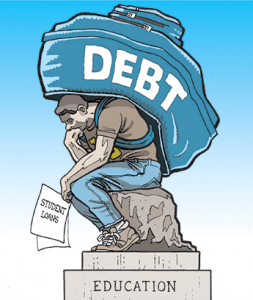 Student loans, if not properly managed, can become a burden that devastates a young professional out of college. Defaulting on payments can ruin a burgeoning credit rating, and an inability to pay the loan at all can lead to years of bankruptcy. Any loan is a risk, and long term loans can have a draining effect on an individual. The question then is how to avoid potentially costly debt as the cost of higher education continues to rapidly increase?
Take Only What You Need
Avoid excess debt by calculating exactly how much you need to borrow in order to complete your schooling. By avoiding excess debt, you can keep the amount owed low and thus payments will be smaller and more manageable. Being frugal for four years can be the difference between good credit and defaulting.
Budget
A defined budget both during and after college can be beneficial in avoiding defaulting on payments. By maintaining the habit of operating within your means, and evaluating your income as such that you can make your payments and lead a normal life, you will know exactly how much you are paying and to what ahead of time. By sticking to a budget you will never accidentally miss a payment, while at the same time saving enough to cover any emergencies that have not been accounted for.
Credit Cards
As a general rule you do not want to stack debt upon debt. A common occurrence in today’s world is the living from month to month on the back of credit card debt, hoping that the next month will be the month where you finally “Catch up.” Credit cards are a money sink, the high amount of interest makes paying off the debt exceptionally hard, and missing a single payment can increase the interest. By accruing credit card debt, student loans become harder to pay, and more of your monthly income gets consumed in interest payments. Credit cards should be avoided as often as possible.
Be Timely and Maintain Records
Do not leave payments to the last minute. Stay on top of your debt, note all the payments, and keep track of what is owed. Maintaining an understanding of your debt is imperative if you intend to pay it off. Slacking off or avoiding keeping records can leave you at a loss when you need that information the most. Questions about when money was paid or received can go a long way toward avoiding a credit score mishap.
Keep Your Lender Informed
Changes in address and phone number can occur quite frequently. It is not enough to simply notify your local post office of the address change. By keeping your lender informed you will avoid possible missed payments due to a mailing error. Small errors can have large repercussions and it is wise, even if occasionally inconvenient to stay ahead of the curve when dealing with your personal finances and the parties involved with your fiscal well being.
Seek Help if Necessary
Admitting to financial problems is often shameful and difficult. The inability to pay one’s bills in a given month can create a cascade effect that can affect one’s finances for years. Though it is difficult, when financial problems present themselves it is best to seek assistance from friends or family if possible in order to avoid problems in the future. If such assistance cannot be obtained inform your lender and see if anything can be done to help.
Construct a Plan
Constructing a financial plan can help assess where one stands and how to achieve financial freedom in the future. A financial plan should carefully measure ones income against one’s expenses, and through such evaluation weed out unnecessary expenses. The plan should convey a solid idea of when debts will be cleared, and should be regularly adjusted as salary and expenses either increase or decrease. Constructing such a plan takes dedication and requires individuals to maintain solid records and be willing to extricate themselves from activities or purchases that can have an adverse effect on their budget. A financial plan can be a valuable tool in overcoming the difficulties of dealing with debt as one enters the workforce.
One of the advantages of student loans is their ability to help create good credit for young adults beginning their lives independent from their parents. The difficulty arises from the lack of knowledge regarding debt and debt management. Asking most college graduates to deal with debt is like asking a child to run before it can crawl. There are no solid foundations in place that educate young adults in the proper methods for budgeting, planning, and debt management. Therefore the impetus is upon the individual to seek out and find the resources that will make him or her better prepared for life after college.
Tags:
budgeting,
debt,
economy,
financial planning,
loans,
money,
personal finance,
student loans
April 16, 2012
 You may be one of the many who are tired of renting. Or you may be someone who’s about to be married and saving for that wonderful place you intend to call home. Will owning a house you can call your own remain a dream? It doesn’t have to be. There are many ways to make this dream become a reality for you. It’s just a matter of putting things in order. All these considerations may sound complicated, but they’re actually not. Just like everything else in life, it’s simply a matter of “looking at the bigger picture” and then breaking them down into smaller pieces, working on accomplishing each piece slowly but consistently.
How to Begin
Start with a well designed plan. First, you have to decide on the basic four: 1) the type of house you want; 2) the location; 3) are you building or buying? and 4) How much is your budget?
Knowing the type of house you want is very basic because building a house, or buying a finished one is not something you do everyday. And so a lot of thought has to be put into considerations such as size and functionality. To address these two concerns, think about your family now, or your family five to ten years from now. What’s the size of your family? How many children do you have? Will you have more in the coming years? How many bedrooms do you plan to have? How big will be the kitchen? Or the dining room? How many bathrooms? All these may sound very simple, but if left unconsidered, it will have an effect later on.
The location of the house is also crucial. More than considerations on distance from your workplace and the school, location also determines the value of the land where you intend to build your house (or where the house you intend to buy is already built). This adds up to the actual cost of the house.
Know the amount of the house you want – even of it’s a rough estimate. Knowing and seeing the amount will help you and guide you in your decisions.
From there, you can now proceed by asking your self this question: can you afford it? If through your pencil pushing you realize that you can’t afford it, then at least the knowledge will help you make some adjustments. Moreover, although you may not have the money now, in lump sum, but there is a way. There are home loans available for those who can afford it in the long haul …
What to Do Next
First, evaluate your finances to find out how much you have, and if you need to get a loan, how much you need to borrow. Second, be familiar with the different lenders in your area and find out as much as you can about them. Do Internet research and visit deifferent websites. Make comparisons. Identify which amongst the many lenders can help you best. Find out about the different home loans they’re offering, their interest rates, the benefits of their loans, and many other information necessary before you make your decision. You can also consult a local mortgage broker for additional information.
Bottom line, there is help out there. Just find the best one, and start working to own the home you’ve always wanted.
Tags:
financial planning,
Home Loan,
House Loans,
loans,
money,
mortgage



 admin •
  10:28 am •



Recent Comments