February 13, 2015
 Are you worried about the upcoming tax season? Are you just dreading getting all of your documents in order and calculating costs, expenses, and other financial details? When deadlines inch closer and closer, and you are not equipped with financial expertise, you want help, and you want it fast. There is nothing worse than being unprepared for the onslaught of tax returns and documentation that comes at the end of the year. For your preparation of financial statements in Calgary, you need the best of the best. Whether you have business needs, or require individualized assistance, highly qualified, professional accounting services can help you every step of the way. Fortunately, there are reputable services and staffers waiting to guide you through every step of the year-end process
Prep With The Best
With a professional accounting services company, you can rest assured knowing that the most highly-qualified and skilled experts are working with you and for you. These employees know how to sufficiently prepare and plan all of the aspects of annual bookkeeping, so they can provide top-performing assistance. With a wealth of knowledge, including expertise in the Canadian Income Tax Act and its obligations and regulations, businesses and individuals trust these professional accountants to handle all of their tax needs. With all of the required paperwork and actions, not to mention the national rules for filing taxes, things can seem overwhelming. Do yourself and everyone else a favor and trust the experts to walk you through every detail.
Trusted And Reliable Assistance
While dealing with the final preparations for tax filing is a concern for both people and businesses, there is also the financial planning that needs to go into next year. Reliable accountant specialists can work with you to develop a strategy that will guarantee a maximum investment return for you, as well as minimize added expenses and headaches. They have the trusted expertise you are looking for when handling the preparation of financial statements. With so much paperwork and documentation to locate, organize, and submit, why not depend on someone whose main focus is just that? Entrusting your financial statements with someone who has the certifications and appropriate training will help you secure your monetary assets and financial well-being. These benefits can set you on a path to financial stability for years to come.
Efficiency for Everyone
Finally, these accountants can be a wonderful advantage to anyone. Business owners use these professional services for all of their financial organizing tasks, such as keeping logs and records orderly and accurate. Individuals who employ these services for their particular financial circumstances no longer fret tax season, for they are armed with an experienced and qualified tax expert. It is about time that you enjoyed the ease, convenience, and reliability of such professionals.
Tags:
Business,
Capital,
economy,
Financial Accounting,
money,
Tax Filing
February 8, 2015
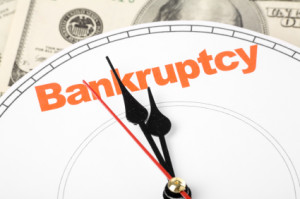 Filing for bankruptcy is a drastic step in regaining your financial health, and the impacts are long-lasting. It is not something to be done lightly, or without weighing out all of your available options. If you are drowning in debt, however, bankruptcy can be a valuable first step in rebuilding your financial future.
GetFreeOfBills.com notes that bankruptcy comes in two forms: Chapter 7 and Chapter 13. While Chapter 7 allows you to discharge most debts, Chapter 13 requires you to follow a structured plan to repay your debts under more favorable terms. Depending on the amount of disposable income you have, you might be required to file Chapter 13. Regardless of which type you file, however, the pros and cons are generally the same.
Pros
- Clean slate: A bankruptcy provides a clean slate. It effectively resets your credit to zero, except for the debts that cannot be discharged such as student loans, recent back taxes, and child support. It provides you with the opportunity to stop making costly payments and provides you with more money to live on each month.
- Opportunity to rebuild: Some people believe that bankruptcy prevents you from ever having credit again, but this is not the case. Many people manage to build new lines of credit shortly after their bankruptcy, and it gets easier as time passes. While it is true that bankruptcy remains on your credit report for 10 years, its effects gradually lessen.
- Stopping adverse collections actions: If you are being hounded by creditors, facing foreclosure, or afraid that your wages will be garnished, bankruptcy can be a psychological relief. When you file for bankruptcy, you will receive an automatic stay from the court. This forces your creditors to cease all adverse collections activities against you. If you have a bankruptcy attorney, he or she will also act as a shield, handling creditors on your behalf.
- Exemption laws: Your home and car are generally exempt from bankruptcy, as long as you continue to meet your payment obligations. You are also entitled to a cash value for personal possessions. If you have a significant number of luxury possessions, you might be required to sell some, but the exemptions are generally high enough to let most people keep their personal items.
- Job protection: Although some employers will not hire applicants with a bankruptcy on their credit report, the job you already have is protected. It is illegal for an employee to be fired for declaring bankruptcy.
Cons
- Damaged credit: Bankruptcy is a major hit on your credit report. In the immediate aftermath of the bankruptcy, you might be unable to get any new credit at all. Although it usually does not take long to get new offers, you will fall into a high risk category for lenders. Expect to pay interest rates that are significantly higher than the ones you had prior to your bankruptcy. However, if you are in the position of filing for bankruptcy, your credit is probably already damaged. Some people find that the credit hit is much less significant than they anticipated.
- Filing costs: Filing for bankruptcy typically costs a few hundred dollars, depending on your location. Attorney’s fees are billed on top of that. However, in most cases you can make a payment arrangement if you can prove that paying a lump sum would present a financial hardship.
- Embarrassment: Although it is surprisingly common, filing for bankruptcy still carries a certain stigma. Some people worry that their loved ones will find out and ultimately think less of them for their decision. However, bankruptcy typically comes at the end of a long journey through mounting debt. Most people understand that sometimes life happens, and do not judge their friends and relatives for making a tough financial decision. Besides, having your home foreclosed or your car repossessed is not exactly a less embarrassing option. When taken seriously and only as a last resort, bankruptcy can actually be the smartest choice for some situations.
- Exempted debts: Some debts cannot be discharged in a bankruptcy, including recent back taxes, child support, and student loans. In addition, most people choose to keep their mortgage and car loan, if applicable. However, discharging your other debts will create more available money each month, which can then be diverted toward paying your remaining obligations.
Bankruptcy is not for everyone, but it is the best solution for many people. Attorney David M. Often of Get Free of Bills understands the complex decision-making process that is involved in determining whether bankruptcy is the right choice for you. Contact his office today for professional advice on how to proceed along your journey to financial freedom.
Tags:
Bankruptcy,
Bankruptcy Laws,
budgeting,
Credit Card,
Credit Card Debt,
Debts,
Financial Panning,
Laws,
money
January 21, 2015
 Just as the name implies, a short term debt financing stands out as a financing form that involves a financial obligation a company has to fulfil in a shorter period of time when compared with regular financing options. In most situations we are talking about a maximum of 2 years, although 1 year financing is usually offered.
Many companies opt for short term debt financing because of the fact that they want to have more working capital available or it is possible to need more money as day-to-day operations need more cash. Cyclical operation conditions or companies that are faced with international trade need such financing in various situations.
According to Today’s Growth Consultant Reviews, there are 4 types of short term debt financing that you can consider:
This is basically an instant credit extension offered by the lending institution. As a company gets the overdraft agreement, it can transmit or draw down cash from the account beyond the balance that is available. Credit amount will always depend on overdraft limits that are negotiated with banks. In this case the advantage is that you will only take out as much as you need for the operation activity when it is necessary.
A credit letter is basically a letter that comes from the bank and guarantees payments towards sellers. Sellers are guaranteed that amounts will be received during credit period. In this situation the advantage is that the company is usually going to be offered a better overall credit term when dealing with a supplier.
These are loans that have to be repaid in a short period of time, together with the associated interested. This is a loan that is not revolving and usually has a completely fixed repayment period. A company can use it in order to gain more liquidity as working capitals are lower or are necessary (for instance, for paying creditors or buying stocks).
This document will bind a party to pay an amount of money at a fixed rate to the secondary party at a specific date. In most cases this is a bill that appears when dealing with international trade. Exporters can grant a credit for the importer for the goods shipped with an exchange bill for the amount.
Short Term Debt Financing Qualification
In order to receive such financing you do not need to think about formal qualifying criteria. Usually, the company needs to hold a stronger business case that supports business viability and owner capital. A supplier can offer a short term credit for the purchases in order to enhance competitiveness. The bank will offer overdrafts and short term loans in order to earn an interest and build client relationships. To put it simply, if the company is transparent in operations and financials, there is a strong possibility that such financing would be offered.
Tags:
budgeting,
credit,
debt,
Debt Problems,
economy,
financial planning,
money,
personal finance
January 13, 2015
 The key aspect for maintaining an excellent investment portfolio is investment analysis and monitoring. These processes are generally defined by the portfolio valuation service, which may also cater to fund managers, shareholders, limited partners, beneficiaries or holding companies.
All stakeholders are very demanding these days and they are constantly requesting for reports on the development of the portfolio companies. This often includes sporadic assessments and NAV (net asset value) calculations. When you are selecting a valuation service, you will have to check out their frequency of checking the NAV. Some services may offer monthly analysis, whereas others may offer quarterly or annual NAVs. There is an urgent need to identify the best valuation service because there are many services that may not give the desired reports in the manner that you need them. Independent and trusted analysis is the need of the hour these days—mainly in the corporate world. When you are investing your money in various companies through a fund manager, you will find that they can be biased in their valuation. In such instances, getting the valuation done by third-party services is really a good idea.
Monitoring the portfolio is always based on the analysis and evaluation of the different portfolio companies. There are two key aspects that a valuation service should look out for — the financial aspects and the soft factors. The financial aspects of the valuation are important, but the soft factors or the qualitative factors are also equally important. During monitoring or evaluation of the portfolio, you may have come across some very important terms such as the market environment, which generally comes under soft factors or the qualitative factors. When you sit face-to-face with the valuation service executive for the very first time, you will have to make sure that you are interested in the product.
Valuation and reporting go hand in hand, but there are different methods used for valuation and reporting. Look out for portfolio valuation services that provide your quarterly and annual reviews. They should also be providing you with summaries and overviews of evaluated companies. Valuations generally follow strict guidelines so that there is no ambiguity what so ever. Typically, the valuation follows the IPEV valuation guidelines. IPEV stands for International Private Equity and Venture Capital Valuation Guidelines. Some valuation services may also adhere to the AIFM Alternative Investment Fund Managers Directive guidelines. When the valuation firm adheres to the IPEV and the AIFM guidelines, the company will surely meet all independent valuation needs.
Since valuation is a very important process, selecting the right valuation company or individual is paramount. There are thousands of valuation companies and individuals, but all of them may not have the expertise and experience. For most valuation companies, efficiency and competitiveness go hand in hand. So, you will find that rates are very competitive these days. Valuation experts who have decades of experience in valuation are always preferred to do the valuation of your portfolio. Also, valuation experts who provide an entire gamut of valuation under one roof are always selected these days.
Tags:
Assets,
Business,
economy,
financial planning,
investments,
money
January 11, 2015
 In October 2014, the personal saving rate, the ratio of personal income saved to personal net disposable income, was only five percent in the United States. Americans are not known for being savers; the all-time high for personal saving ratio was 14.60 percent in 1975 which is lower than many developing countries.
The truth is, life happens and it can often be expensive. By building your savings into a nest egg, you will be better prepared for these developments.
A Nation of Spenders
Almost half of American households (44 percent) have no more than three months of expenses in a savings account, leaving them unprepared for medical, legal, or other emergencies. Many rely on credit which accumulates expenses through interest rates and in some unfortunate circumstances, late or missed payments.
The National Foundation for Credit Counseling conducts a survey every year on consumer financial literacy. According to the latest survey, 16 percent indicated that their emergency fund was insufficient. The same percentage also admitted to not having enough in savings to retire.
Saving Is Necessary
Relying on credit instead of stashing away money is a risky game. As your balances rise, so do interest rates and fees. Many people file bankruptcy because they do not keep up with servicing their debt.
As this pattern continues, credit scores drop but life does not stop happening. If a car needs brakes, a water heater blows up, or you get sued or face legal charges and need to pay criminal defense lawyer fees, this means having to find money quickly. A household that is liquid asset poor is also vulnerable to predatory lending that only deepens financial insecurity.
Get Started
The economy is unpredictable and only a healthy savings account ensures stability. The time to develop this habit is now. Here are suggestions to get started:
- Start Small. Even if you only transfer $5.00 from every paycheck into savings account, it is better than nothing. The trick is to make this a habit and putting aside a small amount will accomplish that. You will likely increase this amount later, due to the satisfaction of saving.
- Set a Goal. A $1,000 emergency fund covers most every day emergencies like car or home repairs. While legal fees and medical bills could easily wipe out a fund of this size, $1,000 is a good goal to start saving. Break it into two $500 goals if that seems more feasible.
- Schedule Automatic Transfers. Some employers offering direct deposit will allow you to split your paycheck into two accounts. If that is possible, arrange a certain amount for your savings account. Otherwise, set up an automatic transfer from checking to savings at each pay period so the saving process occurs despite any lapses in discipline.
A nest egg means an emergency becomes an inconvenience instead of a disaster. If you are relying on credit or living between paychecks, take it as a sign to change your financial habits. Rather than mull over your mistakes, take action today to start a good savings plan.
Tags:
budgeting,
Credits,
Debts,
financial planning,
money,
personal finance,
savings



 Are you worried about the upcoming tax season? Are you just dreading getting all of your documents in order and calculating costs, expenses, and other financial details? When deadlines inch closer and closer, and you are not equipped with financial expertise, you want help, and you want it fast. There is nothing worse than being unprepared for the onslaught of tax returns and documentation that comes at the end of the year. For your preparation of financial statements in Calgary, you need the best of the best. Whether you have business needs, or require individualized assistance, highly qualified, professional accounting services can help you every step of the way. Fortunately, there are reputable services and staffers waiting to guide you through every step of the year-end process
 admin •
  6:28 am •




Recent Comments