October 18, 2019
 What do you mean by p2p lending?
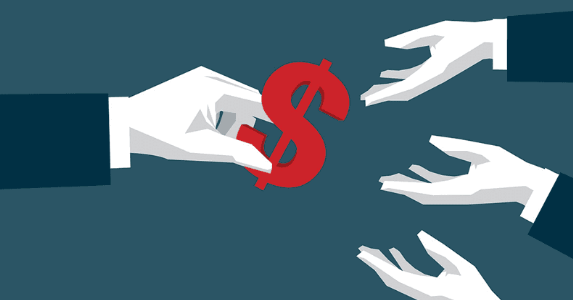
Peer to peer lending is basically a method which connects lender and borrower. The process begins when an investor is interested in lending loans and they search for their match with borrowers who want the same amount. Thus people invest in p2p lending.
P2P lending has become so common and popular because it reduces many barriers for both lenders and borrowers. While small business units or borrowers can easily find their loan through it; on the other side it is also very convenient for the lenders to find their borrowers.
Before understanding any tip to invest in the secondary market you must be very clear what secondary market is all about?
Start your journey, now is the best time to take your first step towards a profit guaranteed marketing strategy. In today’s market, there are uncountable registered platforms for peer to peer lending system; In Crowd Reviewed they share all that you’d like to know about the P2P platform. Like In 2017, laws have been passed for p2p lending. In 2018, 12 platforms have been documented for legal p2p lending. It is calculated that the world P2P lending trade is valued $3.5 billion-global in 2013 and at $64 billion in 2015 is expected to reach nearly $1 trillion by 2050.
This is clear proof that the faster you start investing in P2P lending is more the profitable it will be.
What is Secondary market?
It is basically a modern marketplace where already issued loans, debuts or any other insurance can be bought or sold by the marketing company. The marketing company buys or sells insurance not from the issuing company. Insurance is firstly issued by companies in the primary market then it comes to the secondary market for sale. Some precise examples of the secondary market are the NYSE (New York Stock Exchange) and NASDAQ.
Some details of secondary marketing
If any seller is in need of money for any emergency then he can easily sell his insurance to the buyers since there is a lot of demand in the market.
The prices of the market are automatically arranged and re- adjusted due to the high number of transactions each day. The transaction expense is also very less owing to large market.
Saving money takes a lot of effort for some people, but with secondary marketing, anyone can easily save his/her money safely.
Since the secondary market has become a high source of finance so there is a high regulation in the secondary market by the government. It assures that your money is completely safe there.
Importance of secondary market
It is a good indicator of a country’s economy. Any change in the stock market is reflected in the economy.
It gives a very smooth working experience to companies who can easily buy and sell insurance from the market.
It gives a chance for investors to set up their business of investing securities and getting returns.
One of the most profitable businesses in the secondary market is through P2P transactions, also known as peer to peer investment.
The UK is known for ages for its strong economy. One of the most common investment methods in the UK is P2P lending. The best P2P lending platforms are in the UK. From 2008 – 2009 there was an imbalance in the UK’s economy. The imbalance was recovered by p2p lending only. It has a huge potential in maintaining a country’s economy. Due to the best rates and its ability to sustain, P2P lending has become a huge success.
Why should you invest in peer to peer lending?
P2P lending providers charge very little for finding a borrower which is matching with the lender. But instead, the profit that is earned is much more compared to the charges applied. No other bank or other marketing methods can give you such a profitable deal. This characteristic makes peer to peer lending the best marketing strategy for small businesses. P2P lenders give you a chance to give the role of your bank to yourself. You can simply land and borrow money through this system according to your own rates.
The main benefit of peer to peer lending transactions is that in any other kind of transaction of lending loans, the banks play the main role. In P2P, the role of bank is eliminated. As a result, the profit is much higher for both parties.
Build up your business slowly
When you first start investing start it in a decent and smart way. The right procedure is that you must start with small investments with a large number of borrowers. Divide your total investment into small amounts and lend each amount to different borrowers. So that if by chance there is some surprising irregularity in paying loans you won’t get panicked since the amount is relatively small. Check out the profile of the borrowers minutely before lending money, because you must be aware of the profile of the person you are lending the money.
Start investing and stick to it
It’s really not clever to keep your money ideal since your ideal money will not generate any profit. So instead of that invest your money for a profitable business. P2P lending is a safe way of lending securities where you can easily get your money return whenever you require them. Investment in peer to peer lending is more profitable when kept for a long time. The plans which are invested for a period of 24 or 36 months are the most profitable plans in P2P lending.
Recycle your investments
Peer to peer lending is a type of investment where the investor starts earning from the next month onwards after investing. But to play smart you must reinvest your earnings to spread your business further. Instead of enjoying your little profits plan beyond and earn great profits.
These are the three mantras to earn great profits in peer to peer lending.
Tags:
auto insurance,
Business,
Cash Flow,
College Loans,
economy,
Financial Assistance,
financial planning,
investments,
loans,
money
September 10, 2019
 Founded in 1984 through a joint venture between Hero Cycles and the Honda company of Japan, Hero Honda (now known as Hero MotoCorp) is today the largest two-wheeler manufacturer in the world with a market share of more than 46% in the two-wheeler bike category. It is also listed at the 108th rank in the Forbes List of the 200 World’s Most Respected Companies. It is also ranked as the 7th most trusted brand in India and has received various awards in the two-wheeler category.
Despite the quality of their bikes and the experience offered by Hero Honda, it is not exempt from bike insurance. Bike insurance is mandatory for any two-wheeler on the road and not having one is a punishable offence. Most importantly, a bike insurance can protect you from a range of liabilities such as accidents, theft or even natural disasters that might lead to loss and/or damage to your two-wheeler. While till some while ago, getting a new bike insurance or renewing an already existing insurance policy involved a tremendous amount of paperwork and documentation, you can now get your two wheeler insurance online with a few easy steps. Below, we will see how to get insurance for your hero bike online.
How to get your Hero Bike Insurance Online
Getting a Hero Bike insurance online, today is not a big matter at all. You can get the best bike insurance policy for your Hero bike with the minimum amount of paperwork through various online portals. The insurance also makes you eligible for road-side assistance, provides engine protection coverage, coverage for personal accidents and against third-party liability. In any case, there are a few factors that determine the premium for your bike insurance policy such as:
1. The age of the two-wheeler.
2. Already existing add-on insurance covers.
3. The cubic capacity (cc) of a vehicle.
4. The depreciated value of a vehicle.
5. The discounts that have been availed.
6. The model of the Hero two-wheeler.
7. Already existing insurance policy
To buy a Hero Bike insurance online, you need to follow the steps below:
1. Submit details of Bike: You will firstly need to submit the details of your bike including the make and model number with details such as the cubic capacity etc.
2. Comparing the Premium: You can choose the premium for your bike from a variety of plans that are available and compare these prices with the add-on coverage.
3. Payment of Premium: After you have chosen the right insurer for you and submitted the bike details, you need to pay the reflected premium. You will also need to check the applicable GST and can pay by net-banking services, credit card, debit card or any of the e-wallets.
4. Policy: After completing the above steps, you will be given an online payment receipt to your registered email address and will receive confirmation of your approved policy.
Now, you can also get a multi-year bike insurance policy for your Hero bike up to a period of 3 years. This is especially helpful for many who are unable to renew their insurance annually.
Tags:
auto insurance,
Bike Insurance,
Claims,
Coverage,
economy,
insurance,
investments,
Law,
money,
personal finance,
Premiums,
Returns
April 23, 2015
 Vehicles have become a necessity and so many people own vehicles. Vehicles are relatively expensive hence most people consider financing or leasing when getting a vehicle. There are important things that you must know when financing your vehicle and they are discussed below.
Financing options
There are two main types of financing for vehicles and they are direct-lending and dealership-financing. Direct-lending is where you get a loan from a bank or any other financing institution such as a credit union and you make an agreement to pay over a period of time. Once you have decided on a vehicle to buy and the dealer to buy it from then you can pay with the direct loan you received. Dealership financing is where you pay for your vehicle through the dealership. The dealer gives you a vehicle and you make an agreement to pay for a period of time but you also pay for the finance charge. In this case, you must have an assignee such as a bank. Before choosing a financing option, you must do your research and shop around for the best options before making a decision on whether to buy or lease. You can do this on the internet by just a click on the computer.
Before buying or leasing a vehicle
Before you buy or lease a vehicle, you must consider the federal or state laws that govern financing and leasing of vehicles. These laws will ensure you lease or buy a vehicle legally and also give information to make the process simpler and easier. You must also determine how much you can afford. Before making a purchase or taking up a lease, you must assess your financial situation and make sure that your income is able to cover the payment for the vehicle as well as your living expenses. You can get information about our financial situation online with just a click. It is also advisable to shop around for a financing deal that is comfortable for you. You should not strain financially after taking up financing for a vehicle.
When applying for financing
When you are applying for financing you should talk to the finance and insurance department of several dealerships to determine the financing options that they have and the cost to be paid monthly. Talking to several dealerships will help you determine the best dealership that fits your needs. You must also be ready to share your financial information such as your current financial situation as well as past and current credit obligations so that the dealerships can determine what amount of financing you can qualify and determine the vehicle that you can buy with your current situation. The dealerships also require your financial information so that they can take it to the consignee. When you are considering leasing a vehicle, you must know that you can only use it for a particular period and for a number of miles. Leasing payments are usually lower than fi9nancing payments but freedom of using the vehicle is limited. Some creditors may need you to have a co-signer especially when your financial situation is shaky so that they can take up responsibility in case you default to pay the loan.
Tags:
auto insurance,
Business,
Car,
Car insurance,
investments,
Vehicle Financing
August 15, 2014
 Automobile insurance business is among the most sustainable in the present world. Government regulation of making insurance compulsory for all motorized vehicles contributes to the success of this business. This business of covering automobiles against damages could be owned privately, by public sector undertakings, or by joint stock companies. In a country like USA auto insurance business is controlled by public limited companies. The level of competition among these companies is not stiff as the number of entities is less. Further each of these companies is tied up strategically with separate car manufacturers and their dealers for insuring new vehicles.
Insurance for vehicles is done on sale but before the concerned automobile hits the roads. The coverage amount depends on vehicle type, its use, its engine capacity, and seat capacity. If these are same across manufacturers then insurance cost remains same for similar category vehicles. For instance, the cost of insurance for a 4-seated petrol car of 1200 cc of two different makes would be same. Similarly the cost of insurance for trucks of same capacity and type but different brands would be the same.
With the parameters of calculating premium remaining constant there is not much of variation in insurance cost among companies. Further, there is not much of publicity for auto insurance as it is mandatory for all vehicles. Anything which is compulsorily procured or bought does not require too much of a marketing, particularly when service providers are limited. However, in a globalised economy the entrance of more companies in this trade is expected to increase competition. With increased competition it becomes important to devise new tools for attracting more customers. More information on these topics is found in this author’s website.
Probable tips
- Depreciation – Under normal circumstances premium for any automobile is increased every year because of depreciation. As the chances of wear and tear of a used machine increases with its usage so does its coverage cost. Keeping insurance costs unchanged in spite of depreciation is one way of making insurance packages more attractive.
- Discounts – Usually automobile insurance providers offer accidental or loss coverage for a period of one year at a time, to be renewed in successive year. In the event of ‘no claims’ (when there are no accidental damages) during a year, the cost of insurance is discounted for the subsequent term. This discount rate varies from one service provider to another and is a determining factor of attracting more customers.
- Claim settlements – Time required for claim settlement is another vital aspect in boosting auto insurance business. For a car owner the time spent in receiving the settlement amount from the time of notifying damages is crucial. Often companies take a long time in making settlement payments and that too after repeated requests. Lengthy settlement period is a huge turn-off for car owners. To make automobile insurance services more tempting, settlements should ideally be made before a damaged car leaves a garage.
- Simplicity – Formality involved in lodging a complaint is another vital issue determining the acceptability of a motor vehicle insurance provider. The greater the formalities, lesser is the acceptability of an insurance service provider. It is advisable to have a simple and convenient process of lodging a complaint or claim.
- Accessibility – Accessibility is another important determinant of an insurance company’s popularity. Companies with more offices or contact points are naturally more acceptable to end-users. It is common human tendency to approach a service provider which has more visibility.
Tags:
auto insurance,
Car insurance,
Claims,
Coverage,
economy,
insurance,
investments
April 25, 2012
 The insurance industry is dynamic and changing every day, and with advancements in technology, many insurance companies are improving their level of efficiency. Instead of relying on manual systems to handle business operations, many insurance companies are instead relying on insurance automation to do the job for them. With current insurance market trends, more and more insurance companies are starting to automate many of the processes that they engage in on a regular basis.
What is Insurance Automation?
Insurance automation is a process that involves leaving some regular functions up to automated systems. Instead of having employees engage in these activities, they have automated computer systems that handle the functions. This makes it possible for employees to focus on other areas of business and allow the automation systems to handle the rest.
Claim Processing
One area in which many insurance companies rely on automation is in claim processing. When an insured has some kind of damage that he needs to be reimbursed for, he must file a claim. While some insurance companies still have call centres and agents that file claims, others set up automated systems to handle this task. With these automated systems, customers can file a claim on the insurance company’s website or call into a phone number. If a customer calls the phone line, you will talk to an automated system that will ask them for information such as his policy number and details about the claim. At that point, the information will be entered into the claim tracking system so that an adjuster can be assigned to the claim and begin working on it. This cuts down the amount of labour that it takes to run the insurance claims coming in.
Follow Up
In addition to handling claims in this manner; many insurance companies also lead to follow a process through an automated system. For example, when a claim has been handled, the insurance company may want to check back with the customer to make sure that all of his problems were handled in a professional manner. An automated system can mail out a survey or send one via email to all of the appropriate customers at the right time. Sometimes, an automated phone system can be used to call all of the customers in a particular area. This makes it possible to check back with customers on a regular basis to make sure that they are being taken care of in a timely manner.
Considerations
When it comes to using insurance automation, insurance companies can use a number of different systems and tools to make their jobs easier. They can cut down on costs by eliminating some jobs that employees traditionally had to do. Because of the improvements in technology, it is possible to save money on labour costs and get things done more efficiently. Insurance companies have to walk a delicate line to make sure that they don’t try to automate too much so that they seem like they are getting away from a customer-centred position. Otherwise, automation can play a valuable role in the industry.
Tags:
auto insurance,
Car,
Car insurance,
insurance,
Policy Paper



 What do you mean by p2p lending?
 admin •
  6:41 pm •





Recent Comments